By Aaron Holloway, Membership Manager
With summer fast approaching, the improvements here at Stowe continue. Our Horticulture Team has been working on some new projects that will ensure the beauty of the Gardens last for years to come!
Chloe Linton, our Conservatory Manager, provides an update on the Soil Conservation Project taking place in the Williamson Conservatory:
We just completed restoring the first bed in the Williamson Conservatory, adding in new soil and new plants. We chose to go back to our roots and pay homage to the original design in these beds.
This first bed to go under renovation is the outer bed to your left when you enter the glass house. Historically, this bed was used to house and display plants of economic interest such as bananas, different fruiting trees and plants with textile values.
After time and staff turnover over the years, much of this proclaimed economic bed was reduced down to one curry plant and some bananas, accompanied by some other species that were used as filler. Adding in and raising the soil was the perfect time to add new species and we are delighted to add six new economic species and reintroduce two species that were previously in those beds!
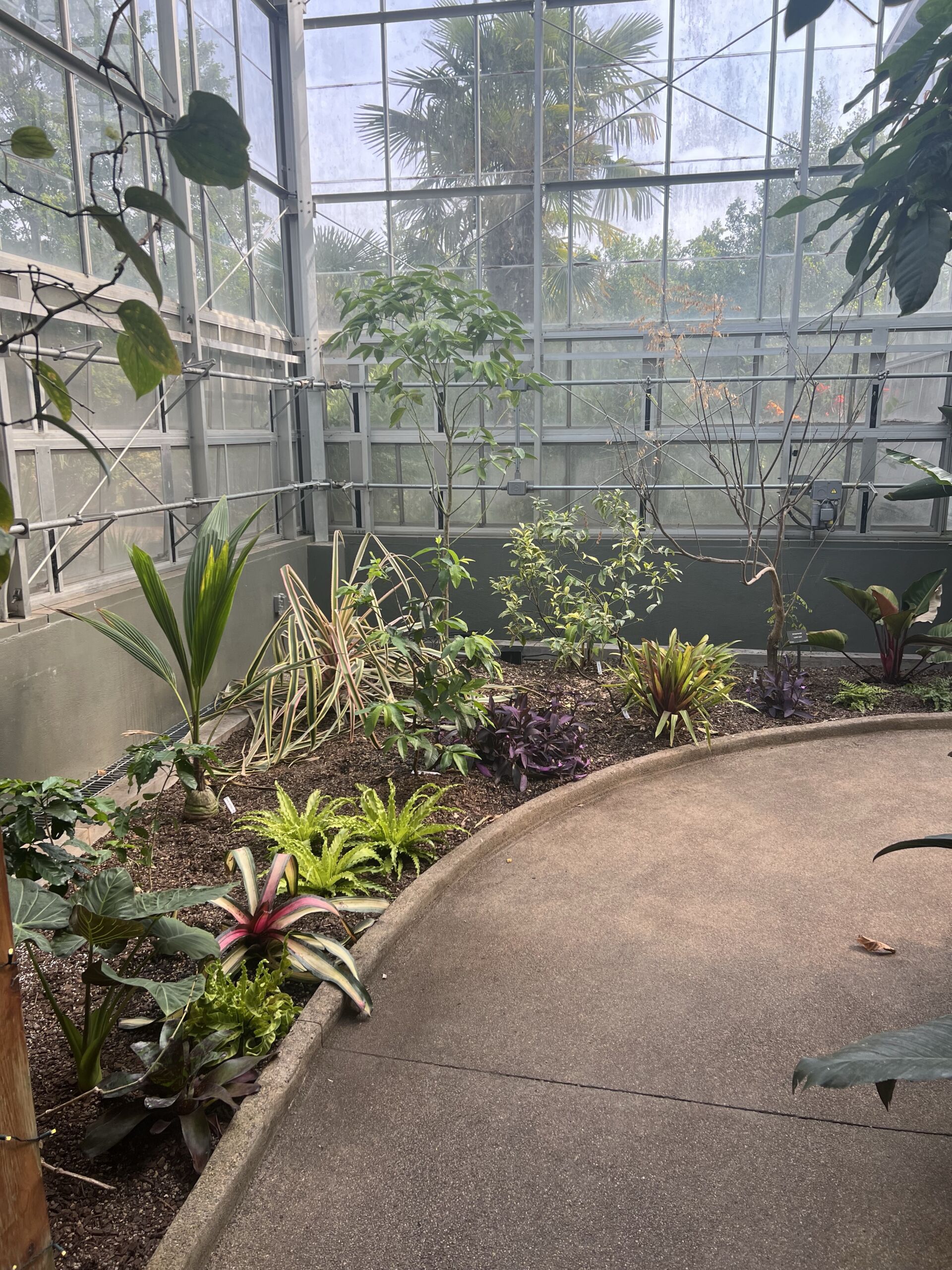
Below is a full species list of the new species added to the Conservatory:
- Palm Coconut Dwarf Green Malayan or (Cocos nucifera)
- True cinnamon or (Cinnamomum verum)
- Guava or (Psidium guajava)
- Coffee or (Coffea arabica)
- Variegated pineapple or (Ananas comosus var. variegatus)
- Curry or (Murraya koenigii)
- Blue java banana (Musa Acuminata x Balbisiana)
- Variegated Pink lemon or (Citrus limon ‘Variegated Pink Eureka)
- Variegated banana (Musa × paradisiaca ‘Ae Ae’)
Lindsey Barger, our Formal Gardens Manager, takes you through the thought process of some trial planting being done on the Four Seasons Lawn.
Four Seasons is an ever-evolving garden at the entrance of Daniel Stowe Conservancy. As the first garden visitors witness when they arrive, we accomplish a lot of activities and community building within this space. Its purpose is to have something in bloom every season and have flowers all year. There are daffodils blooming in early spring, roses in the summer, hydrangeas and chrysanthemums until fall, and pussy willow blooms that emerge in winter. This garden hosts many of our events, including, kids’ camps and field trips activities, wedding receptions and ceremonies, ice sculpture carving and markets. The Four Seasons Garden is the central gathering location where everyone gets together before they depart on their own separate adventures throughout the rest of The Gardens.
Though Four Seasons has changed a lot since the early 2000s, it is still working towards becoming an impactful and inspiring space today. About four years ago, it underwent a major transformation that stripped the space down to its foundation and it was rebuilt from the ground up. Very few of the original trees remain in the garden, the weeping elm being the oldest from 2001. Previous gardeners planted a wide variety of plants such as maples, ginkgos, roses, along with many shrubs and perennials. But soil compaction from the renovation made many of the plants have a difficult time thriving. Many of the new plants were re-homed or needed rehabilitation in our Growing Center Greenhouses. Since these challenges of the renovation we have researched plants that can survive in damp, compact soil and full sun.
From our research we have discovered these plants that work best:
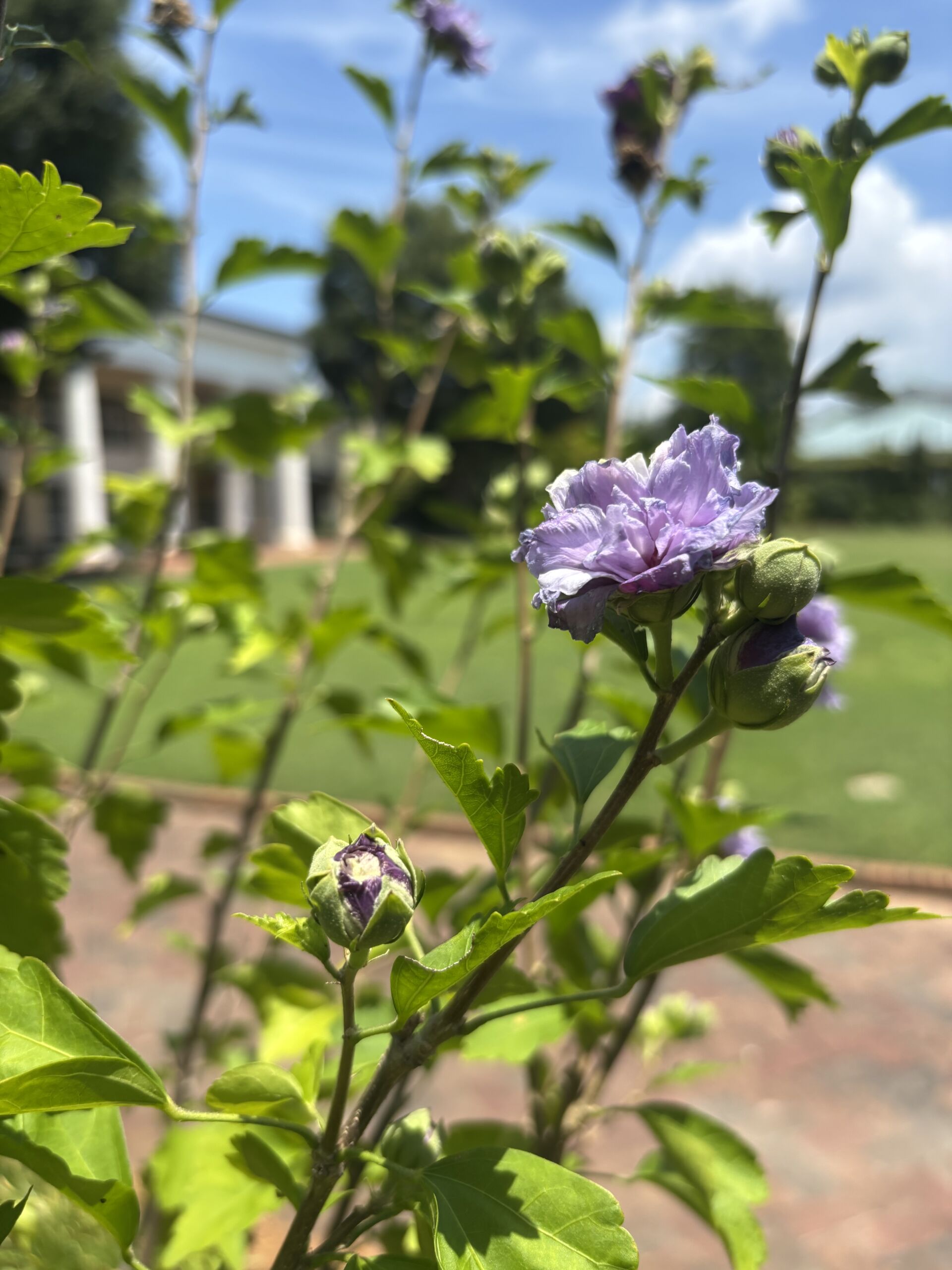
- Hibiscus: A damp soil, full sun loving tropical in the mallow family that comes back every year
- Pussy Willow: We have two, (Salix integra and Salix chaenomeloides) both of east Asian heritage, and they flourish with wet soil. They have been extremely successful and have a large footprint in the garden
- Hydrangea: We chose hydrangeas that would do well in full sun. Most of ours are Hydrangea paniculata, a long blooming and full sun loving variety.
- Ajuga: Typically thought of as a shade loving perennial ground cover, ajuga has proven it can grow just about anywhere
- Magnolia: We have two varieties, named ‘Betty’ and ‘Lois’, both tolerate and thrive in damp soil year-round. ‘Lois’ has yellow flowers, ‘Betty’ has pink.
- Chrysanthemum: A perennial that needs to have damp soil, mums are very reliable for our damp soil. Our particular variety, Chrysanthemum ‘Gethsemane Moonlight’, spreads and has beautiful soft yellow flowers in the fall.
- Daylily: Jokingly referred to as “ditch” lilies because they can survive poor conditions like soggy soil and roadside ditches. They are perfect for a troublesome area, and there are so many varieties you can find in Four Seasons to be inspired by!
- Abelia: A popular shrub found commonly at garden nurseries; they have a higher tolerance than other shrub varieties. They come in a multitude of sizes, but colors are consistently green or lime green with pink flowers.
- Spirea: With pink and/or white flowers, these shrubs will adapt to wet soil and give your garden an attractive plant for hummingbirds and pollinators.
- Milkweed: We are growing asclepias tuberosa, the native milkweed, which loves wet feet and will feed lots of butterflies, such as monarchs. Ours were grown in house by our own Janet Manuel, the Ecological Stewardship Manager at Stowe.
We continue to cultivate a variety of thriving plants in Four Seasons so we can continue to inspire our guests with a love of nature. We hope you’ll continue to visit The Gardens at Stowe every season and be inspired by what is in bloom!
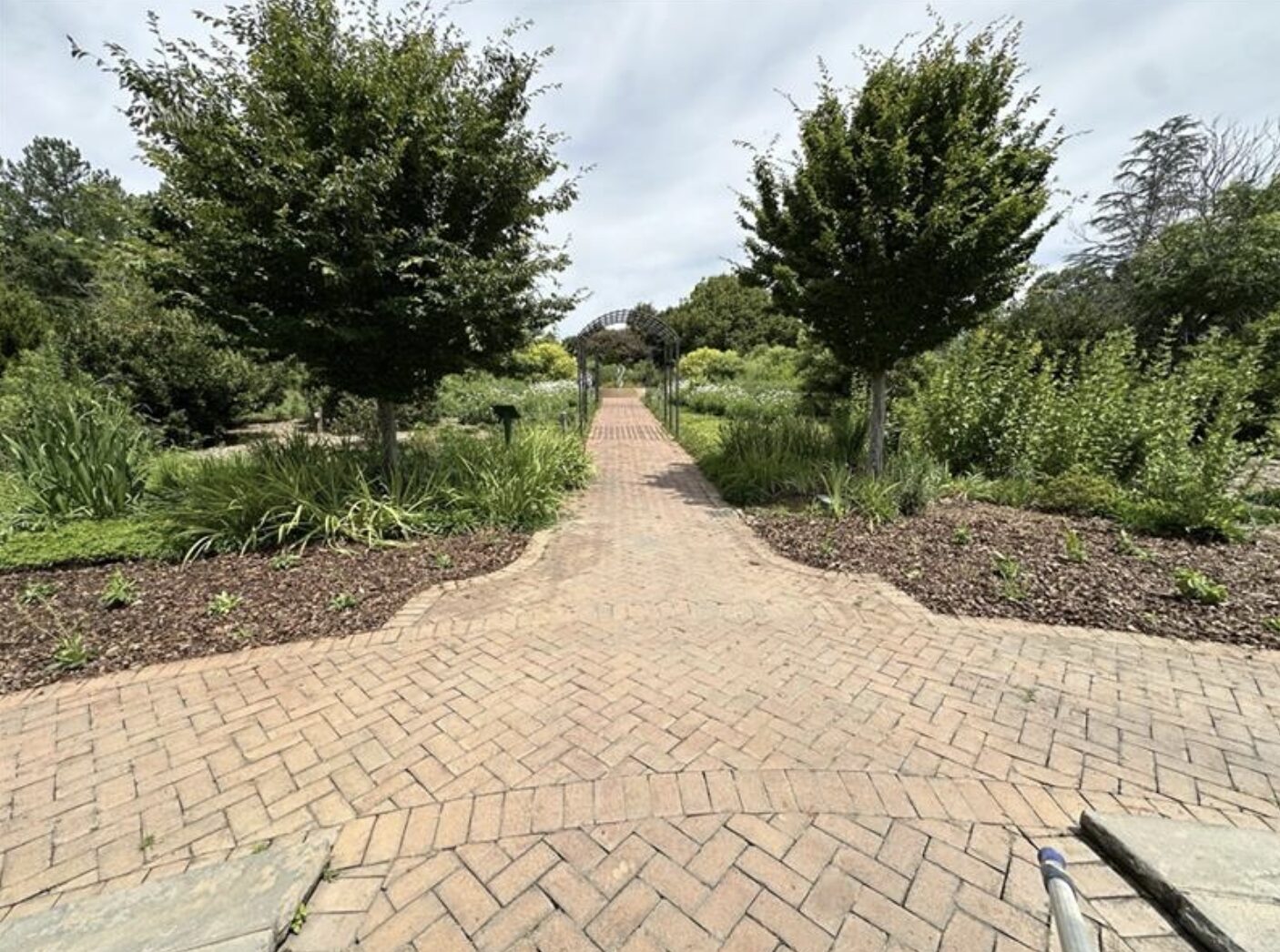
Sachaly Rosario Rivera, one of our resident Horticulturists, debuts the inspiration behind a new bed added next to the Tunnel Fountain.
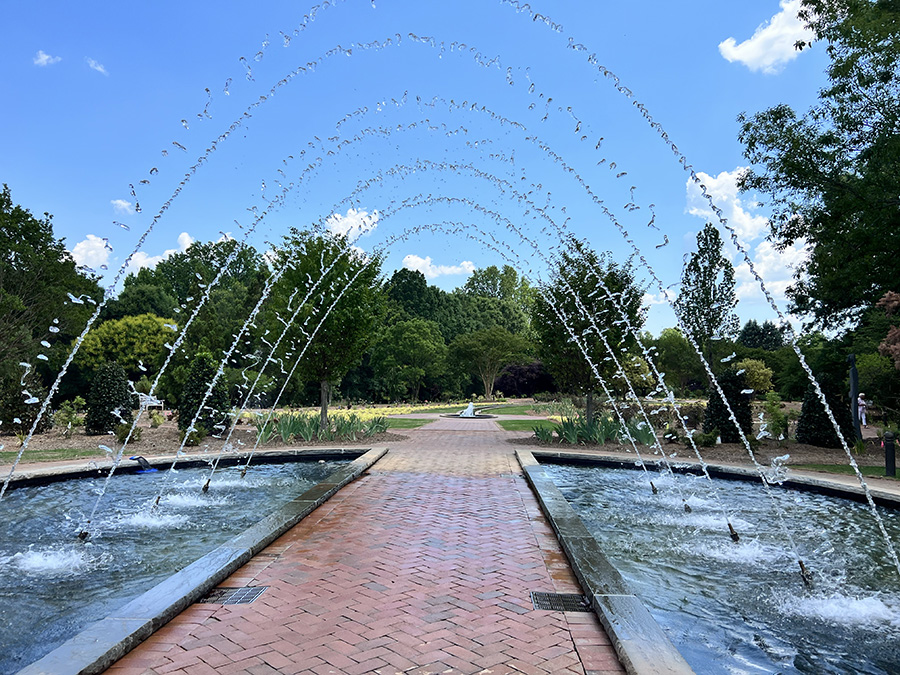
As I passed a year with Daniel Stowe Conservancy, I have gotten to know my gardens better. I have now gone through each season here and seen the transformations each space undergoes. An iconic feature of the Azalea garden is the Tunnel Fountain. It’s twin arches create a tunnel perfect for photos and to cool down.
I have noticed that the grass around Tunnel struggles to handle the water that the jets produce. It made some sections of the grass muddy and gross. I had the idea of taking out the grass and creating more garden beds. Since the water tends to move through the grass, I decided to create a makeshift rain garden. If I add water-loving plants, they will soak up the water.
With the current site conditions of moist/wet soil and full sun, I searched for plants that could meet those conditions. I settled on Asclepias incarnata ( Swamp Milkweed), Lobelia siphilitica ( Blue Cardinal Flower), Salvia lyrata ( Lyreleaf Sage), and Aronia melanocarpa ( Black Chokeberry).
On June 23 and 24, we created the new beds with those plants. We took out the grass, added leaf compost to amend the soil and planted everything minus the Black Chokeberry that will come in the fall. I am waiting for a big storm or a very windy day to put it to the test. Besides that, I am happy with how it looks and can’t wait for everything to fill in. Come check them out!
Janet Manuel, our Ecological Stewardship Manager, reintroduces our updated Woodland Phenology Walk!
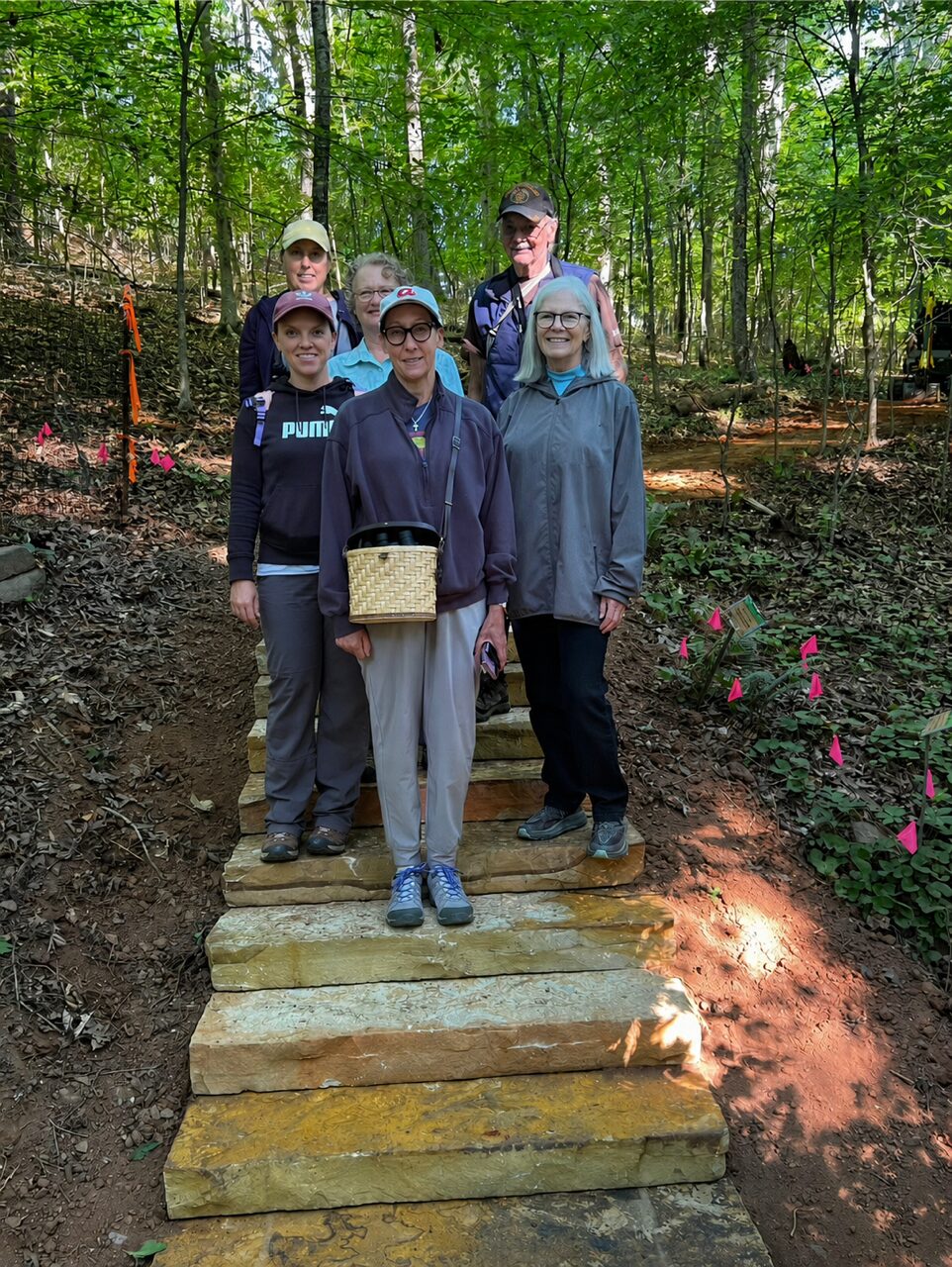
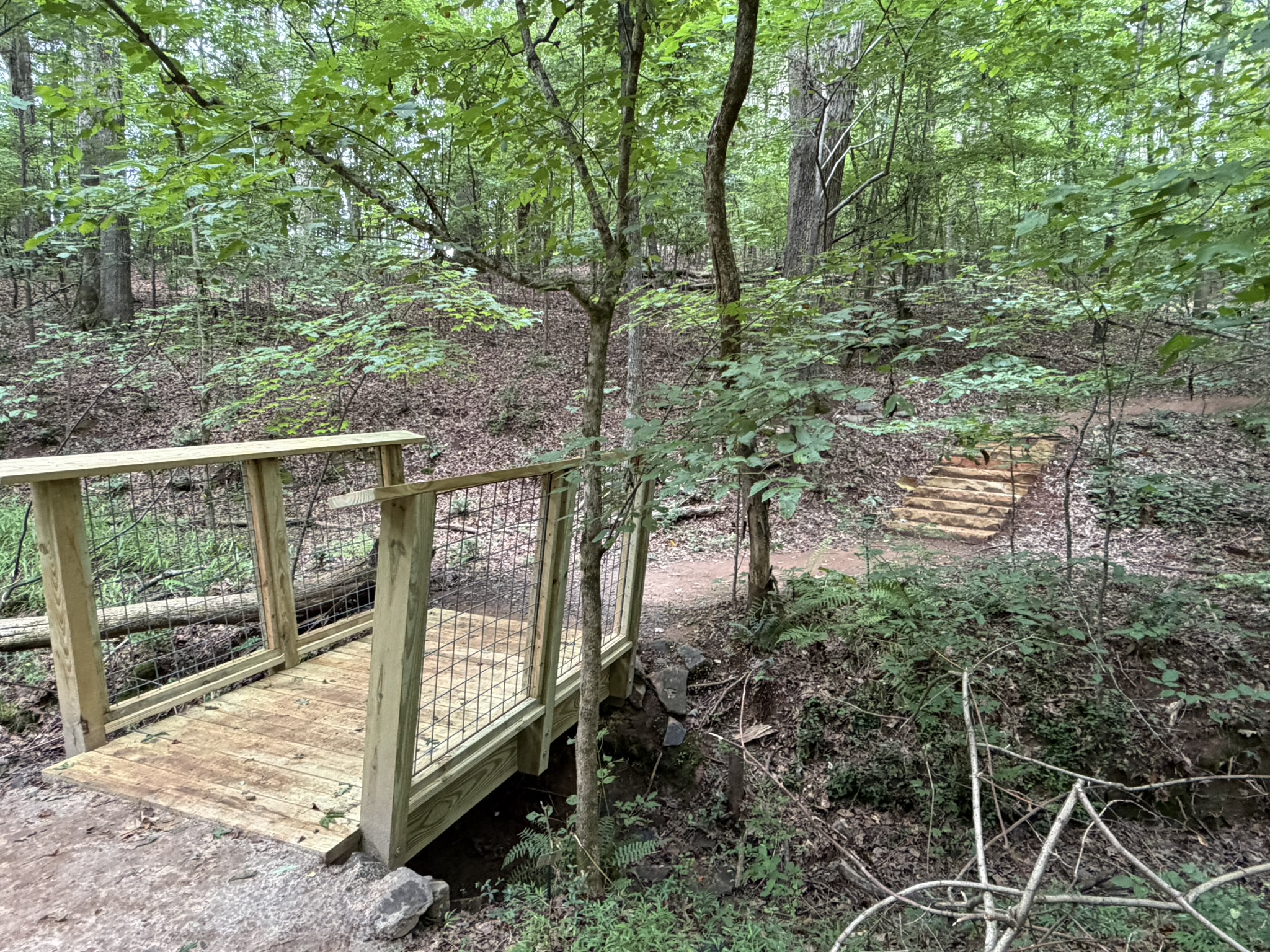
The Woodland Phenology Walk has been transformed with the completion of a sustainable trail reroute that replaces several steep, eroded sections with a gentler, more resilient path. The new alignment reduces exposed roots, improves accessibility, and creates a more enjoyable walking experience while protecting one of the Conservancy’s most ecologically significant woodland habitats.
Designed as a slow “Path to Nature,” the Woodland Phenology Walk encourages visitors to pause, observe, and experience the changing seasons through native plants and wildlife. To preserve this peaceful setting and protect sensitive habitats, bicycles are not permitted on the trail. The improved design also reduces erosion and stormwater runoff, helping protect water quality throughout the Catawba Watershed while reducing long-term maintenance needs.
Since 2016, the trail has served as the home of Daniel Stowe Conservancy’s Phenology Program, where dedicated volunteers monitor seasonal changes in marked trees, shrubs, and wildflowers. Their observations provide valuable long-term data on how local ecosystems respond to weather and climate while connecting visitors to the rhythms of the natural world.