By Caitlin Conner, Marketing + Communications Manager
Sunday, May 24 marked one of our favorite days of the year at Stowe: the return of the Butterfly Bungalow for the summer! The Butterfly Bungalow is an enclosed mesh building filled with hundreds of fluttering butterflies of different species and all their favorite pollinator plants. The Bungalow gives you the opportunities to observe these winged beauties up close and personal; watch butterflies emerge from chrysalides, discover which native plants attract the most butterflies, spot hungry caterpillars munching on leaves and more! The Butterfly Bungalow is truly one of the most magical exhibits at Stowe and we’re so excited that it’s Bungalow season again! Read on to meet the butterflies that you may spot during your next visit and let this blog post be your identification guide as you explore the Bungalow this summer.
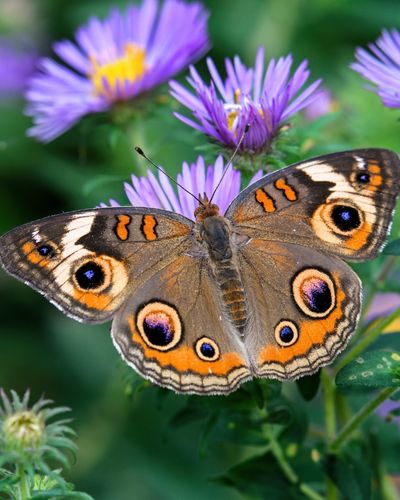
Common Buckeye (Junonia coenia)
The Common Buckeye is named for their unique “eyes” painted on their hind wings. These wings are light brown and include distinctive orange and white markings along with their “eyes”, making them a pretty easy species to spot. They fall into a category of butterflies known as brushfooted because their front legs appear as little brushes that tuck up against their thorax.
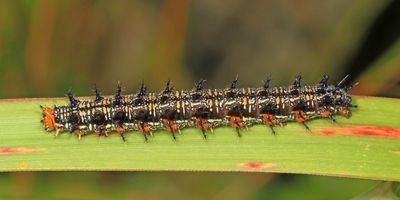
Lifecycle: Common Buckeye caterpillars are typically brown with orange markings and blueish black spines that cover their body. While they might look prickly, you have nothing to fear; Buckeye caterpillars are completely harmless. As caterpillars, they feed on plantain weeds and Gerardia, snapdragon and toadflax flowers.
Habitat: Common Buckeyes can be spotted across North, Central and parts of South America in open, sunny spaces such as fields, dunes and scrubs.
Favorite snacks: Adult butterflies are partial to shallow flowers such as asters and sunflowers, with the occasional taste for soil minerals and rotting fruit.
Personality: Feisty, energetic and showy
Keep an eye out for the Common Buckeye in the Butterfly Bungalow and you might just find one “watching” you back!
Eastern Black Swallowtail Butterfly (Papilio polyxenes)
As their name suggests, Eastern Black Swallowtails are mostly black, but possess stunning pops of color around the perimeter of their wings. Males have mostly yellow markings with red and blue accents, while females have prominent blue and white markings at the base of their wings, with fewer yellow marks above.
Lifecycle: When they hatch, Eastern Black Swallowtails are black and spiny but eventually develop into a green body with black stripes and yellow spots. Their chrysalis blends well into tree bark or leaves as a form of camouflage.
Habitat: Eastern Black Swallowtails are common throughout North America, particularly in the eastern and central regions. They prefer residing in sunny, open spaces such as fields, parks, meadows, savannas, yards, gardens and roadsides.
Favorite Snacks: The caterpillars only feast on foliage in the carrot family, enjoying snacks like the tops of carrots, dill, parsley and celery. The butterflies enjoy the nectar from flat-topped flowers such as zinnias, phlox, thistles and cosmos.
Personality: Agile, bold and adventurous
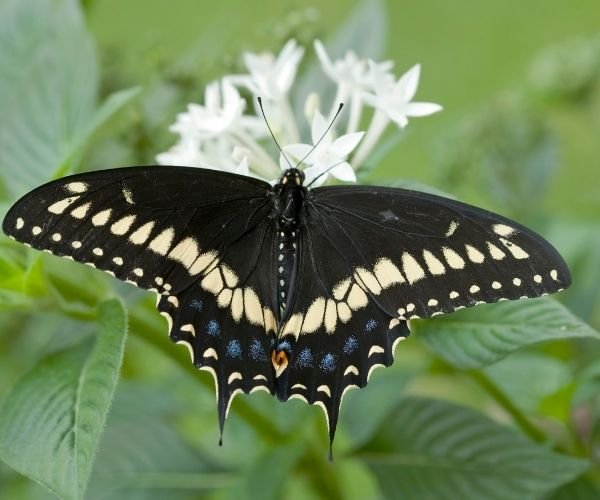
Male Eastern Black Swallowtail
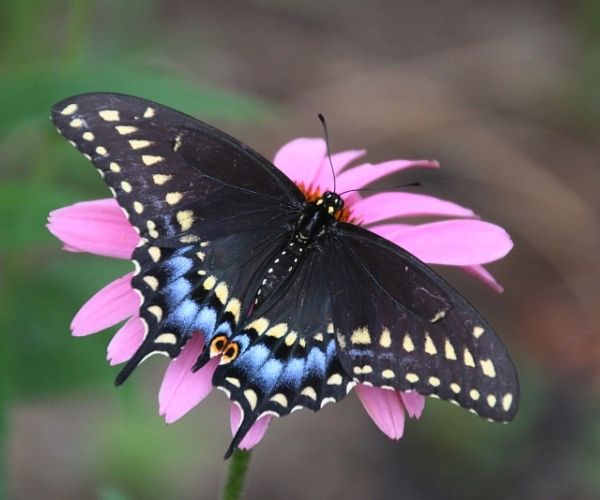
Female Eastern Black Swallowtail
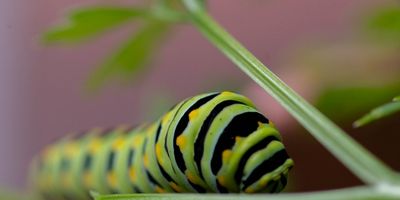
Eastern Black Swallowtail Caterpillar
What Makes a Swallowtail?
You’ll notice several swallowtail butterflies on this list. They have several physical characteristics and anatomical traits that categorize them as such:
- Tail-like wing extensions
- The Osmeterium defense on caterpillars – this is a orange, Y-shaped horn that swallowtail caterpillars can produce from behind their head to release a foul scent that drives away predators
- Fused neck plates
There are over 550 species of swallowtails, so not every single one carries all of these characteristics, but looking for them is a good place to start when identifying swallowtails (particularly the wing “tails”).
Eastern Comma Butterfly (Polygonia comma)
What makes the Eastern Comma stand out are their beautifully scalloped wings. These wings actually gave them their name since they are swooped like a comma. These wings practically glow like fire in a deep orange hue and distinct black and brown markings. As a final touch, their wings are traced in a white-ish silver. The underside of their wings is striped in various shades of brown, almost giving them a wood-like appearance when their wings are up.
Lifecycle: Like the Common Buckeye, the Eastern Comma are spiny caterpillars that can come in a wide range of colors, from green to white to black. Their chrysalis is brown and spiky
Habitat: You can typically find the Eastern Comma in shaded areas or near bodies of water.
Favorite Snacks: Eastern Commas feed on sap, rotting fruit, dung, salt and minerals.
Personality: Curious, quick and territorial
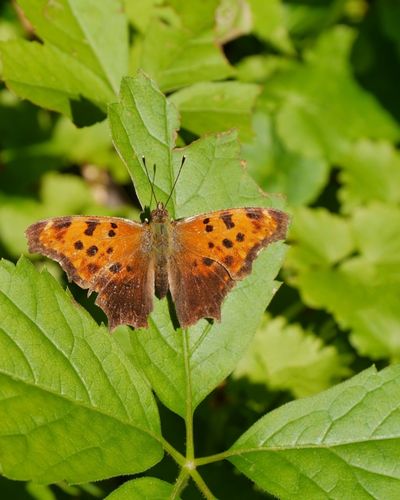
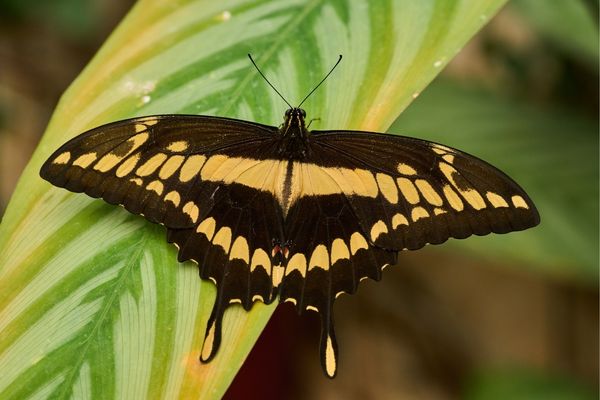
Giant Swallowtail Butterfly
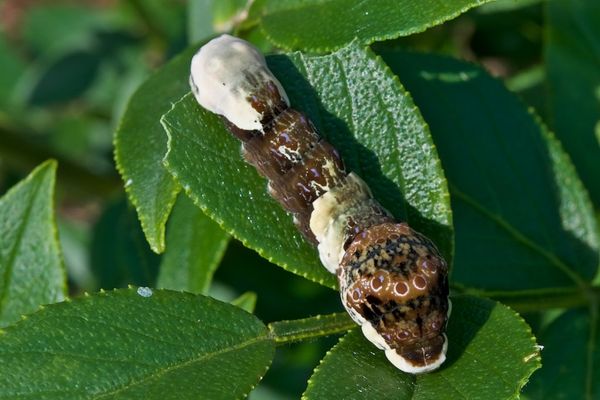
Giant Swallowtail Caterpillar
Giant Swallowtail (Polygonia comma)
The Giant Swallowtail holds bragging rights as North America’s largest butterfly – these massive beauties can have a wingspan of up to six inches long! And if you can’t spot them by their size, they’re pretty distinct by their coloring, too. Their abdomen and outer wings are a light yellow shade with red and blue markings along the bottom of their wings and black and yellow stripes right above their head. Their extended wings are mostly dark brown or black with yellow markings and very small red and black marks at the bottom of their wings.
Lifecycle: The Giant Swallowtail caterpillar has earned the nickname “orange dog” because they are particularly pesky on citrus farms. Despite the name, they are not orange, but rather shades of green and brown that provide remarkable camouflage. These caterpillars are highly identifiable since they resemble a bumpy twig or even bird droppings!
Habitat: You can typically find the Eastern Comma in shaded areas or near bodies of water.
Favorite Snacks: Eastern Commas feed on sap, rotting fruit, dung, salt and minerals.
Personality: Confident, aggressive and social
Julia (Dryas iulia)
It’s no wonder that the Julia butterfly is sometimes referred to as “the flame” – it’s bright orange coloring can’t be missed! These speedy beauties are not only known for their bright wings, but for quickly zipping around their habitat.
Habitat: Speaking of habitat, Julias as native to Brazil and most frequently found in southern Texas and Florida. These butterflies love a tropical or subtropical climate and thrive in the heat.
Lifecycle: We’ve mentioned spiky caterpillars before, but Julias may be the most hardcore; their long, branchy spines cover their entire body. Unlike the harmless Buckeyes and Commas, don’t touch the Julia caterpillars! They may cause a rash and as such are inedible for certain species of birds, making their spike cool and useful! Alternatively, you may mistake the chrysalis of a Julia for a dead leaf, as it is dull and gray.
Favorite snacks: The caterpillars love to munch on passion vines, while the butterflies enjoy nectar and pollen. Their most interesting snack? Crocodile tears! Julias are known to sit on crocodile’s eyes and force their eyes to well up so they can drink its tears. Who knew a little butterfly could make a crocodile cry?
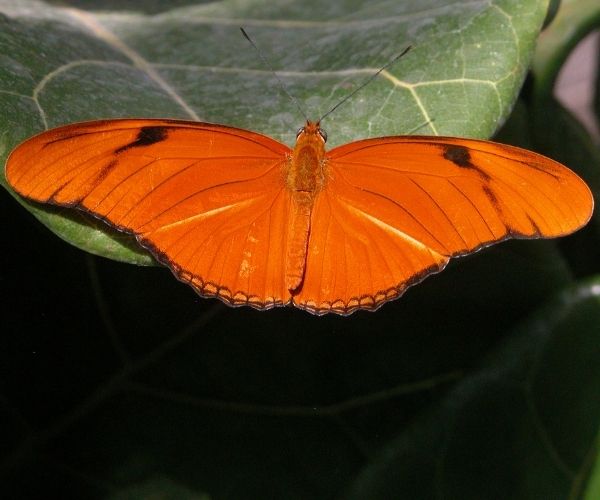
Julia Butterfly
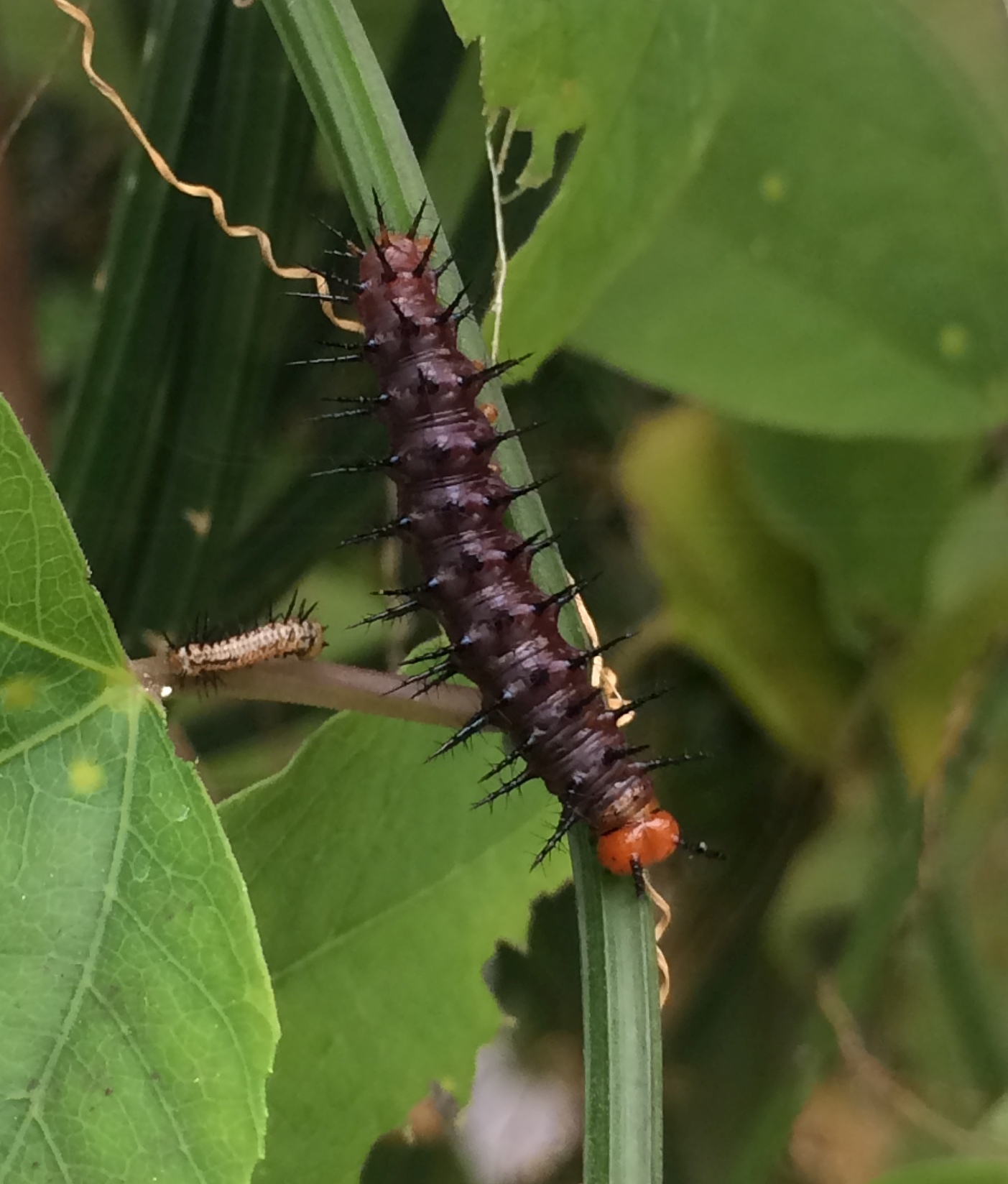
Julia Caterpillar
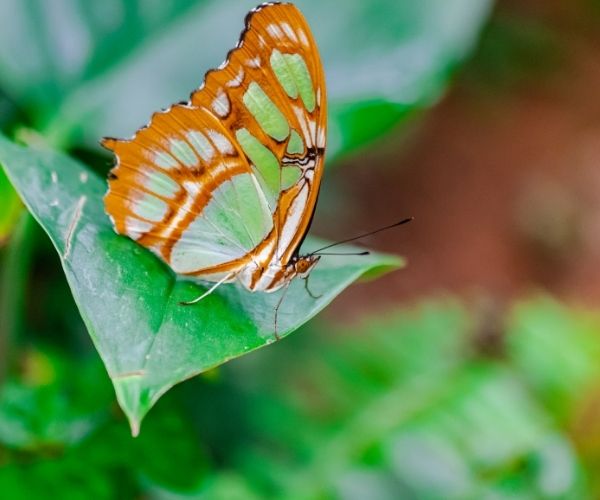
Malachite Butterfly
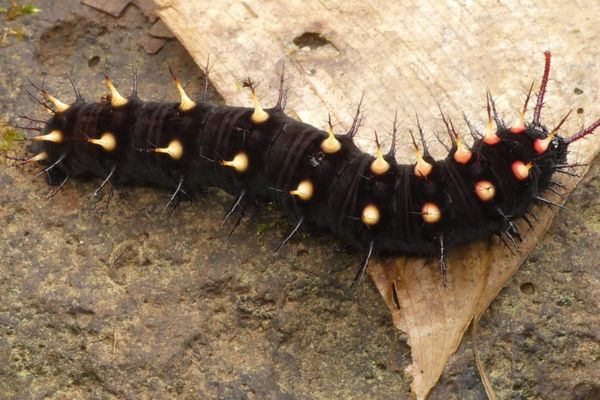
Malachite Caterpillar
Malachite (Siproeta stelenes)
Like the Buckeye, the Malachite is also a brush-footed butterfly. Its breathtaking iridescent seafoam and sky blue wings with bold, black marketings make it easy to spot.
Habitat: The Malachite thrives in a hot climate, as it is one of the most common butterfly species in Central and South America. They can also be found in the wild in Texas and Florida in the U.S. Their favorite places to call home include tropical rainforests, savannas and fruit orchards.
Lifecycle: The Malachite caterpillars couldn’t look more different than their fully formed counterparts; the horned, spiny, black-and-red critters are a far cry from the shimmery green butterflies that they will become. The caterpillars feed on host leaves until they are ready to pupate, and their bright green chrysalis serves as more of a hint of their true colors.
Favorite snacks: While they are beautiful, Malachites have questionable taste (at least by human standards). They enjoy rotting fruit, dead animals and dung. To avoid stinking up the Butterfly Bungalow, we’re experimenting with stale beer mixed with brown sugar this year. We’ve christened this Bungalow feeding station “The Butterfly Bar” – cheers!
Personality: Calm, curious and friendly
Monarch (Danaus plexippus)
Perhaps the most iconic butterfly of all time, most folks can spot a Monarch’s deep orange wings and black and white markings. Monarchs native to the Eastern United States are also well-known for their migration south in the colder months. These jet-setting butterflies travel thousands of miles to reach warmer climates in Florida, California and Mexico.
Habitat: Monarchs can be found in many different climates across America, as well as several other countries including Australia, New Zealand and Morrocco. Their habitats vary as well; you can spot Monarch butterflies in pastures, gardens, forests, cities, prairies, roadsides and anywhere in between – they just require host plants for their larva.
Lifecycle: Monarch caterpillars go through several stages of development, changing from a small, greenish-gray larva to the yellow and black striped caterpillar that is almost as recognizable as its butterfly form. To begin its final transformation, the Monarch caterpillar forms a pale green chrysalis that hardens as it develops. Near the end of the pupal stage, the chrysalis becomes near translucent and the butterfly emerges.
Favorite snacks: You may associate Monarchs with milkweed, and that’s because Monarch caterpillars are on a strict milkweed-only diet. Adult Monarchs are not picky butterflies and enjoy a wide variety of plant nectar, including sunflowers, redbuds, goldenrod, Joe Pye weed, coneflowers and many more. (PSA – The Farmhouse Garden Center sells tons of native plants that attract Monarchs!).
Personality: Resilient, dramatic and brave
Monarch fun fact: Monarchs and Painted Ladies are the only two species of butterflies to visit space!
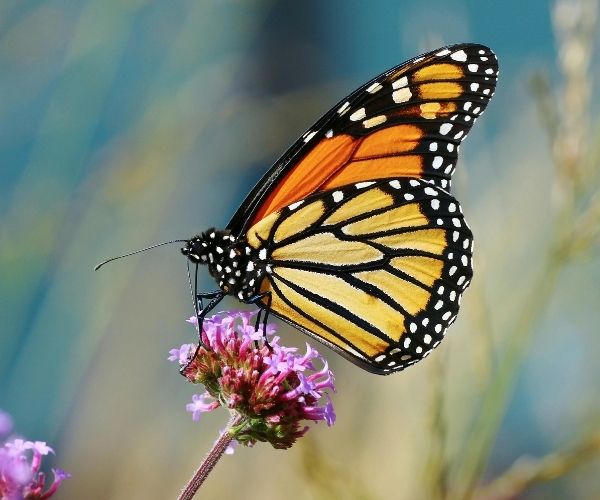
Monarch Butterfly
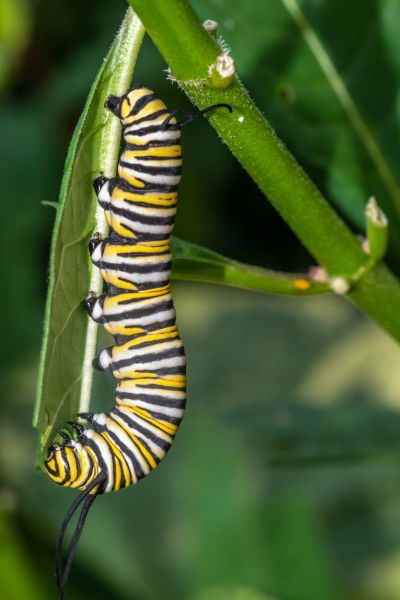
Monarch Caterpillar
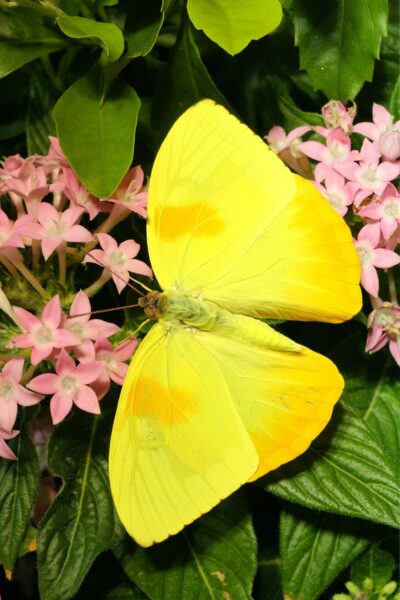
Orange Barred Sulphur Butterfly
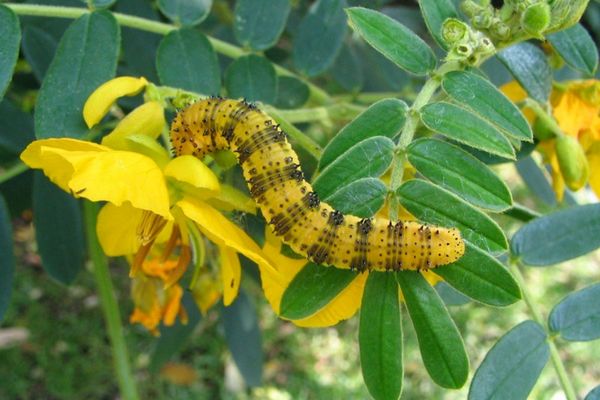
Orange Barred Sulphur Caterpillar
Orange Barred Sulphur (Phoebis philea)
The name is a little misleading – Orange Barred Sulphur butterflies actually appear bright yellow. Their large wingspan and flash of electric color make them an easy species to pick out. Their name comes from the small bar of orange coloring that stretches across their hind wings. Some of the females can also be white instead of yellow. Both males and females possess a small, deep orange band on the base of their wings.
Habitat: Orange Barred Sulphur butterflies prefer wide-open lowlands, which is why they are commonly found in parks, gardens and roadsides. You can find them all across America and in the Caribbean.
Lifecycle: Orange Barred Sulphur caterpillars start out light green, but develop distinct deep green stripes as well as bumpy black spots and some patches of yellow. The caterpillars feed primarily on plants in the Cassia and Senna families. Their chrysalis can be green or pink with a distinctive pointed head.
Favorite snacks: Orange Barred Sulphurs care more about the shape of the flower than the nectar itself; often gravitating towards tubular flowers of many different varieties.
Personality: Restless, social and erratic
Painted Ladies (Vanessa cardui)
While the Monarch might hold the crown for most recognizable butterfly, Painted Ladies are actually the most common and widespread species of butterfly in the entire world. Their open wings appear pretty similar to monarchs; the base is bright orange and they have several distinctive brown, black and white markings. Their closed wings make them less easy to spot since they are a light brown that easily blends into leaves, trees, rocks and wood.
Habitat: Painted Ladies love having room to roam, so they prefer open spaces such as prairies, fields, parking lots and gardens. As mentioned above, they are the most common species of butterfly and can be found in countries all over the world.
Lifecycle: Their caterpillars also appear similar to monarch caterpillars with their black and yellow stripes. Painted Lady caterpillars, though, have black spines down the side of their body. They form a hardened brown chrysalis with large white bumps running down the side.
Favorite snacks: Painted Ladies enjoy tall plants and seem to prefer nectar from cosmos, asters, coneflowers and zinnias.
Personality: Nomadic, flirty and social
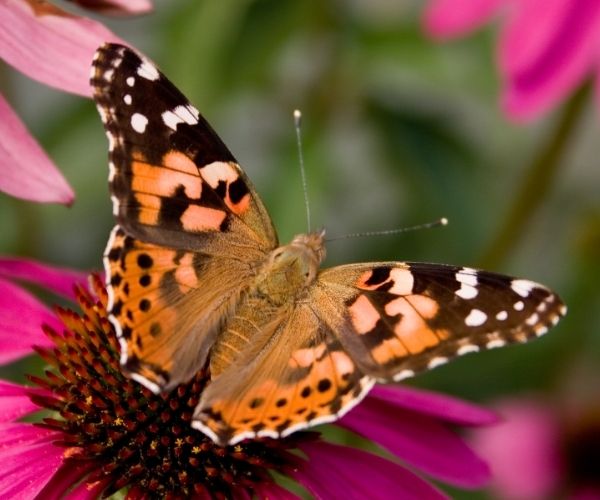
Painted Lady Butterfly
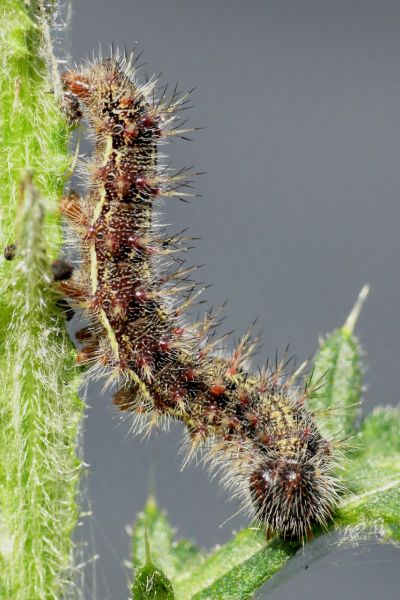
Painted Lady Caterpillar
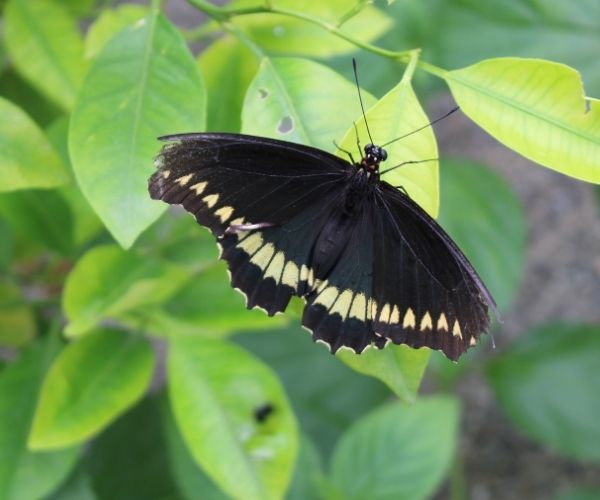
Polydamas Butterfly
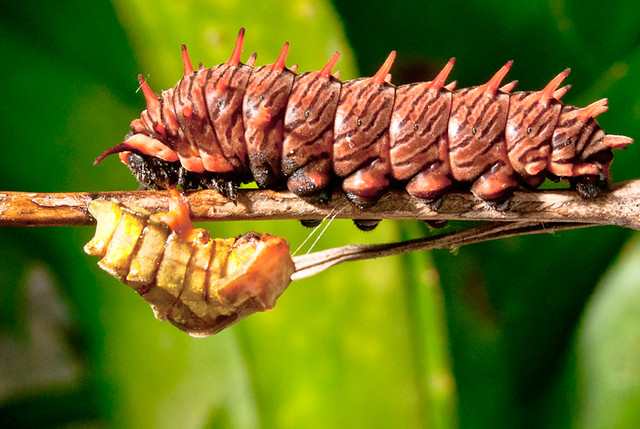
Polydamas Caterpillar
Polydamas Swallowtail (Battus polydamas)
The Polydamas Swallowtail is often referred to as the gold rim swallowtail for good reason – these striking pitch-black butterflies possess a gold line down the width of their wingspan. Their closed wings reveal red markings on their wings and abdomen.
Habitat: Polydamas butterflies reside in tropical climates, calling the Caribbean, Central and South America their home, as well as some southern states in the U.S. such as Texas and Florida. Within these locations, you’re most likely to spot a Polydamas Swallowtail in woodlands, fields and savannas.
Lifecycle: Like their adult form, Polydamas caterpillars are dark, often dark brown or black, with orange-brown spines all over its body. They form their chrysalis in a signature “J” shape.
Favorite snacks: Adult butterflies prefer Lantana plants, but also enjoy milkweed, honeysuckle and butterfly weed.
Personality: Energetic, territorial and adaptable
Polydamas fun fact: Polydamas caterpillars are voracious eaters, but only consume toxic host plants (mostly pipevine plants) that make them taste bad to predators!
Red Admiral Butterfly (Vanessa atalanta)
The Red Admiral is primarily black, with red bands and white spots visible with spread wings. When their wings are closed, they are most a marbled brown that helps them blend into their surroundings, but they also have a pop of red and blue on the upper portion of their wings directly above their head.
Habitat: You can find these butterflies all over the world! They can appear in many different landscapes but prefer wetlands.
Lifecycle: As pupa, the caterpillars actually change color based on temperature! At low temperatures, they appear black and at high temperatures, they appear bright crimson. The eggs and larva typically host on nettle plants and eventually form a brown, pointed chrysalis.
Favorite snacks: Red Admirals love a sugar rush and feast on all things sweet, including fermenting tree sap, rotting fruit and bird droppings.
Personality: Red Admirals have a bit of a split personality; they are friendly, curious and docile around humans, but can be aggressive and territorial with each other.
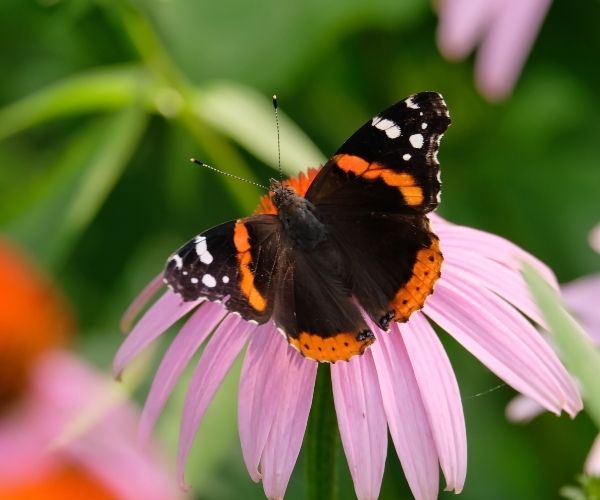
Red Admiral Butterfly
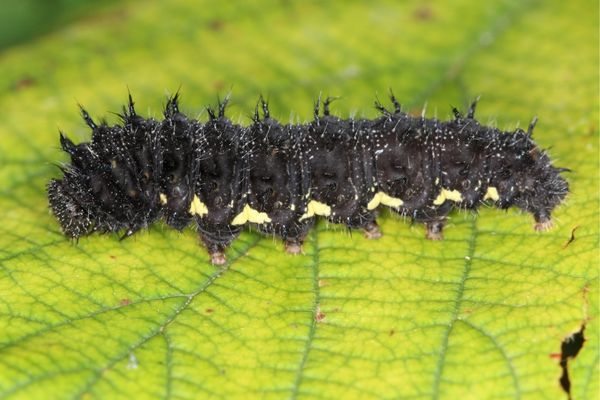
Red Admiral Caterpillar
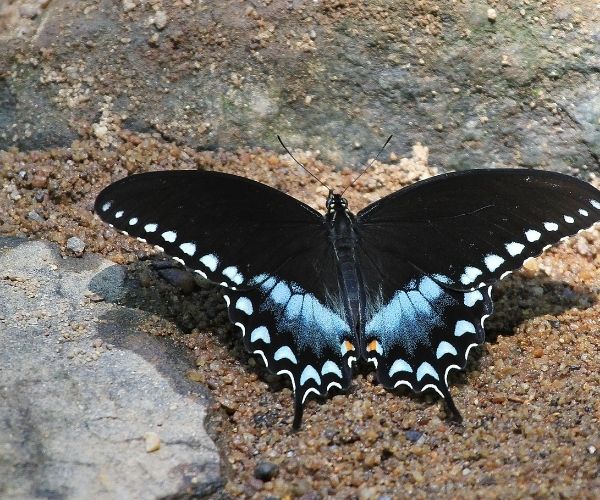
Spicebush Swallowtail Butterfly
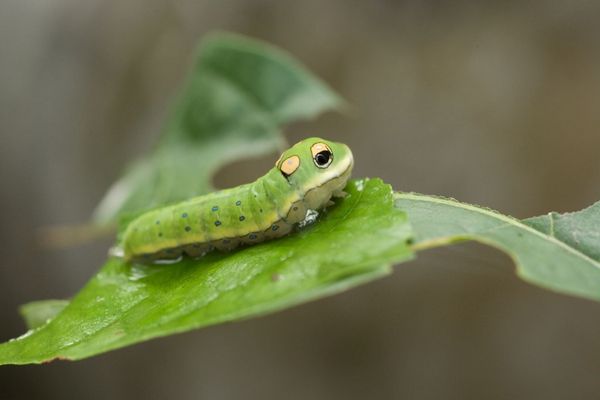
Spicebush Swallowtail Caterpillar
Spicebush Swallowtail (Papilio troilus)
The Spicebush Swallowtail are easily identified as black butterflies with a shimmery patch of blue at the bottom of their wings and white spots from the widest point of their wings running down the perimeter. As with most swallowtails, they have a pretty large wingspan, generally three to four inches. When they close their wings, they are still primarily black and blue but you’ll notice a row of bright orange spots.
Habitat: The Spicebush is native to the Eastern United States and parts of Canada (specifically southern Ontario), but occasionally can travel further. Unlike many other species of butterflies that prefer open, sunny spaces, Spicebush Swallowtails prefer shaded, deciduous woodlands and swampy areas. (Although the females sometimes can be found in open plains).
Lifecycle: These butterflies get their name because they use primarily spicebush as the host plant for caterpillars, but the caterpillars can also consume sassafras and redbay. In the later stages, these caterpillars are easily identified due to their bright greenish-yellow hue, blue spots and large “eyespots” that help keep predators at bay. (Some call these eyespots ferocious…I think they’re pretty cute). The color of the chrysilis depends on the time of year: brown in the winter and green in the summer.
Favorite snacks: Spicebush Swallowtails tend to stick to flower nectar as their food source and mainly enjoy Joe-Pye Weed, jewelweed, honeysuckle, lantana, thistles and azaleas.
Personality: Tricky, agile and restless
Zebra Longwing Butterfly (Heliconius charithonia)
As you can probably guess by their name, Zebra Longwings stand out due to their black and white stripes and extended wingspan. This unique wing pattern also serves as a warning to predators. Zebra Longwings consume pollen as well as nectar from flowers, thus making them toxic to predators.
Habitat: This species of butterfly mostly resides in Central and South America, and Southern U.S. states like Florida and Texas. Clearly they love a tropical climate and can most often be found in swampy, humid forests and fields.
Lifecycle: While the adult butterflies have stripes, the caterpillars are white with black spots and long, fierce-looking black spikes all over their bodies. Like their adult form, caterpillars are also toxic to predators due to the copious amount of passion vine leaves they consume. Like many other caterpillar species, the Zebra Longwing’s chrysalis closely resembles a dead leaf.
Favorite snacks: Zebra Longwing butterflies are unique in that they injest both pollen and nectar. Their favorite plants include lantana, Spanish needles, tropical sage and firebush.
Personality: Social, intelligent and calm
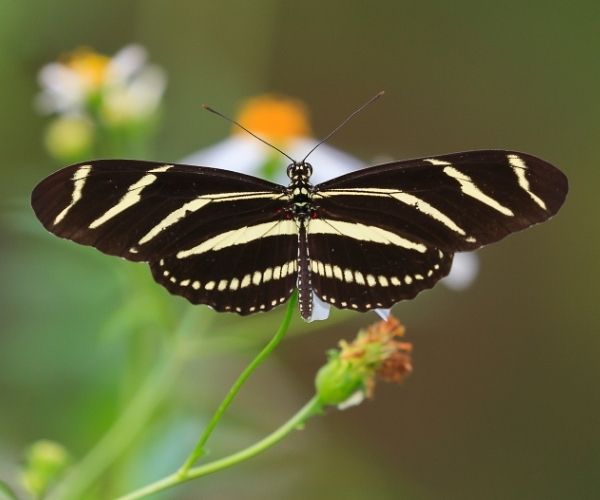
Zebra Longwing
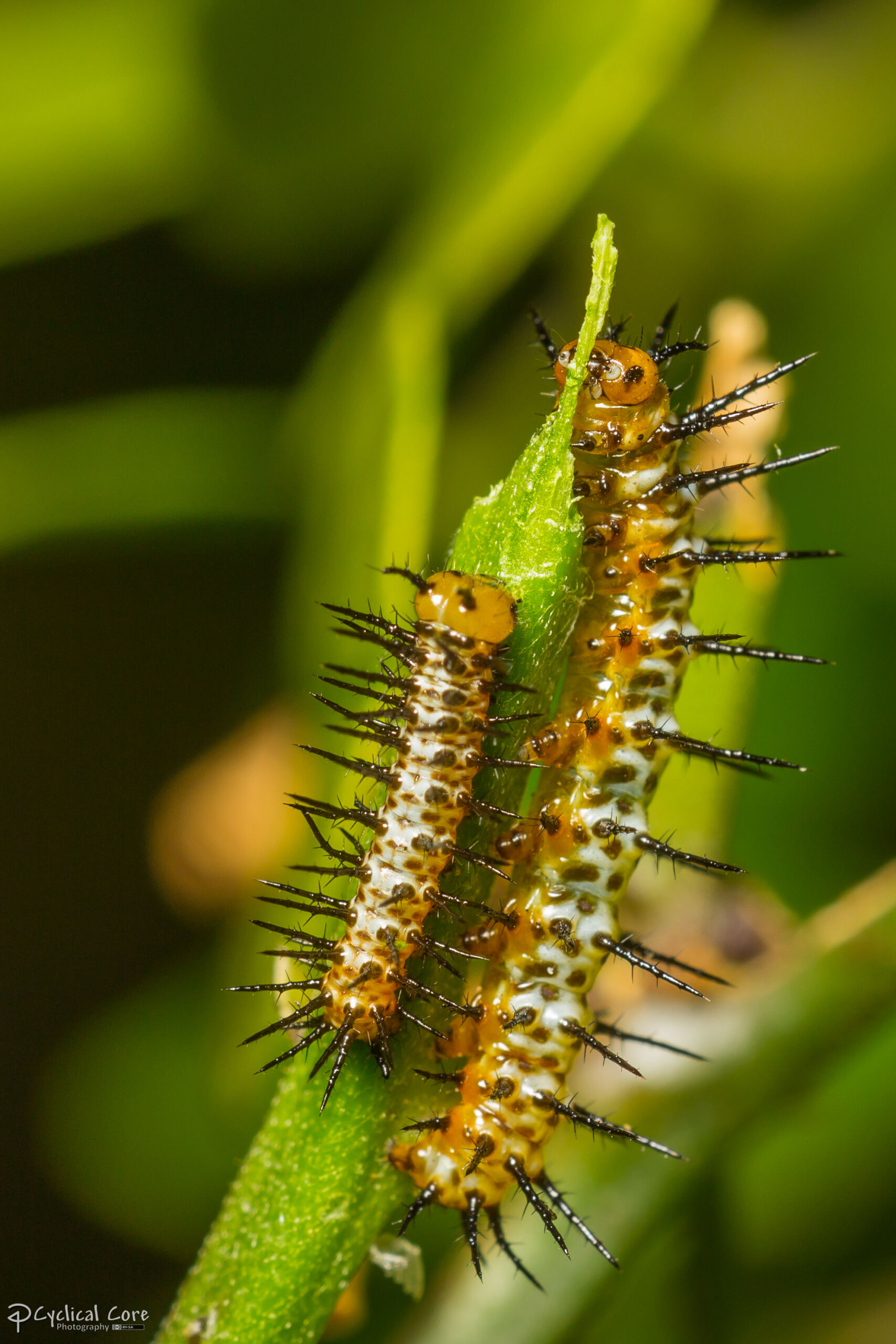
Zebra Longwing Caterpillar
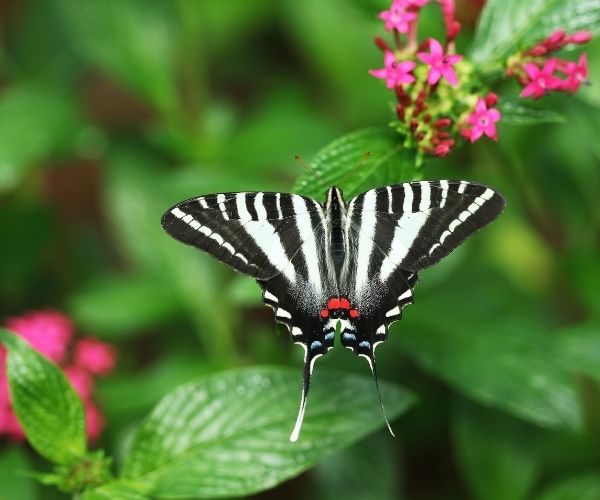
Zebra Swallowtail
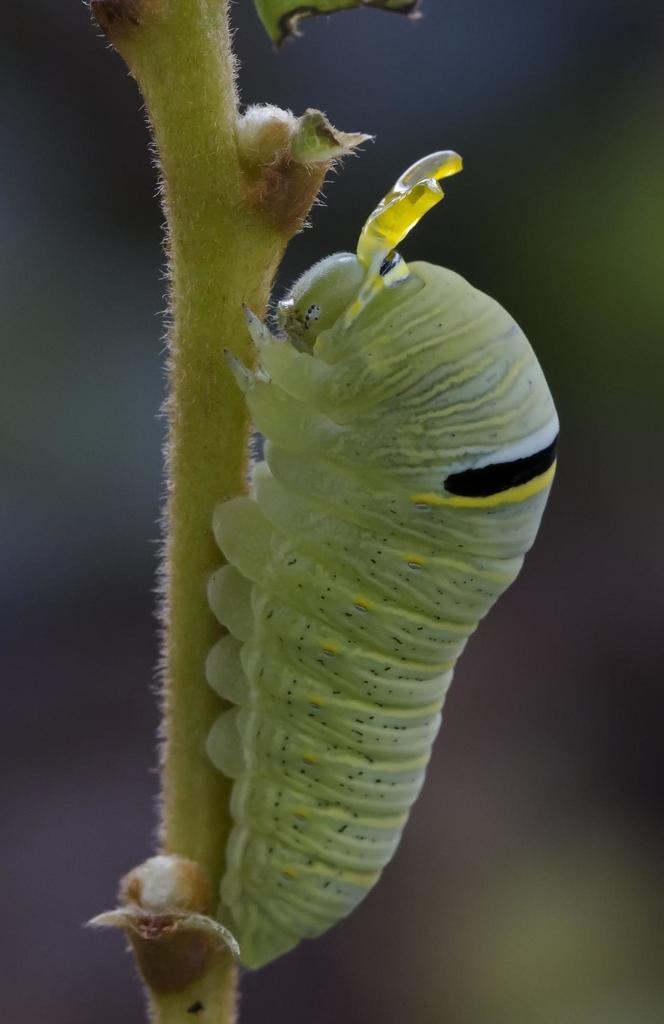
Zebra Swallowtail Caterpillar
Zebra Swallowtail Butterfly (Eurytides marcellus)
With such similar names, you’d think that Zebra Swallowtails and Zebra Longwings would be difficult to differentiate, but despite their shared black and white stripes, Zebra Swallowtails actually have several distinctive characteristics. For one, they possess the classic triangular swallowtail pointed wings. Their stripes are vertical leaning, rather than horizontal and they have a bright red dot at the base of their wings. They shift colors slightly depending on the weather; the pointed tips of their wings becoming fully black in the hotter summer months.
Habitat: Their habitat is tied to pawpaw trees (more on that below) so they only reside where they can find easy access to pawpaws, including the eastern U.S. and southeast Canada. Due to this restriction, you will generally find them in moist forests, swamps and near rivers and marshes.
Lifecycle: You may spot several different variations of Zebra Swallowtail caterpillars. Newly hatched caterpillars are black with lighter colored white or pale yellow stripes. As they grow, they can become one of two coloring options. The more common form is green with yellow and white stripes. More rarely you may spot a black caterpillar with white and orange bands. These caterpillars also produce a strong, unpleasant odor that helps deter predators like spiders and ants. They produce this odor by eating leaves from pawpaw trees, which is the only source of their diet and required for their survival.
Favorite snacks: Adult Zebra Swallowtails have short tongues, so they rely on flowers without long nectar tubes such as lilac, milkweed, redbuds and the blooms of blueberries and blackberries. Their also known to drink mineral dense water and mud to absorb the nutrients, as well as dine on rotting fruit, animal dung and carcasses.
Personality: Elegant, independent and defensive
Fun fact: Possibly the cutest aspect of Zebra Swallowtails is that they partake in “puddling” or grouping together in nutrient-dense zones.
A less fun fact? Female butterflies lay their eggs singularly on tree trunks or pawpaw leaves because the little caterpillars are cannibals and will eat each other if they hatch next to each other…talk about a sibling rivalry.
The butterflies of the Bungalow are as unique and quirky as human beings; each fluttering creature has its own personality, tastes and habits. Some fly high, while others shelter close to the ground. Some may gravitate towards the various fruits and nectar on display, while others prefer stale beer. Use this blog as your guide during your visit to the Bungalow to help you identify our flying friends, learn a little more about them and connect the beautiful colors and patterns of their wings to different behaviors and backgrounds.
The Butterfly Bungalow is truly a can’t-miss exhibit at Stowe this summer. Plan your visit today!
Sources:
https://www.butterfliesandmoths.org/species/Junonia-coenia
https://www.britannica.com/animal/brush-footed-butterfly
https://www.flawildflowers.org/know-your-native-pollinators-common-buckeye/
https://hort.extension.wisc.edu/articles/black-swallowtail-papilio-polyxenes/
https://www.uky.edu/Ag/CritterFiles/casefile/insects/butterflies/swallowtail/swallowtail.htm
https://alabama.butterflyatlas.usf.edu/species/details/127/eastern-comma
https://www.butterfliesandmoths.org/species/Papilio-cresphontes
https://ask.ifas.ufl.edu/publication/IN134
https://www.science.org/content/article/scienceshot-butterflies-sip-crocodile-tears
https://www.butterfliesandmoths.org/species/Siproeta-stelenes
https://entomology.mgcafe.uky.edu/ef006
https://www.fws.gov/species/monarch-danaus-plexippus
https://www.fs.usda.gov/wildflowers/pollinators/Monarch_Butterfly/news/monarchsinspace.shtml
https://www.inaturalist.org/taxa/133416-Phoebis-philea
https://hort.extension.wisc.edu/articles/painted-lady-butterfly-vanessa-cardui/
https://pmc.ncbi.nlm.nih.gov/articles/PMC10126055/
https://www.fs.usda.gov/wildflowers/pollinators/pollinator-of-the-month/red-admiral-butterfly.shtml
https://content.ces.ncsu.edu/spicebush-swallowtail
https://www.fs.usda.gov/wildflowers/pollinators/pollinator-of-the-month/zebra_longwing.shtml
https://animaldiversity.org/accounts/Eurytides_marcellus/
https://vnps.org/paw-paws-and-the-zebra-swallowtail-butterfly/
https://georgiawildlife.com/out-my-backdoor-zebras-georgia