By Caitlin Conner, Stowe Marketing + Communications Manager
Research compiled by Janet Manuel, Ecological Stewardship Manager + Emma McGee, Horticulturist
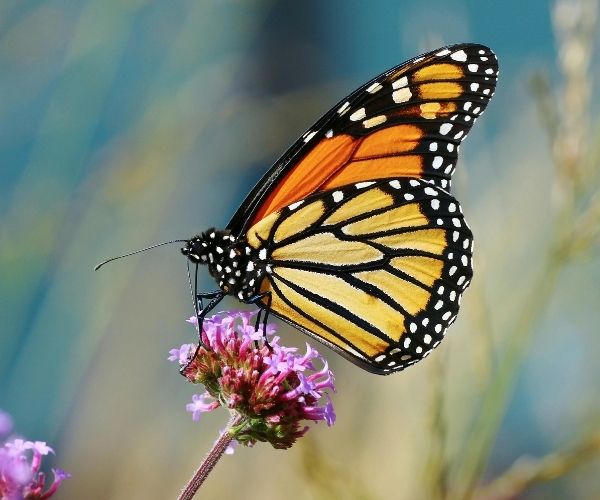
But Bye, Bye, Butterfly (despite the name) celebrates more than just butterflies. It also celebrates the unsung heroes who contribute just as much to enhancing a rich, native ecosystem. Honeybees or bumblebees may also come to mind when thinking of well-known pollinators, but there are many more types of bees that contribute. And on top of bees, insects such as moths, beetles, wasps, flies and other small bugs (and even mammals like bats!) all contribute to ensuring the biodiversity of plants in our region. They’re not as buzzy as bees or flashy as butterflies, but these overlooked pollinators are just as crucial.
Moths
- The name combines the Greek words lepis and ptera, which mean scale and wing, respectively. Both butterflies and moths have tiny individual scales made of chitin, a tough protein. These scales reflect light to create the vibrant colors and patterns we know on these winged beauties.
- The types of Lepidoptera are vast and varied, with 180,000+ species world wide, 13,000+ species in North America and 3,000 species in North Carolina alone!
- Butterflies are actually in the minority! 90% of Lepidoptera are moths.
- Lepidoptera aren’t just pollinators; their caterpillars are a major pathway for transferring plant energy into the food web.
While similar, there are many distinctions that separate butterflies and moths. Here is a quick ID guide at a glance:
- Antennae: Butterflies have clubbed antennae, while moths’ antennae are feathery and threadlike.
- Rested wings: Butterflies hold their rested wings upright, while moths leave them open flat.
- Body: Butterflies tend to have slender, smooth bodies, while moths are chunkier and fuzzier.
- Activity: Butterflies are most active during the heat of the day, while moths are mostly nocturnal.
- Color: Butterflies often have bright colors and patterns on their wings, while moths tend to be more muted.
- Pupa: Butterflies have a chrysalis and moths have a cocoon. What’s the difference?
Because we interact with butterflies during the daytime and their colorful wings stand out, humans often give butterflies more credit as pollinators than moths. However, moths work hard after sunset to pollinate flowers that open in the late afternoon or evening. Because of the tiny scales on their wings and fuzzy bodies, moths quickly and efficiently pick up and spread pollen. According to Butterfly Conservation, recent studies even show that moths are more efficient pollinators than their daytime counterparts!
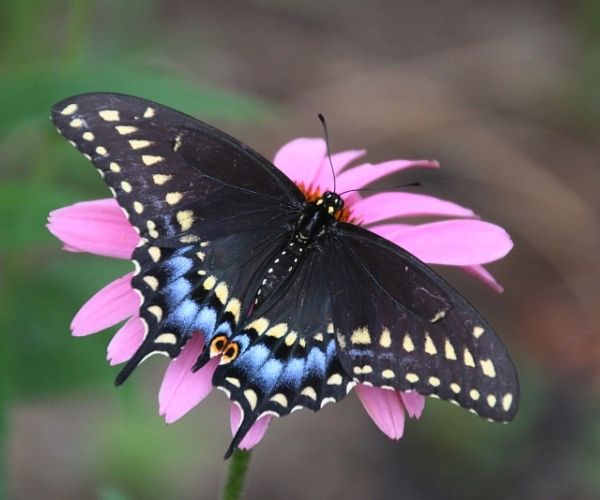
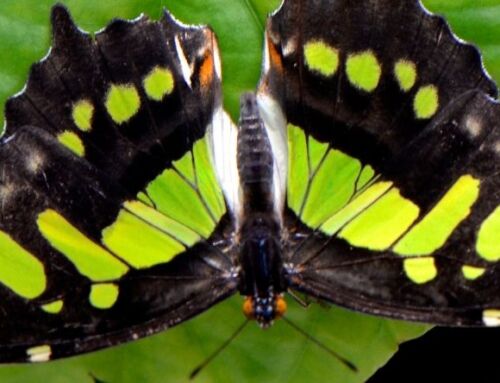
Black Swallowtail Butterfly
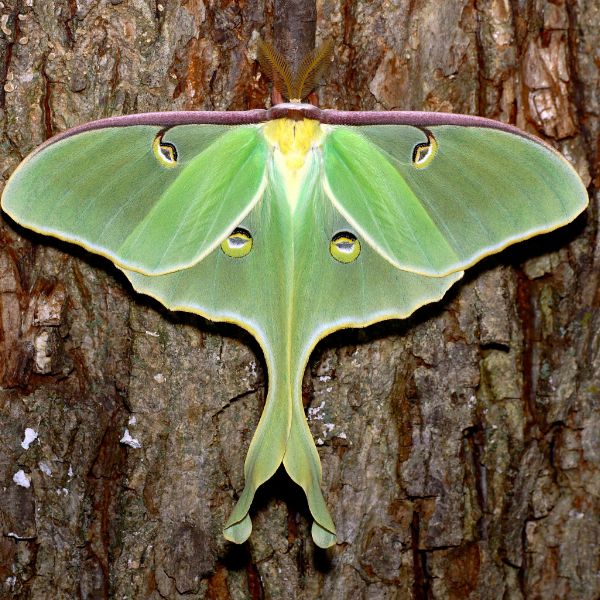
Luna Moth
Small Native Bees
Bees may be the first pollinator you think of, but you probably picture a honeybee or bumblebee. However, did you know that there are over 500 species of native bee species in North Carolina? Most of these bees do not live in hives and live solitary lives, often actively working on flowers. They also come in a wide variety of colors! Small bees can be dark brown, metallic green, blue or bronze. Here’s a quick ID guide for small bees:
- Metallic Sweat Bees are tiny and usually emerald green, blue-green or copper.
- Dark Sweat Bees are very small and slender and typically black, gray, brown or metallic.
- Mining Bees are small, fuzzy and dark-bodied with noticeable hair on their thorax and legs.
- Small Carpenter Bees have tiny, elongated bodies and are shiny with dark blue, blue-green or black bodies with sparse hair.
- Masked Bees are very small, slender and mostly black with yellow or white markings on their face. They stand out because they are mostly hairless and can easily be mistaken for a tiny wasp.
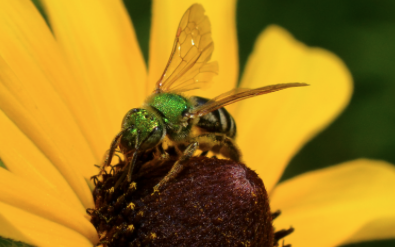
Metallic Sweat Bee
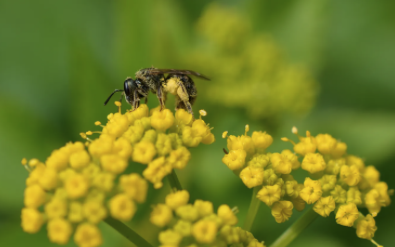
Dark Sweat Bee
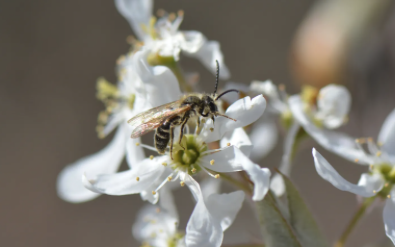
Mining Bee
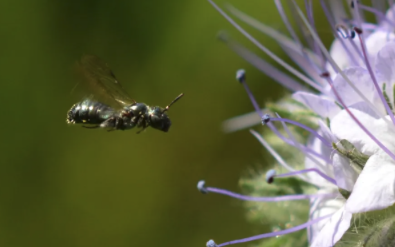
Small Carpenter Bee
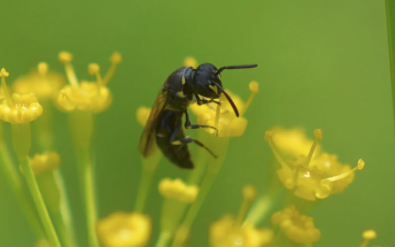
Masked Bee
Why are Small Native Bees Important?
According to USGS.gov, “About 20%-45% of native bees are pollen specialists, meaning that they use only pollen from one species (or genus) of plants. If that plant is removed, the bee goes away. If bees are removed, the plant doesn’t reproduce. Some of the native bees are specialists on the very plants that we use for food, including squashes, pumpkins, gourds, and the annual sunflower.”
So, native bees are crucial pollinators that help us grow crops we know and love every year!
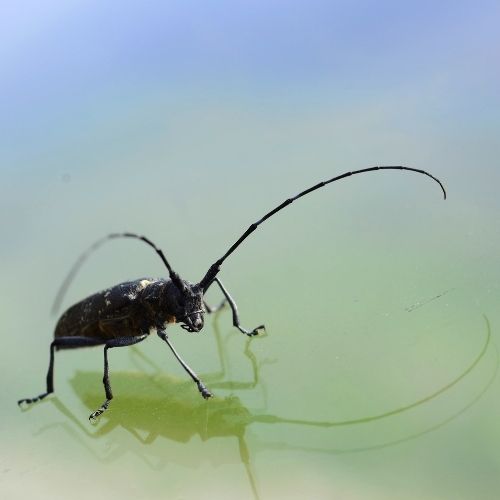
Long-Horn Beetle
Beetles
Here’s a fun fact – beetles were among the first insects to visit flowers! Fossil records show the presence of beetles during the Mesozoic era over 200 million years ago, and they remain important pollinators to this day. Since this era, they pollinate ancient plants such as magnolias, spicebush and pawpaws, all of which we are familiar with in the Carolinas. Beetles tend to pollinate bowl shaped flowers with a strong, fruity scent due to the fact that they rely on smell for feeding and laying eggs. They’re also unique in that their sheath wings allow them to burrow, bore and travel through rocky crevices, accessing different resources.
We may think of pollination as a dainty process due to fragile butterflies and buzzing bees but beetles take a more bullish approach. Due to their chewing mouthparts, most are not able to drink nectar. Instead, they feed on pollen, petals and plant tissues. They eat their way through the flower petals and crawl all over the plants because they can’t hover. They’ve even earned the nickname “mess and soil” pollinators due to the fact that they also use the flower as their personal restroom.
Beetle quick ID tips:
- Armored sheath wings (elytra)
- Visible mandibles
- Segmented or clubbed antennae
- Wings rest to create a straight line down the abdomen
- Lack the ability to hover
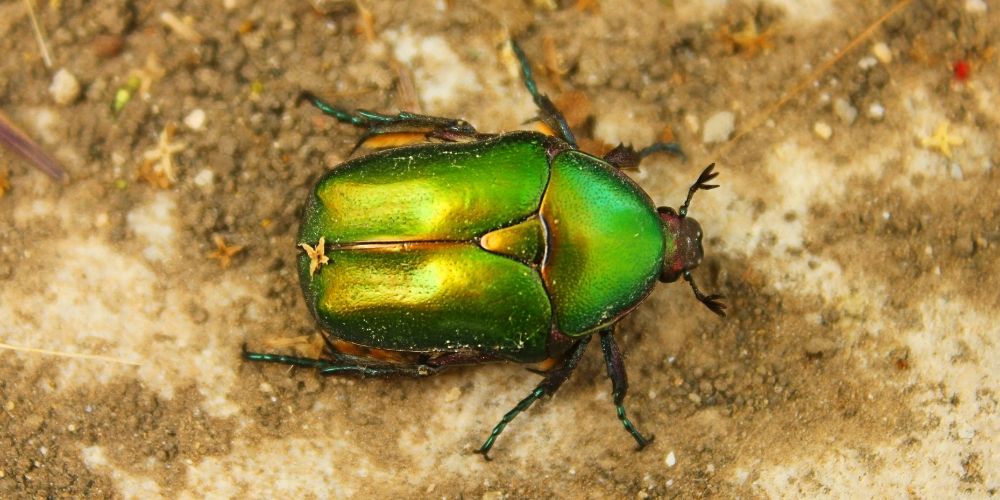
Scarab Beetle
Wasps + Flies
Yep, even mean wasps and pesky flies have a positive purpose when it comes to pollination! Both insects assist with pollination, though they are often not as efficient as their counterparts. Despite this, wasps are the primary pollinators for fig trees and specific types of orchids. They’re also predators, so they further benefit their ecosystem by working as natural pest controllers. Flies are essential pollinators in colder climate where bees cannot thrive and are priority pollinators for cocoa trees, several different kinds of fruit and some root vegetables like carrots and onions.
Spotting the difference:
- Wasps are typically 13-25 mm, while flies vastly range in size
- Wasps are shiny and hairless, while flies may or may not have hair
- Wasps have long legs and a skinny “waist”, while flies are shorter and stubbier
- Wasps have long antennae, while flies have short antennae
- Wasps have two pairs of wings, while flies only have one
- Most important ID tip: Wasps have small eyes and flies eyes take up most of their face
See why it can sometimes be challenging to tell the difference? Despite their physical differences there are over 160,000 species of flies worldwide, and to make matters worse, some harmless flies have evolved to look like wasps to protect themselves from predators!
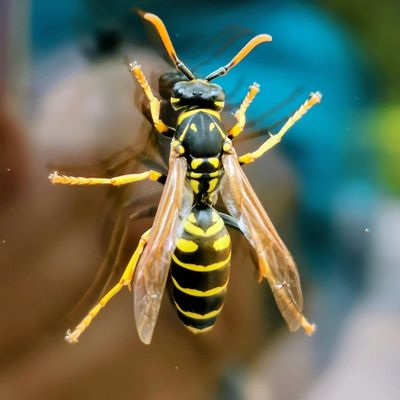
Wasp
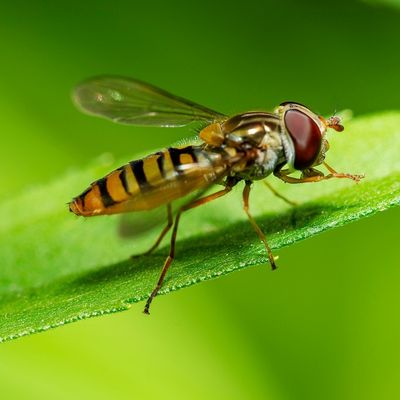
Hoverfly evolved to look like a wasp
Bats
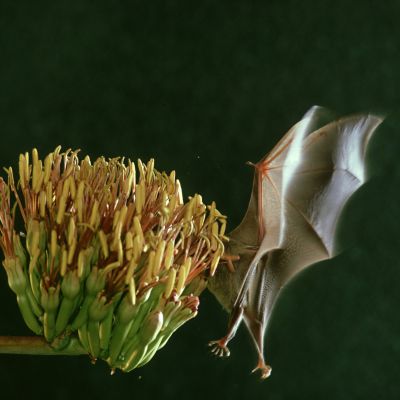
Finally, I wanted to highlight a mammal that also serves as an important nocturnal pollinator: bats! Bats visit flowers that only open at night to eat their nectar with their long tongues. As they do, their fur gets coated in pollen that they carry to the next plant. Here’s a fun fact: bats are essential pollinators for the agave plants that are used to make tequila and mezcal in Mexico and Southwest United States…cheers to bats!
They are also crucial pollinators various species of cacti and tropical fruits like mangoes, avocados, and bananas.
Clearly, pollinators come in all shapes, sizes and colors that extend far beyond the butterfly and honeybee….and at Stowe, we love and support them all. See what pollinators you can spot during your next visit!
Much of the information pulled for this blog post came from two great Lunch + Learn presentations by Janet Manuel, Ecological Stewardship Manager and Emma McGee, Horticulturist. You can watch these presentations here!
Other sources include: