
A behind-the-scenes look at this season's fall annuals, from first drawings to the final planting plan.
It starts with a pencil
Before a single pansy goes into the ground, every fall planting in The Gardens at Stowe begins the same way: with a sketch. Long before the trays arrive, the design lives on notebook paper and scratch sheets, in loose circles and quick scribbles that stand in for plants, pots and pathways.
These drawings are not tidy, and they are not meant to be. They are working documents. Plant names are scrawled along the edges, bed dimensions are jotted in the margins, and counts get circled, checked and crossed out as the plan settles. Each one answers a few practical questions at once: what goes where, how tall will it grow, which colors sit side-by-side, and how many plants will it take to fill the space.
As the sketches take shape, they get a reality check. We look over the availability lists from our two annual suppliers, Rountree and King's, to see which varieties and colors we can actually get, then adjust the plan to match. A favorite pansy color may be swapped, a snapdragon mix substituted, or a bed reworked around what is on offer.
Here is a look at three of this season's plans, cleaned up just enough to read.
Front Garden Pavilion
The garden beds you see as you approach the Garden Pavilion building was designed by Horticulturist Allyssa Boerngen. Allyssa’s sketch draws the Front Garden Pavilion bed as a long oval, with three round focal points set evenly along its length. Between them, sweeping bands of delphinium and snapdragons give the planting height and movement, while curved pockets of dianthus tuck in along the edges. A scattering of heuchera, dusty miller and blue fescue, each marked on the sketch with its own small symbol, repeats around the bed to tie the whole composition together.
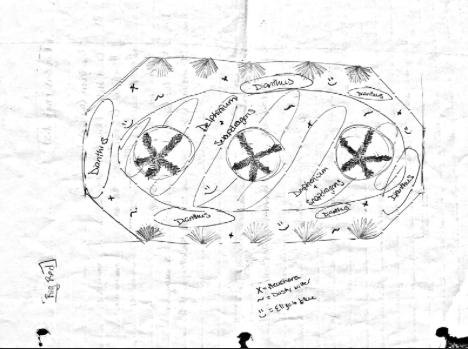
Front GP sketch by Allyssa, with a key for heuchera, dusty miller and blue fescue
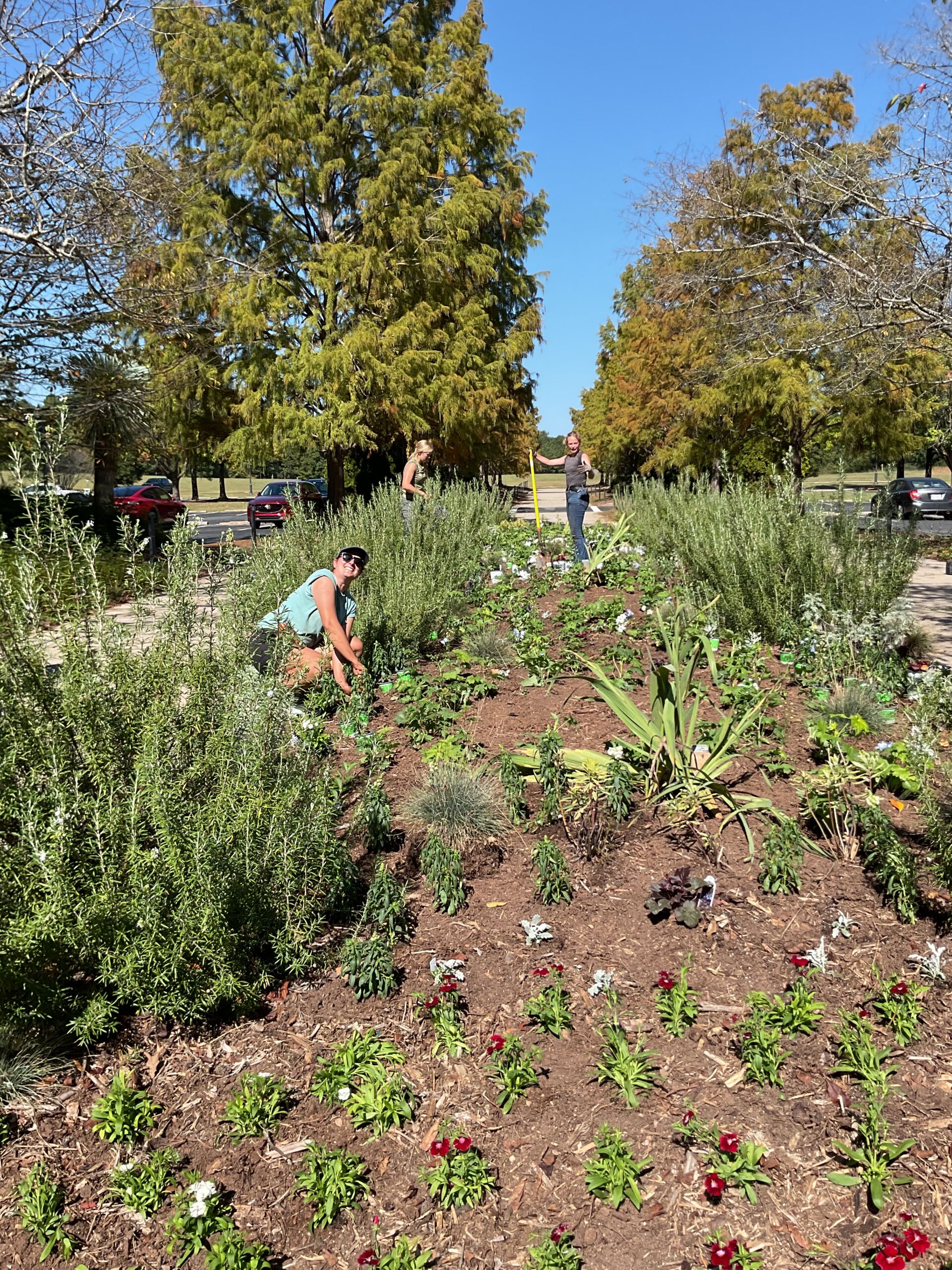
Garden Pavilion beds in progress
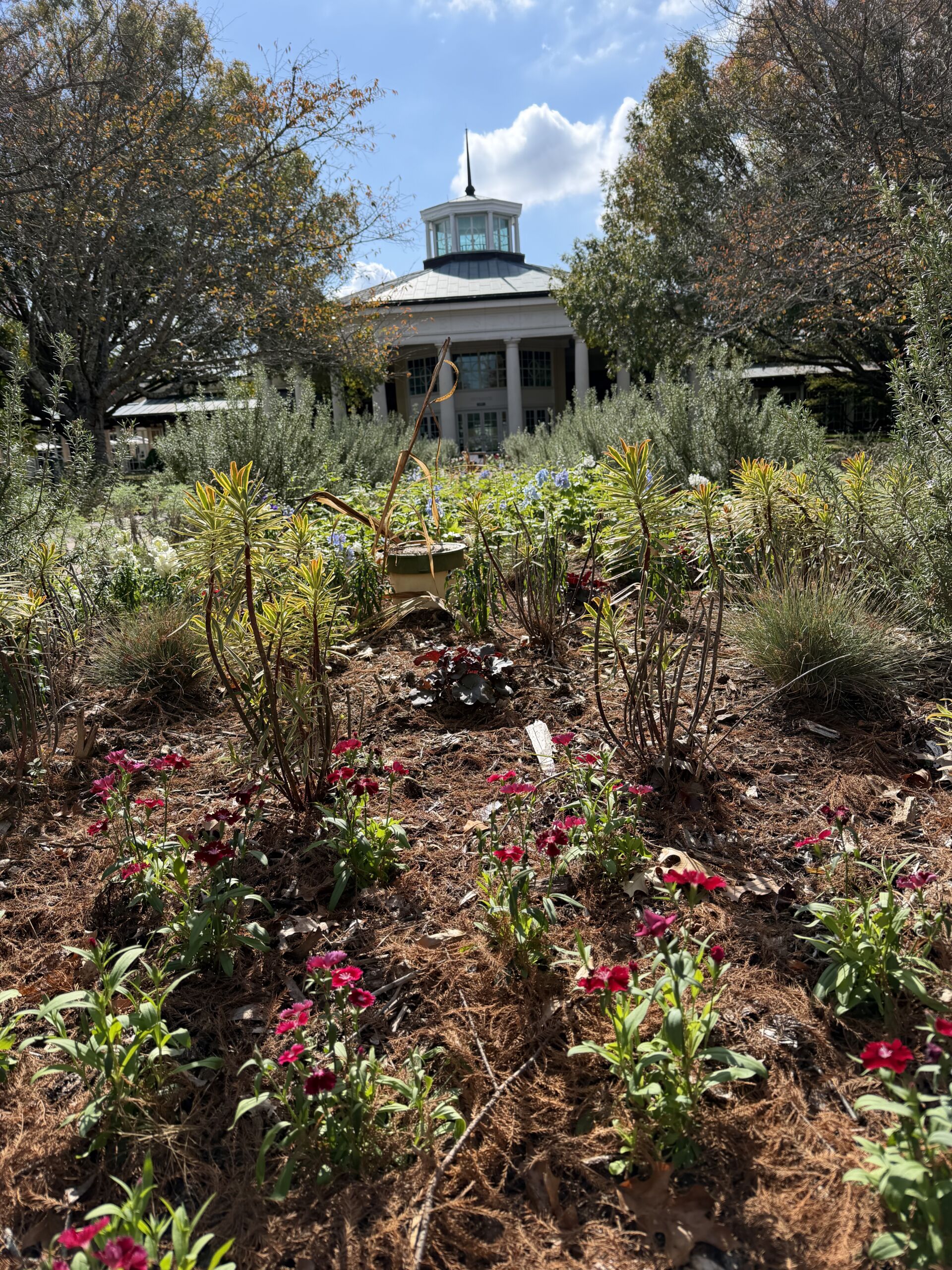
The finished bed!
Canal Garden: Polka Dots and Long Sightlines
The Canal Garden is our largest planting, and Michaela's drawing shows why it takes careful planning. The sketch breaks the space into long, narrow beds, each about 21 feet by 5.5 feet, and works out the planting bed by bed. One bed is a patchwork of pansies in rose, yellow, blue and purple. Another pairs ornamental greens, including kale, mustards and chard, with cardoon and a Cool Wave pansy in Berries and Cream. A third combines tall snapdragons with lemon heuchera.
Along the edge of the page, the notes turn to math. Counts are tallied, highlighted and checked off, because a planting this size has to add up before the order goes in.
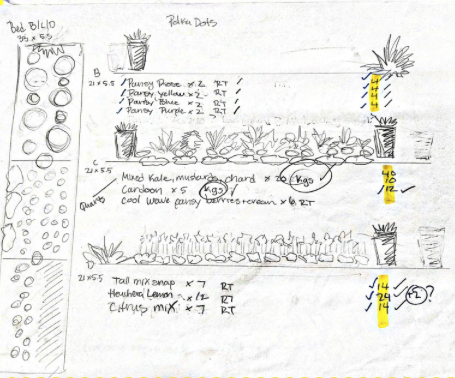
Canal Garden sketch by Michaela, with bed-by-bed plant lists and running counts
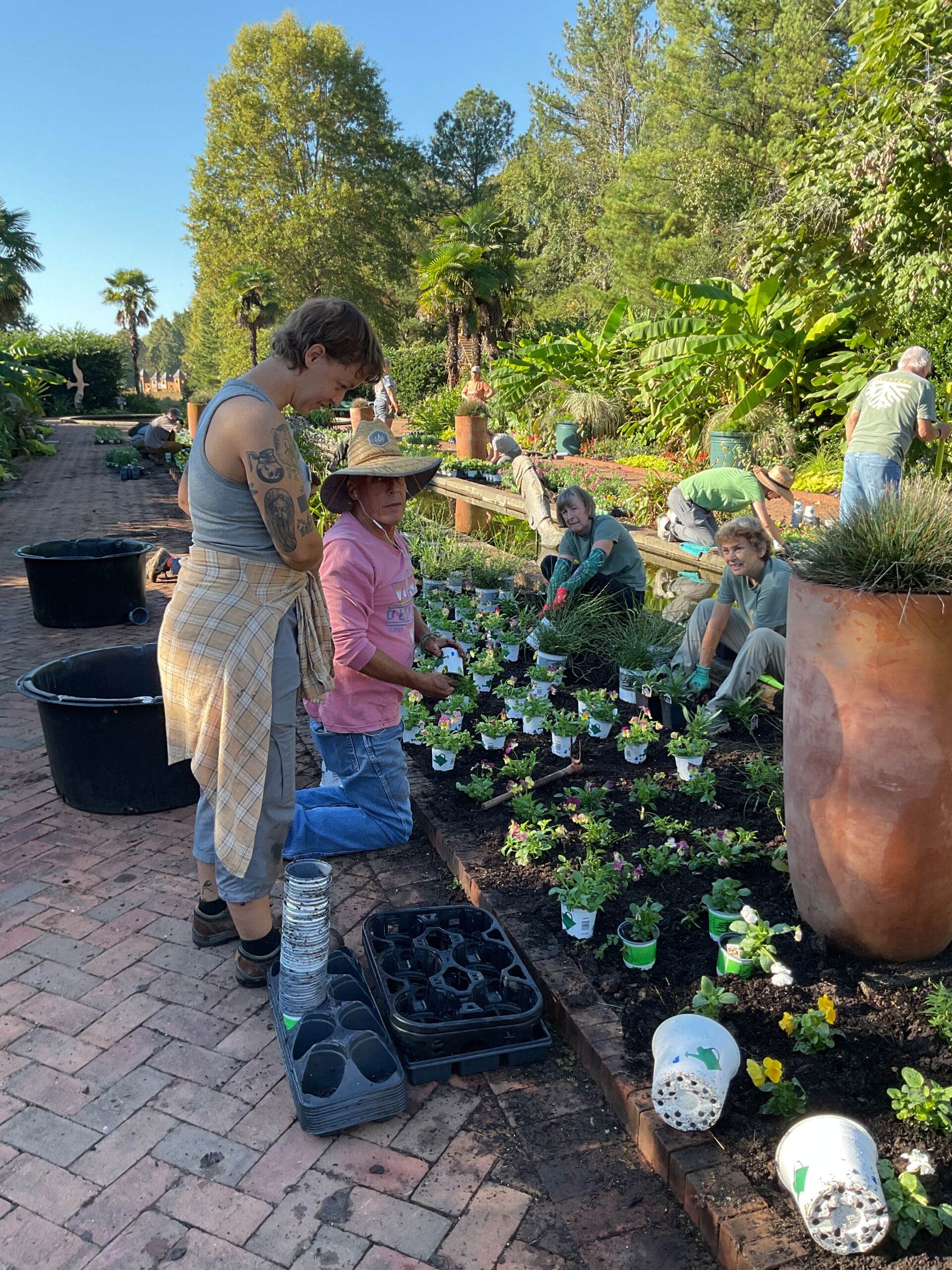
Canal Planting
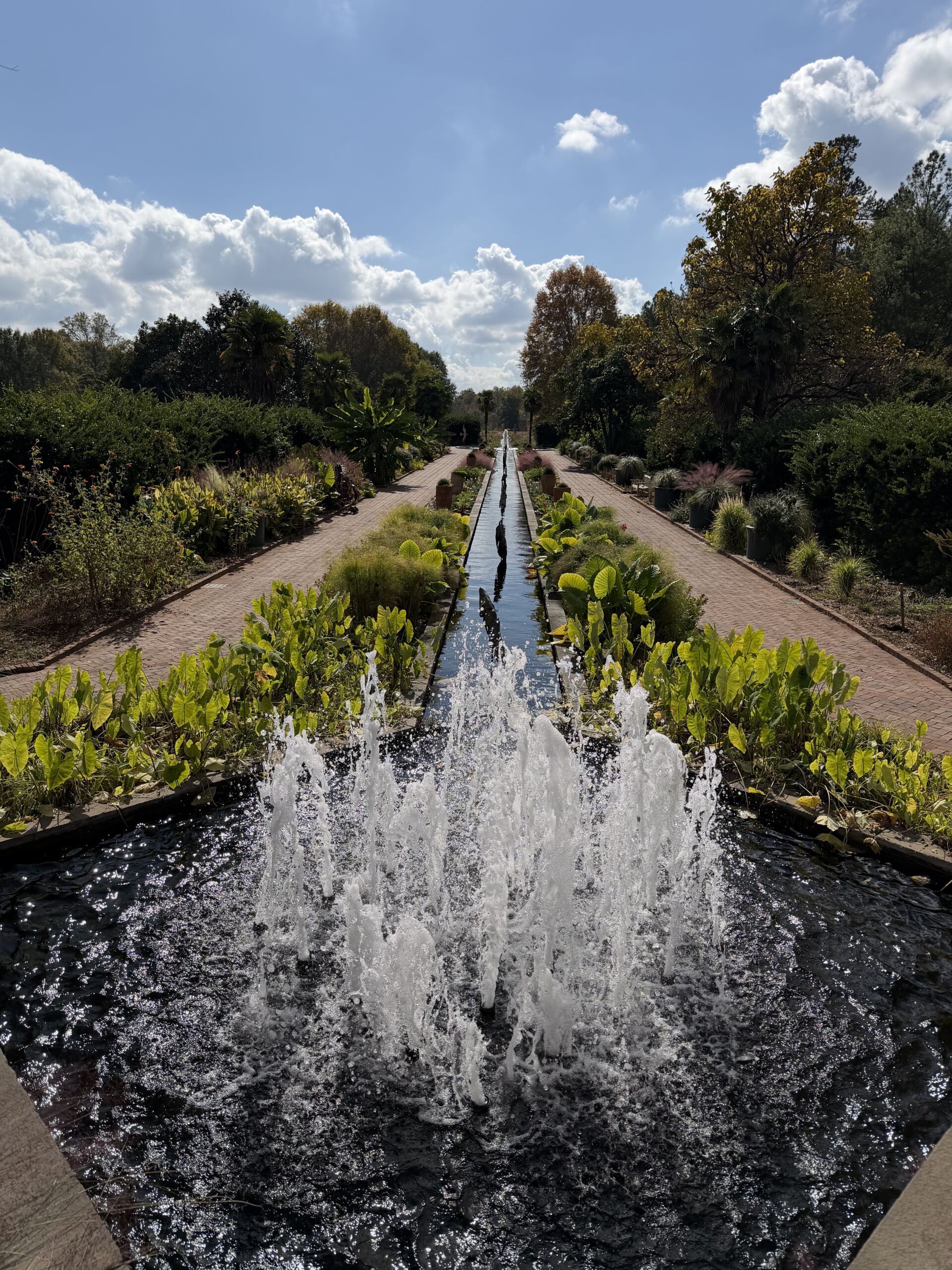
The finished bed!
Cottage Corner Containers
Containers get their own kind of thinking. In Lindsey's Cottage Corner sketch, each main pot is built in layers: tall, spiky rosemary and bold foliage on top, snapdragons and kale in the middle, and a skirt of pansies, violas, ajuga and trailing pansies spilling over the rim. The notes along the bottom of the page read like a color palette: icy blue violas, pink pansies, dark purple and raspberry Cool Wave pansies, and white Liberty snapdragons.
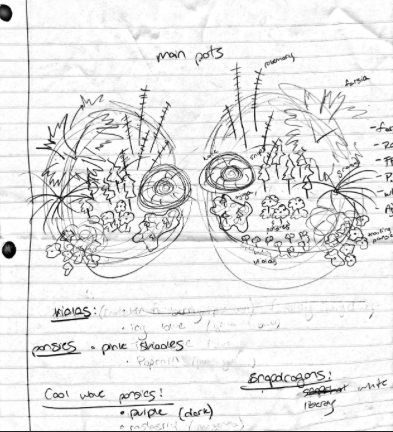
Cottage Corner Containers sketch by Lindsey, with its planting notes and color palette
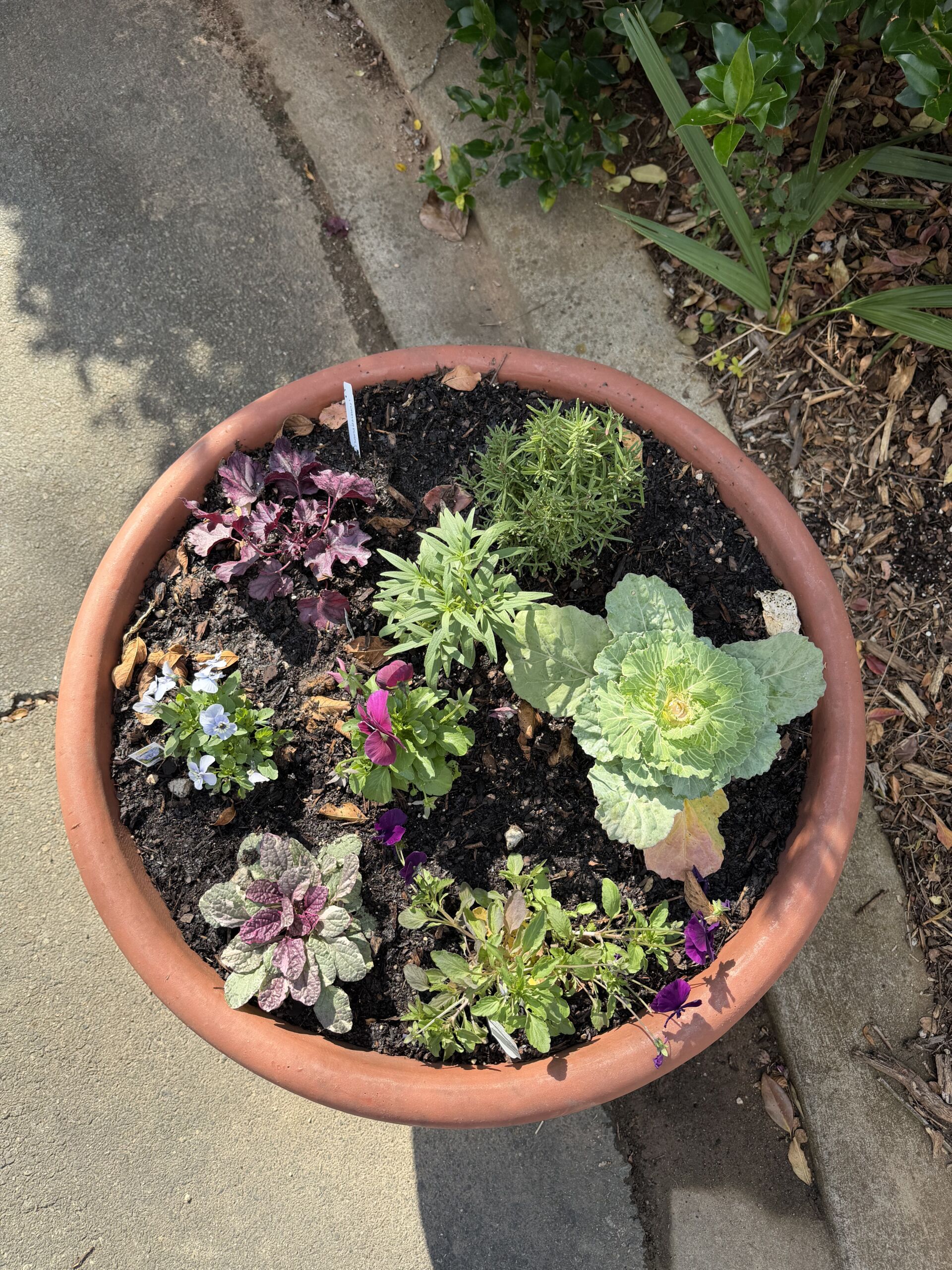
The finished container!
Grown Right Here in Our Greenhouse
Not every plant in the display beds arrives on a supplier's truck. Our very own Nursery Horticulturist, Bailey Stalboerger, grew several varieties of green and purple kale, rainbow chard and other annuals this fall, and those plants have been included in our annual display beds.
Growing in house opens up color and texture that are hard to find on a standard availability list, and it lets us watch the plants develop long before they go out into the gardens. Bailey plans to grow more in the future, so expect to see even more homegrown plants in the beds in seasons to come.
From Drawings to the Ground
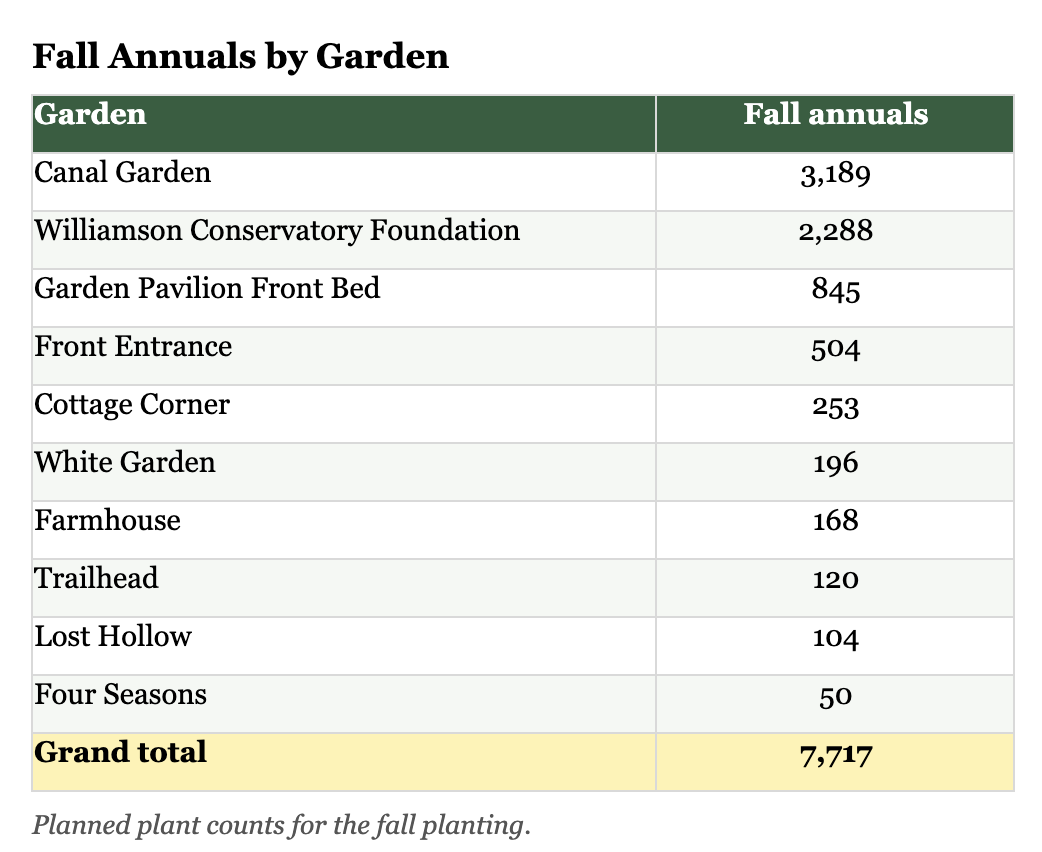
Once a design is settled, the sketches turn into numbers. Each bed's plant list is multiplied out, added up and rolled into a single plan for the season. This year, that plan comes to 7,717 fall annuals across ten gardens.
The Canal Garden and Williamson Conservatory Foundation plantings together account for more than 70 percent of the total, while smaller spaces such as Lost Hollow and Four Seasons get a lighter, more intimate touch.
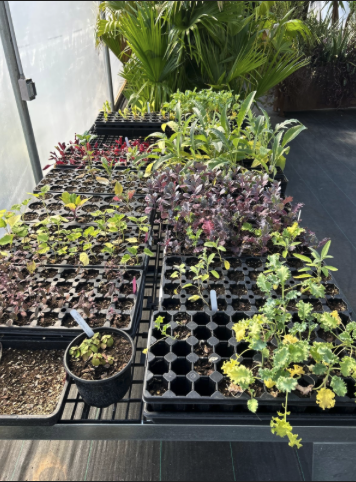
Seedlings of kale, chard and other annuals grown in the greenhouse by Bailey Stalboerger
Come see it grow
Fall is one of the best times of year to visit the gardens, when cool weather brings out the best in pansies, snapdragons, kale and more. Next time you walk through the Canal Garden or pass the Cottage Corner pots, take a moment to look for the pencil lines behind the plants. Every bed started as a sketch, and every sketch started with an idea about how to make the season feel special.
We hope to see you in The Gardens this fall.