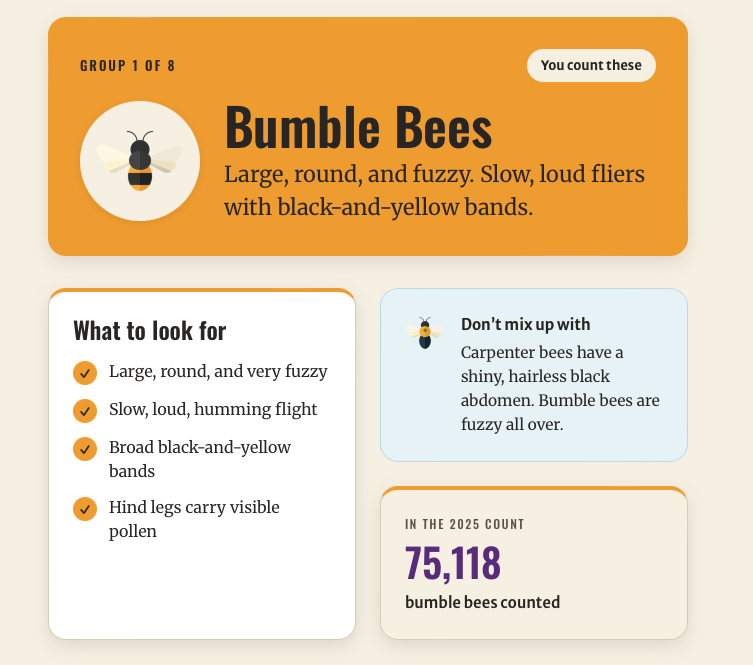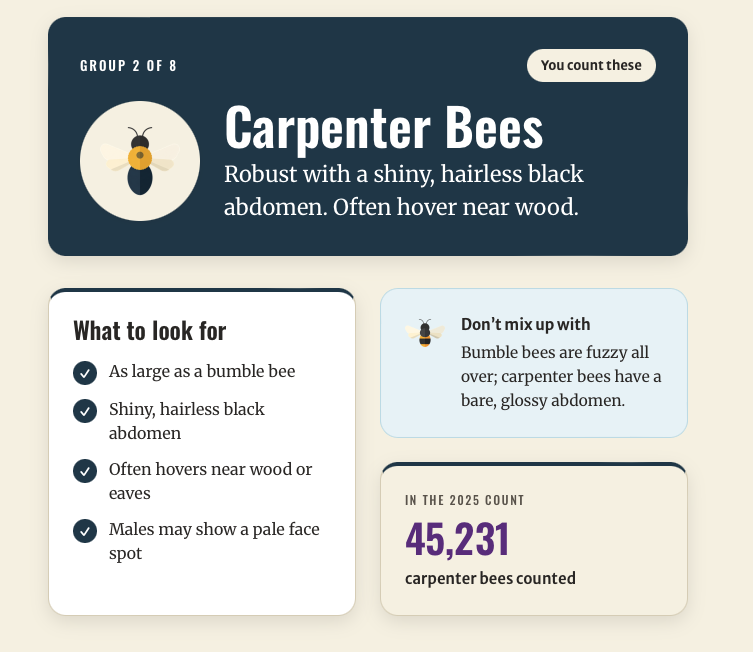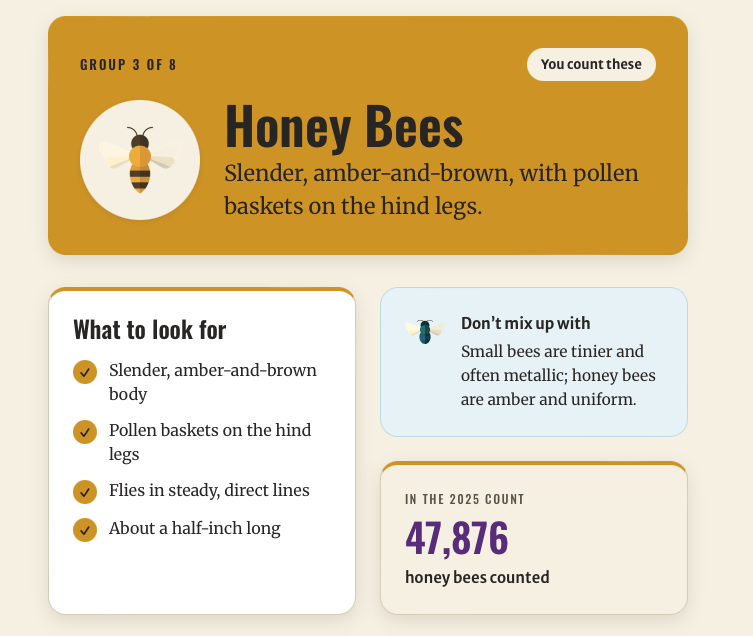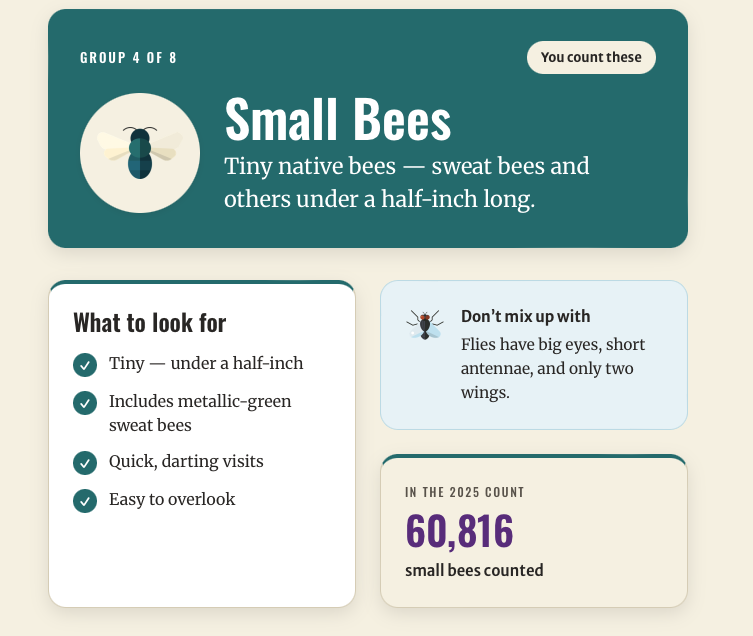
The Great Southeast Pollinator Census (GSEPC) is one of the largest citizen science pollinator monitoring efforts in the United States. It was created to accomplish something that professional scientists could never do alone: collect a “snapshot” of pollinator activity across an entire region during the same weekend period every year.
How It Started
The program began as a pilot project in 2017 led by Becky Griffin with the University of Georgia Extension. Fifty gardens participated in pilot counts during 2017 and 2018 to refine the protocol and ensure that volunteers with no entomology background could collect scientifically useful data. The first statewide Great Georgia Pollinator Census was held in 2019 with more than 4,000 participants. Since then, the program has expanded across the Southeast:
- 2019: Georgia
- 2022: South Carolina
- 2023: North Carolina
- 2024: Florida
- 2025: Alabama
- 2026: Mississippi joined, making the census a six-state effort.
Why collect the data?
The project has three primary goals:
- Increase pollinator habitat – Observing these pollinators in action can encourage people to plant pollinator-friendly landscapes as well as help communities understand which flowers support the greatest diversity of insects.
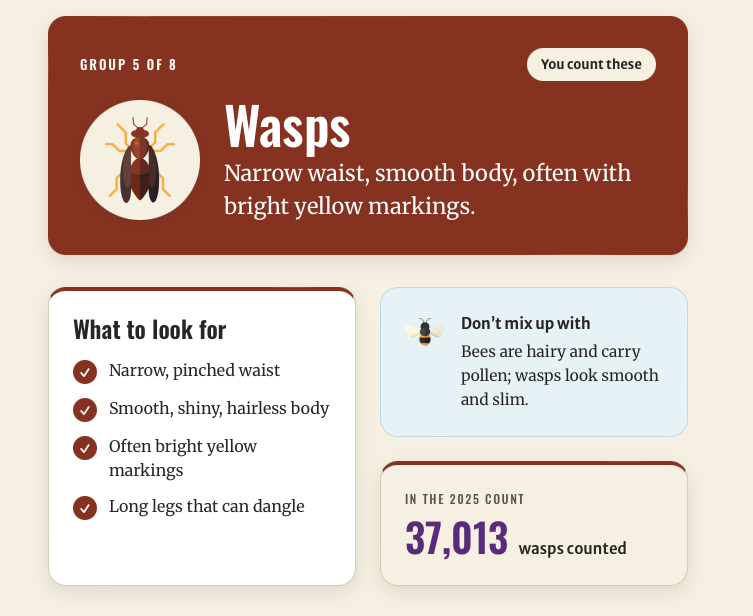
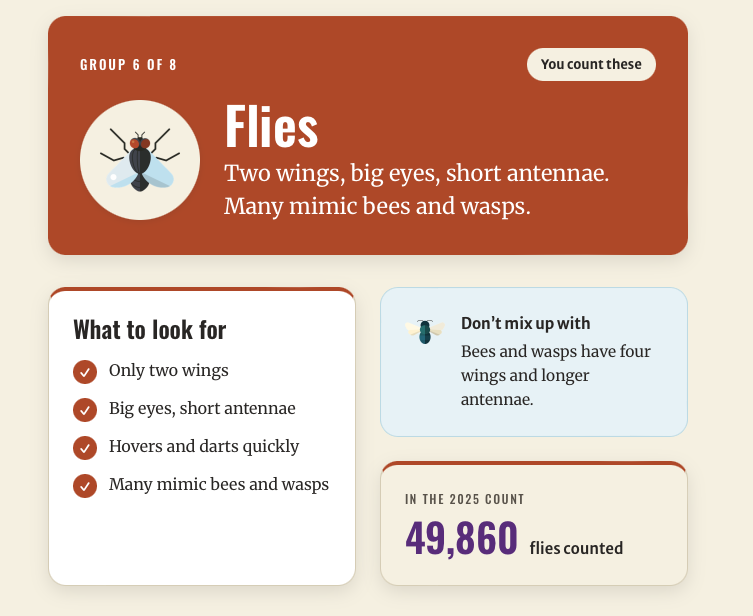
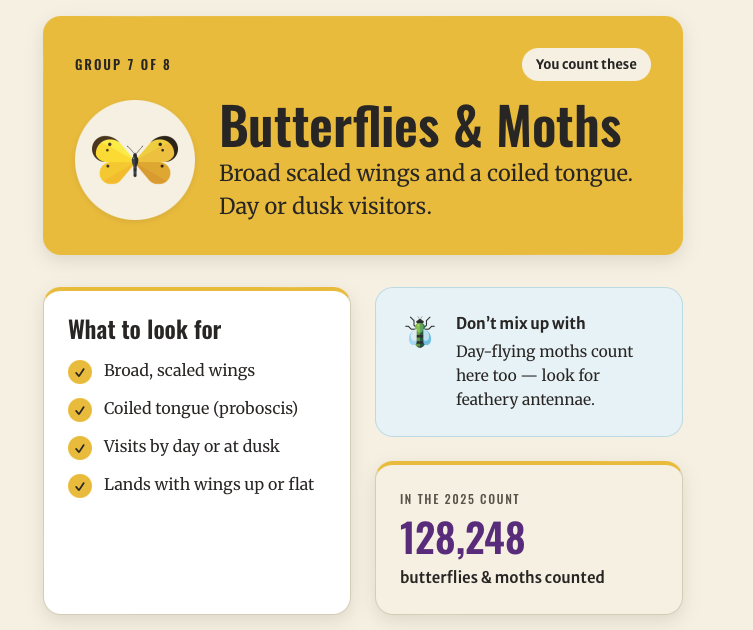
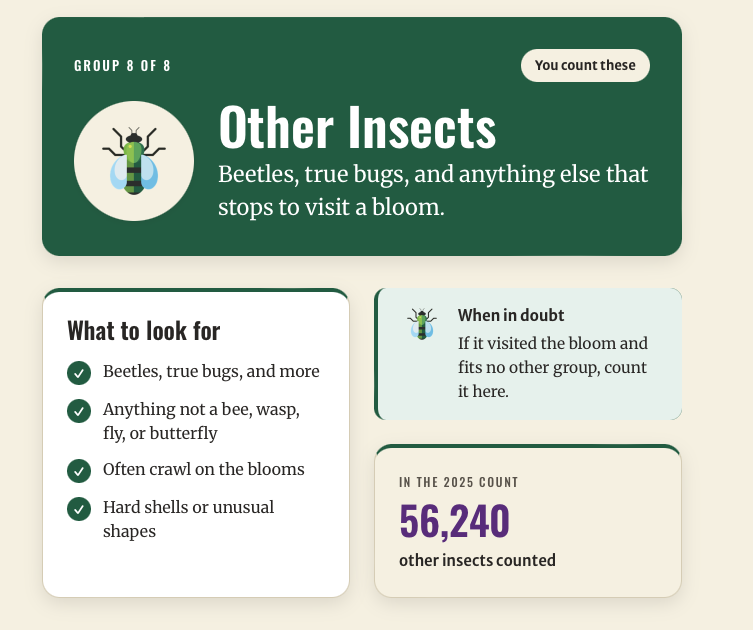
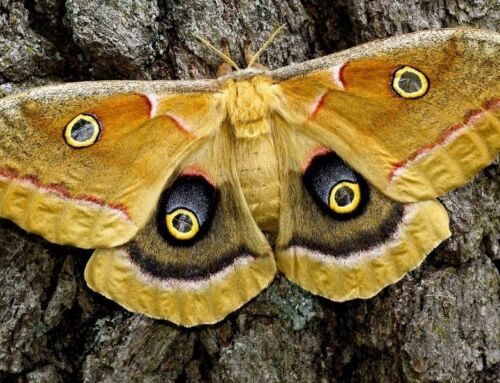
- Improve insect literacy – We’ve certainly learned a lot about identifying insects over the last few weeks! Preparing for the Census teaches participants to recognize the incredible diversity of pollinators—not just honey bees. The identification education builds appreciation for the lesser known pollinators on top of bees and butterflies, such as native wasps, moths, beetles and other beneficial insects
- Generate useful scientific data – The Census creates a long-term regional dataset that can detect changes in pollinator populations over time. It also xamines how weather, drought, land use and honey bee abundance influence native pollinators.
Why is it important?
Unlike many pollinator studies that focus on a single species or a few research sites, the GSEPC collects observations from tens of thousands of gardens, parks, schools, farms and natural areas over the same weekend each year.
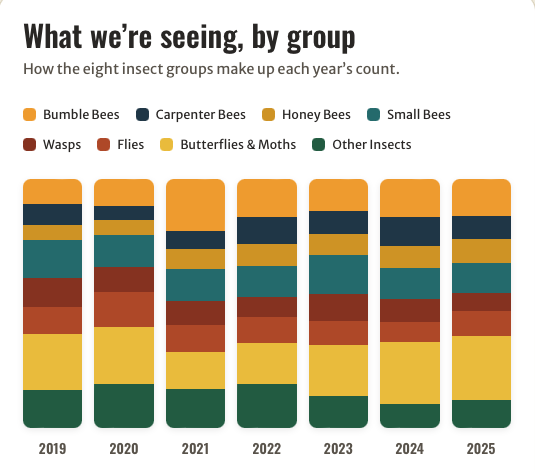
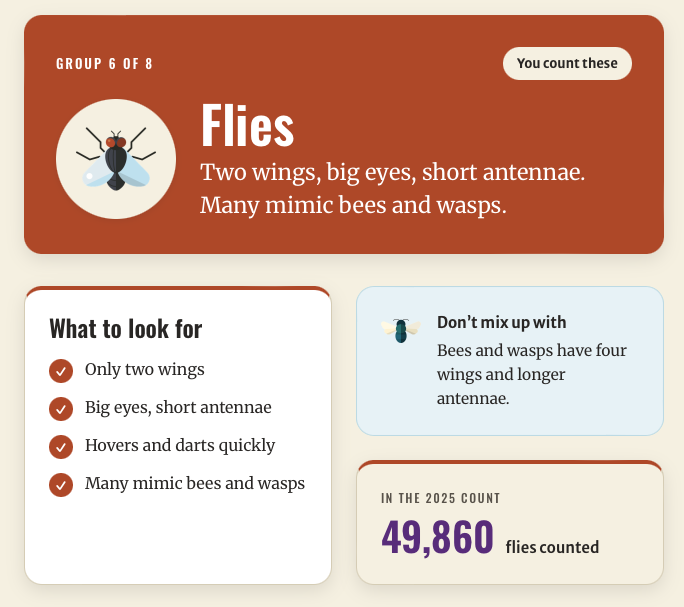
Because everyone counts using the same simple protocol—watching one flowering plant for 15 minutes and recording insects in eight identification groups—researchers can compare data across
- Different habitats
- Counties and states
- Years
- Weather conditions
- Urban versus rural landscapes
Over time, these repeated annual snapshots become a valuable indicator of pollinator trends.
How is the data being used?
The census data have applications far beyond the annual event itself.
- Researchers use it to study pollinator diversity, support pollination economics research and investigate long-term population trends.
- Educators use it to teach biology, ecology, math, and data analysis and engage students in authentic citizen science.
- Communities use it to identify where additional pollinator habitat is needed, guide pollinator-friendly landscaping and inform parks and green-space planning.
- Home gardeners use the results to determine which plants attract the widest variety of pollinators and improve their pollinator gardens for native insects.
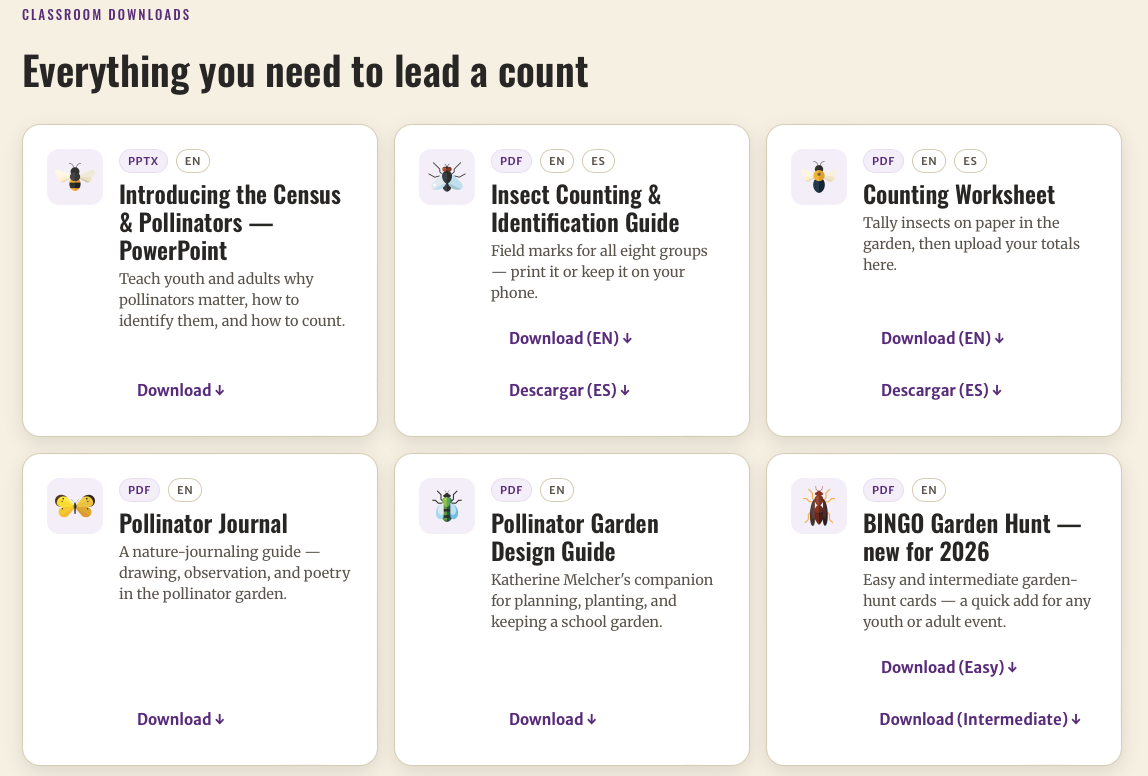
Click to view resources for educators
What have they learned?
Although the project is still relatively young, several important findings have emerged:
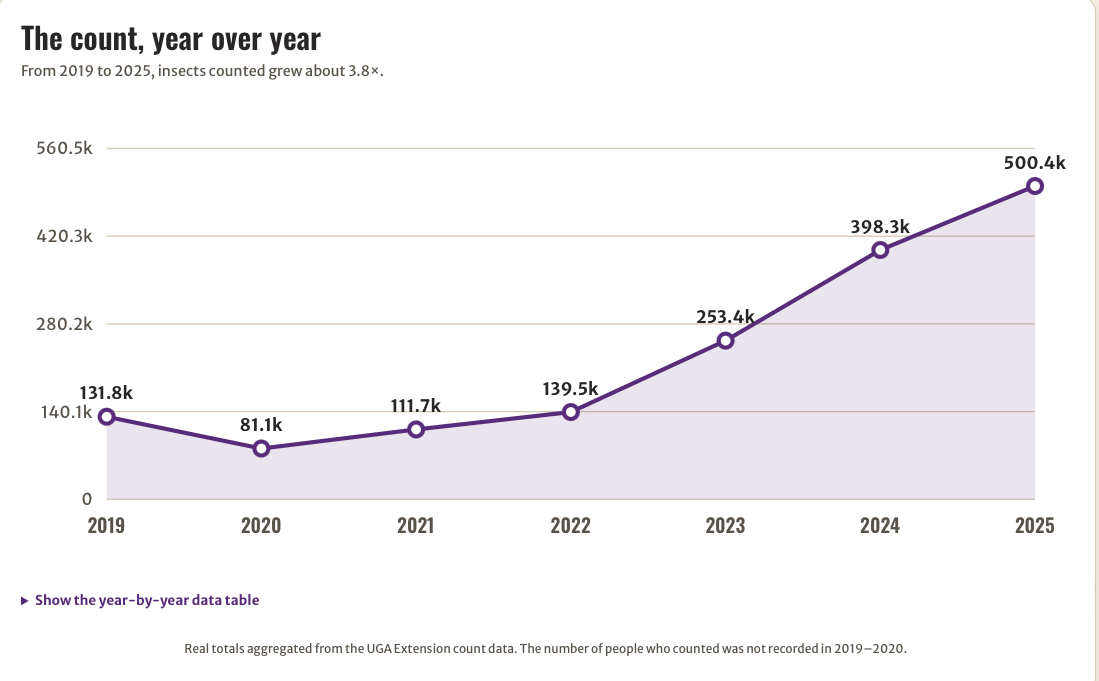
- Participation has grown dramatically—from just 50 pilot gardens to over 27,000 submitted counts in 2025.
- The census has inspired conservation action beyond data collection. In 2025 alone, participants reported creating 1,132 new pollinator gardens, and 594 educators incorporated the census into STEM instruction.
- The growing multi-year dataset is beginning to reveal how pollinator activity changes with weather and geography, laying the foundation for long-term trend analysis as additional years of standardized data accumulate.
2025 by the numbers
- 27,048 census counts submitted
- 500,402 insects counted
- Participants from six southeastern states
- 1,132 new pollinator gardens created
- 594 educators used the census in classrooms
Why it matters for Daniel Stowe Conservancy
The Great Southeast Pollinator Census aligns closely with Daniel Stowe Conservancy’s conservation mission because it combines community engagement with meaningful ecological monitoring. By participating, volunteers contribute to a regional scientific dataset while helping document the diversity of pollinators visiting Stowe’s native plant collections and restored habitats. Repeating the census annually also allows Stowe to track changes in pollinator communities over time, evaluate the effectiveness of habitat restoration efforts and demonstrate the ecological value of native plantings through measurable data.
We hope you’ll join us for the 2026 Great Southeast Pollinator Census from Friday, August 21-Monday, August 24 (Sunday and Monday were recently added as official count days!). Here’s the rundown for how you can participate:
Brush Up on Your Insect Identification
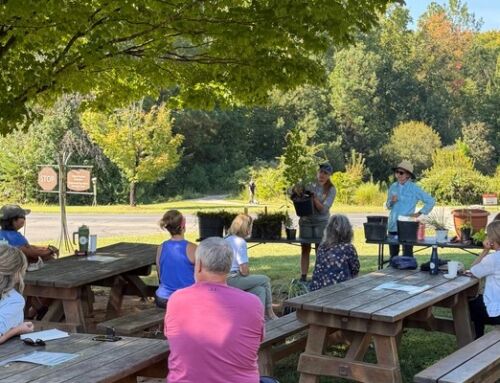
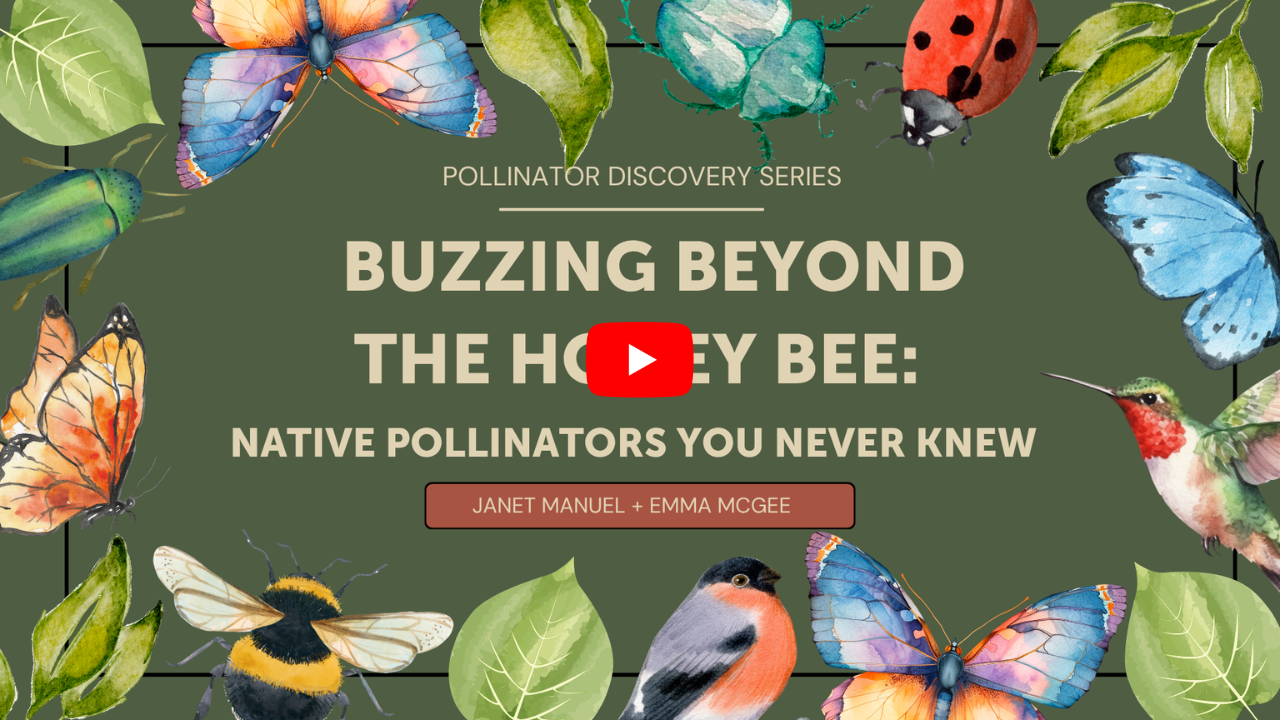
Leading up to the Census, I hosted two Lunch + Learn sessions with Emma, a Stowe Horticulturist. We designed the series to help participants discover, identify and appreciate the incredible diversity of pollinators found throughout our region. The sessions may have already past, but you can still watch them on YouTube!
On Friday + Saturday
- Choose a time slot for a free Info Session the days of the Census via the links below. On August 21 + 22 during the Census, Stowe staff will provide a brief orientation, survey materials and guidance before participants spread throughout the gardens to complete their official 15-minute pollinator count. Whether you attended a Lunch + Learn or are joining us for the first time, the session will prepare you to confidently participate in the Census. These Info Sessions are optional, but encouraged. If you opt to not attend an Info Session, you can still participate in the Census.
- Visit The Gardens at Stowe on Friday, August 21 and/or Saturday, August 22.
- Check in at the front desk at least five minutes prior to your Info Session time slot and they will direct you to our GSPC station in The Gardens and our staff will walk you through a brief orientation.
- Select a pollinator plant in The Gardens (our staff will provide recommendations) for counting. You will stay by that plant for 15 minutes and count and identify the insects that land on the plant.
- After your 15 minutes is up, submit your sheet to Stowe staff at the GSPC station and we will submit your count to the project-wide database!
- Check gsepc.org in the weeks and months following the Census to monitor census data.
Since the Census was extended to Sunday and Monday, you can still participate on those days; we will only host Info Sessions on Friday and Saturday. We will still have data sheets available at the front desk and Butterfly Bungalow for those who wish to participate on Sunday! The Gardens at Stowe are closed on Monday, but there are plenty of pollinator gardens outside The Trailhead Store and The Farmhouse Garden Center in The Village if you’d like to participate on Monday. Please note that you do not need a Stowe sheet to participate – the sheet just serves as a resource.
Whether you participate all four days, one day, at home or at Stowe, know that your efforts are making a difference for pollinator research, education and conservation movements. THANK YOU – and happy counting!
Some Quick Identification Tips from gsepc.org