This blog post is published in partnership with our Spring Planting Sponsor, Carolina Asthma and Allergy Center.

Nature Is Better When You Can Breathe Easy

Asthma and allergy symptoms can stand in the way of fully enjoying nature. Our partners at Carolina Asthma & Allergy Center can help you manage your symptoms and prevent flare-ups so you can fully enjoy the outdoors you love. We are thrilled to have them as our Spring Planting Sponsor to support your journey toward healthier breathing and better allergy control…because there’s nothing worse than a beautiful spring day that you can’t even enjoy due to allergies.
About Carolina Asthma and Allergy Center

Carolina Asthma & Allergy Center is the area’s largest asthma and allergy practice, made up entirely of board-certified physicians. Their allergy specialists treat patients of all ages for a range of conditions. They are committed to providing a high standard of expertise in allergy treatment and asthma care.

They offer a wide range of comprehensive services to address various medical conditions related to allergies, asthma and more. Their dedicated team of specialists is committed to providing personalized care and effective treatment options to help you achieve optimal health and well-being. Their team treats:

  • All types of allergies, from food to pets to pollen and anything in between
  • Asthma and lung conditions
  • Sinus issues, allergic rhinitis and related Ear, Nose and Throat conditions
  • Gastrointestinal symptoms and food intolerances
  • Immune deficiency disorders
  • Nutrition and dietary needs
  • Skin conditions

You can schedule your appointment with Carolina Asthma & Allergy online. 

Enjoy Nature, Not Symptoms

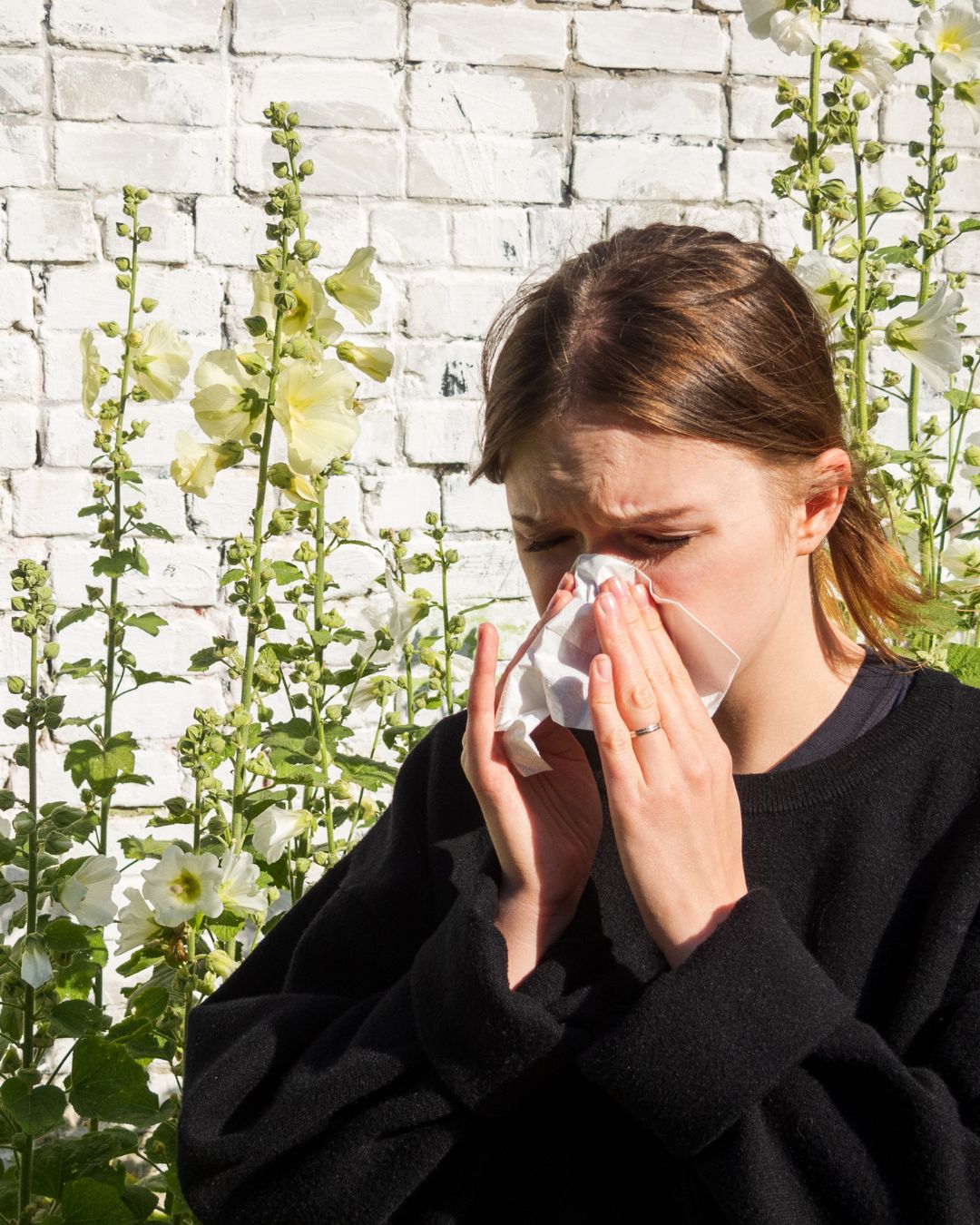
Spending time outdoors can be inspiring and restorative, but for many, pollen, grass, and  seasonal allergens can trigger:

  • Sneezing, congestion, or itchy eyes
  • Shortness of breath or wheezing
  • Asthma flare-ups during walks or events
  • Fatigue from uncontrolled allergy symptoms

You don’t have to choose between nature and your health. With the right care, you can enjoy both.

They also have a great resource on their website where you can check the daily pollen count and what is causing it, from different types of weeds and trees to mold. Pollen and mold counts measure how much of an allergen is currently in the air. Typically these counts are performed over the course of 24 hours and measure the number of pollen grains per cubic meter.
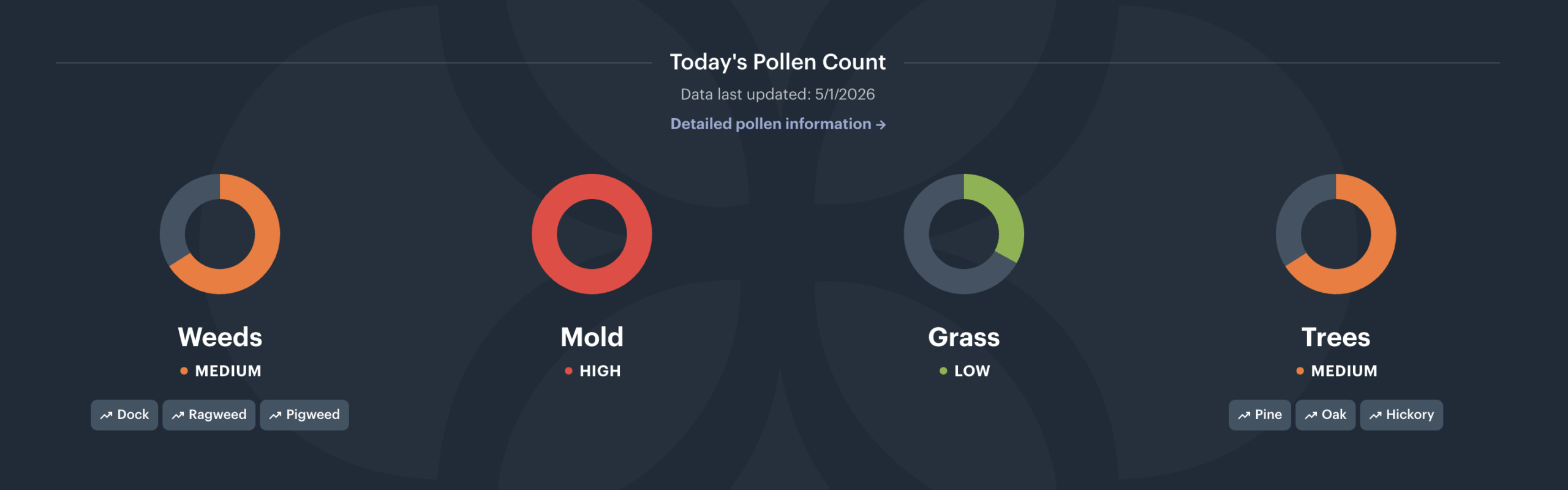
Example of the pollen count from May 1, 2026

To measure pollen and mold counts, researchers make use of air sampling equipment that collects spores throughout 24 hours. After collection, they examine the samples under a microscope to identify the number and type of spores present. From this data, they then calculate grains per cubic meter and give an overall pollen and mold count for that day. Typically, these counts are then translated as low, moderate or high allergy levels so that the public can easily understand them.

When the icon turns orange or red, it means levels are high and you should take precautions to avoid exposure. If you have a pollen allergy, you’ll want to keep in mind that pollen counts differ across plants. For example, if you have a weed or tree allergy, a count over 50 is considered high. For grasses, a pollen count over 20 is considered high.

Every allergen has a different high season. Charlotte pollen allergy seasons can last from May to July and from August to November. Here’s a good overview of when you can expect the most intense allergy symptoms:

  • Tree: March-June, but most intense in April.
  • Grass: April-September, but most intense in May-August.
  • Weed: August-December, but most intense in September.
  • Mold: July-October, but can be year-round if exposed to spores indoors.

Learn more about pollen and mold levels and check today’s count here! 

Dr. Bailee Gilchrist from Carolina Asthma & Allergy recently provided several tips for minimizing allergy symptoms this spring:

  1. Close Your Windows: Keep your windows closed, especially in the morning. That is when the plants are releasing fresh pollen and the pollen count will be the highest.
  2. Change Your Air Filters: Always making sure that your filters are clean. Changing those out every few months is helpful for both outdoor allergens that readily move inside, and the indoor allergens.
  3. Give Your Pets an Extra Bath: Even if you’re not allergic to pets, we’re in the height of the pollen season and they’re going to track that pollen inside as well.
  4. Shower After Being Outside: Make sure you’re showering once you get back home from being outside for an extended period of time.”
  5. Stay On Top of Allergy Medications: There are a lot of over-the-counter options, but your primary care physician or allergy specialist can help guide you and get on the right combination of medicines and timing as well.

John Searby, our CEO, also recently hosted Dr. Roopen Patel from Carolina Asthma & Allergy on Stowe’s podcast, Queen City Green. Dr. Patel provided a lot of insightful information for managing spring allergies, including some tips for immediate action items you can take after visiting The Gardens at Stowe if you are prone to allergy symptoms.

“If you’re feeling these spring allergy symptoms right after you get home from the visit to The Gardens, you can immediately take a shower and change your clothes. Other things you can do – and this is the beauty of some of these allergy medications; they’re over-the-counter – is take an antihistimine. If you know the pollen is going to be bad that day, you can even take on before you go to The Gardens to enjoy the day.”

Get even more tips and tricks from Dr. Patel by listening to the full episode. 

We’re also excited to host Dr. Michael Lapuente on May 14 for a Pollen Walk through The Gardens with our Garden Curator Karen Kottkamp.


This will be an interactive, easy-to-follow walk is designed for the public—helping you better understand what you’re exposed to every day and how it may be affecting you. Learn how to recognize common allergens, anticipate seasonal changes and take simple steps to feel your best outdoors.
It’s a unique opportunity to connect what you experience with what’s growing all around you—right where allergens begin. The Pollen Walk is free, but Garden Admission or Membership are required to attend.

Learn more about the Pollen Walk here! 

Specialized Care for Asthma & Allergies

Stay sneeze free when you visit The Gardens at Stowe! Carolina Asthma & Allergy Center specializes exclusively in diagnosing and treating  asthma, seasonal allergies, environmental allergies, and related conditions.

Their board-certified specialists offer:

  • Comprehensive allergy testing
  • Personalized treatment plans
  • Advanced therapies, including immunotherapy (allergy shots or drops)
  • Asthma management for adults and children

We’re so proud of this partnership and thankful that Carolina Asthma & Allergy can help our visitors stop and smell the flowers this spring (no tissues required).