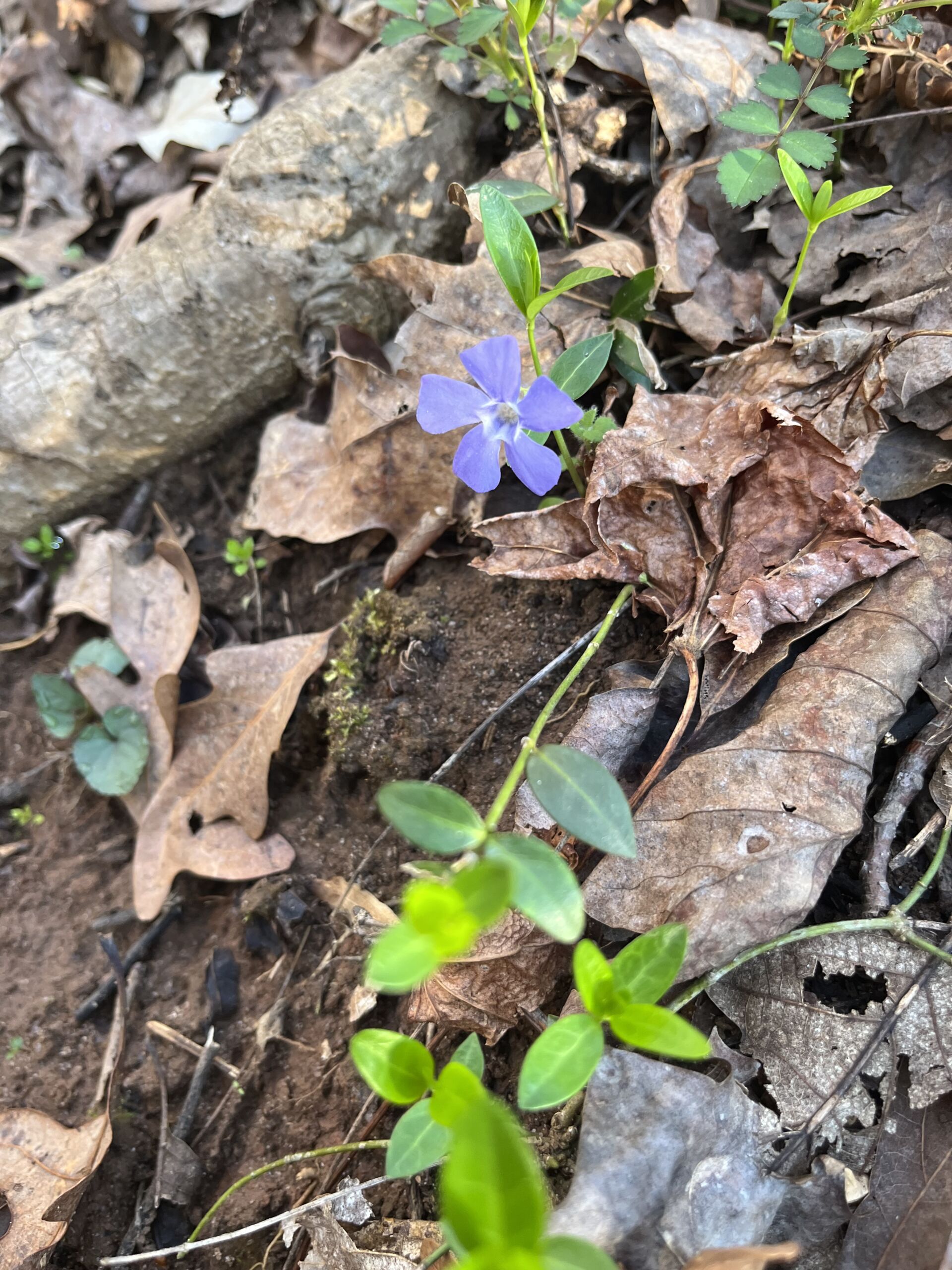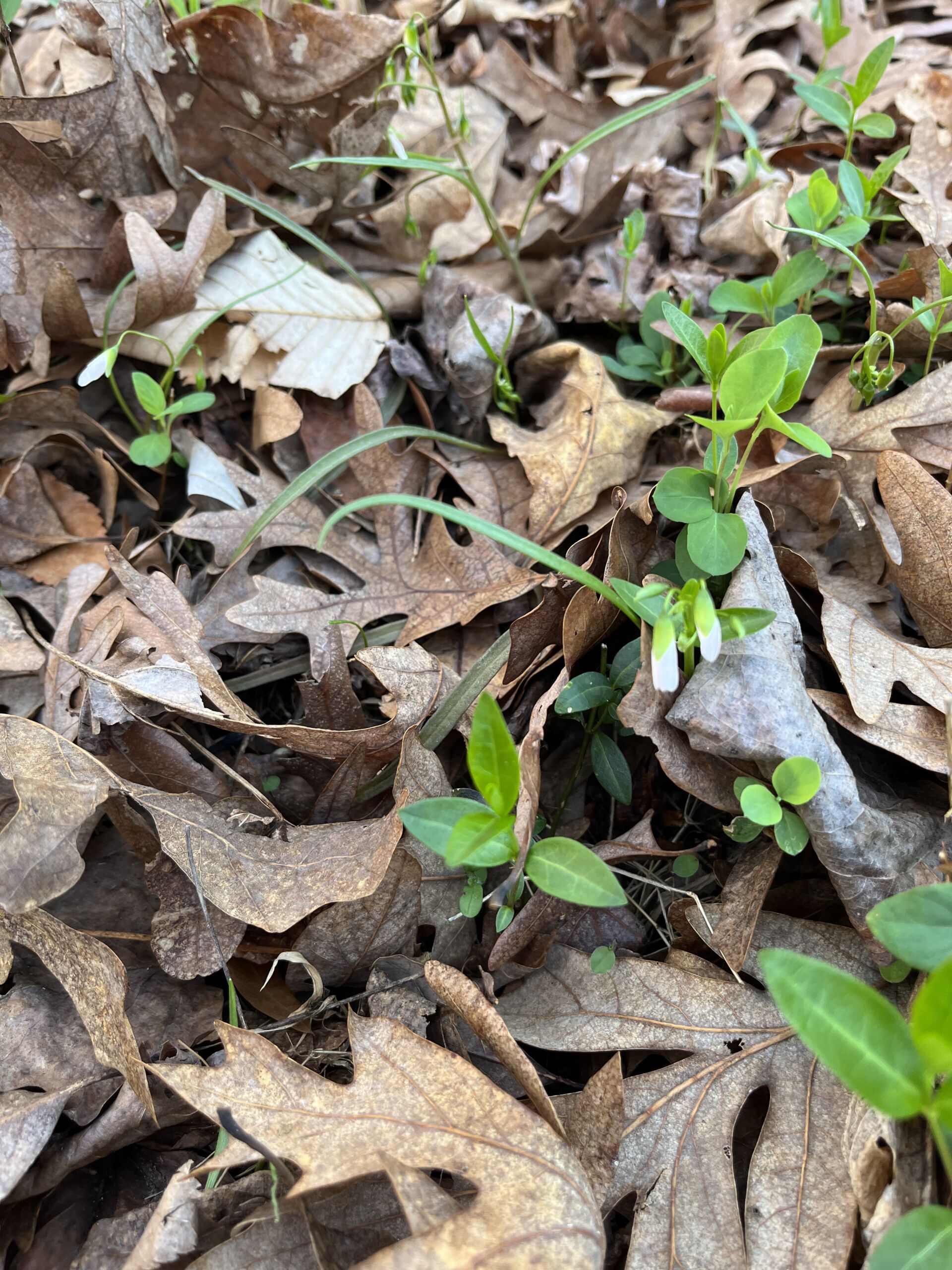

As winter loosens its grip, something extraordinary begins to unfold along the Persimmon Trail at Daniel Stowe Conservancy. For a few short weeks in March and early April, the forest floor comes alive with spring ephemerals—woodland wildflowers that emerge, bloom, set seed and slip back into dormancy before the tree canopy fully leafs out.
Our Phenology Trail offers a front-row seat to this fleeting display. These plants don't just signal spring, they tell a story about timing, pollinators, soil health and the interconnected web of life in our woodland ecosystems.
What Is Phenology?
Phenology is the study of seasonal changes in the natural world. It is not only a beautiful documentation of changing seasons, but a leading indicator of climate change, a helpful tool for managing invasive species, predictions of health-related shifts such as allergies and optimization of planting, fertilizing and harvesting cycles for crops. We took a deep dive into phenology and the hard work of our Phenology Volunteers in this blog post.
March 16-20 marks Phenology Week hosted by the USA National Phenology Network! This is a virtual celebration of the seasonal cycles of plants and animals. Check out their website for webinars, awards, daily challenges, observer stories and more.
What Are Spring Ephemerals?
Spring ephemerals are specially adapted to take advantage of the brief window of sunlight that reaches the forest floor before the trees leaf out. They grow quickly, bloom brilliantly, and then retreat underground by early summer.
Because their season is short, catching them in bloom feels like discovering a secret.
What You'll See in March
Here are just a few of the stars you can expect to find along the Phenology Trail this month:
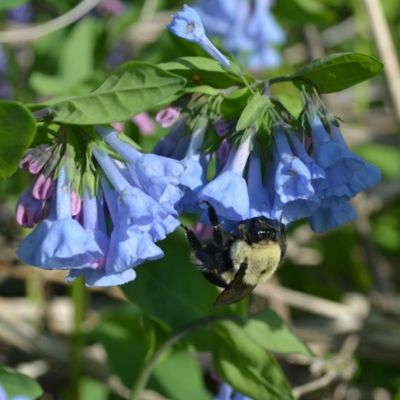
Virginia Bluebells (Mertensia virginica)
Among the most beloved of our spring wildflowers, Virginia Bluebells bloom from late March through mid-April along the Persimmon Trail. Pink buds open into nodding, bell-shaped blue flowers that seem to glow against the woodland backdrop.
They are a vital early nectar source for bumblebees, butterflies, moths and even hummingbirds.
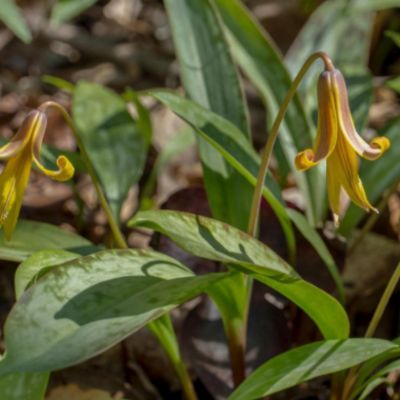
Yellow Trout Lily (Erythronium americanum)
A true spring ephemeral, Yellow Trout Lily emerges, flowers, and sets seed before disappearing for the rest of the year. Its mottled leaves resemble the pattern of a trout moving through water.
Look closely, this plant has a fascinating relationship with ants. Its seeds carry a nutrient-rich structure called an elaiosome that attracts ants, who carry the seeds to their nests, helping disperse the next generation
It also supports native Andrena miner bees, important early-season pollinators.
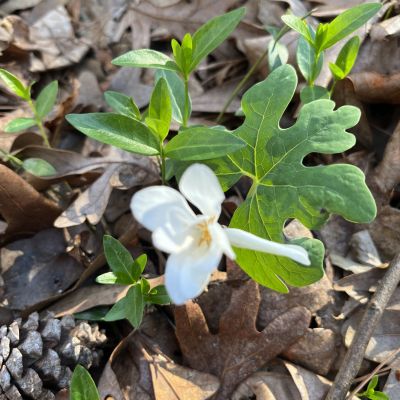
Photo taken by Stowe Phenology Volunteer Margaret Dunford
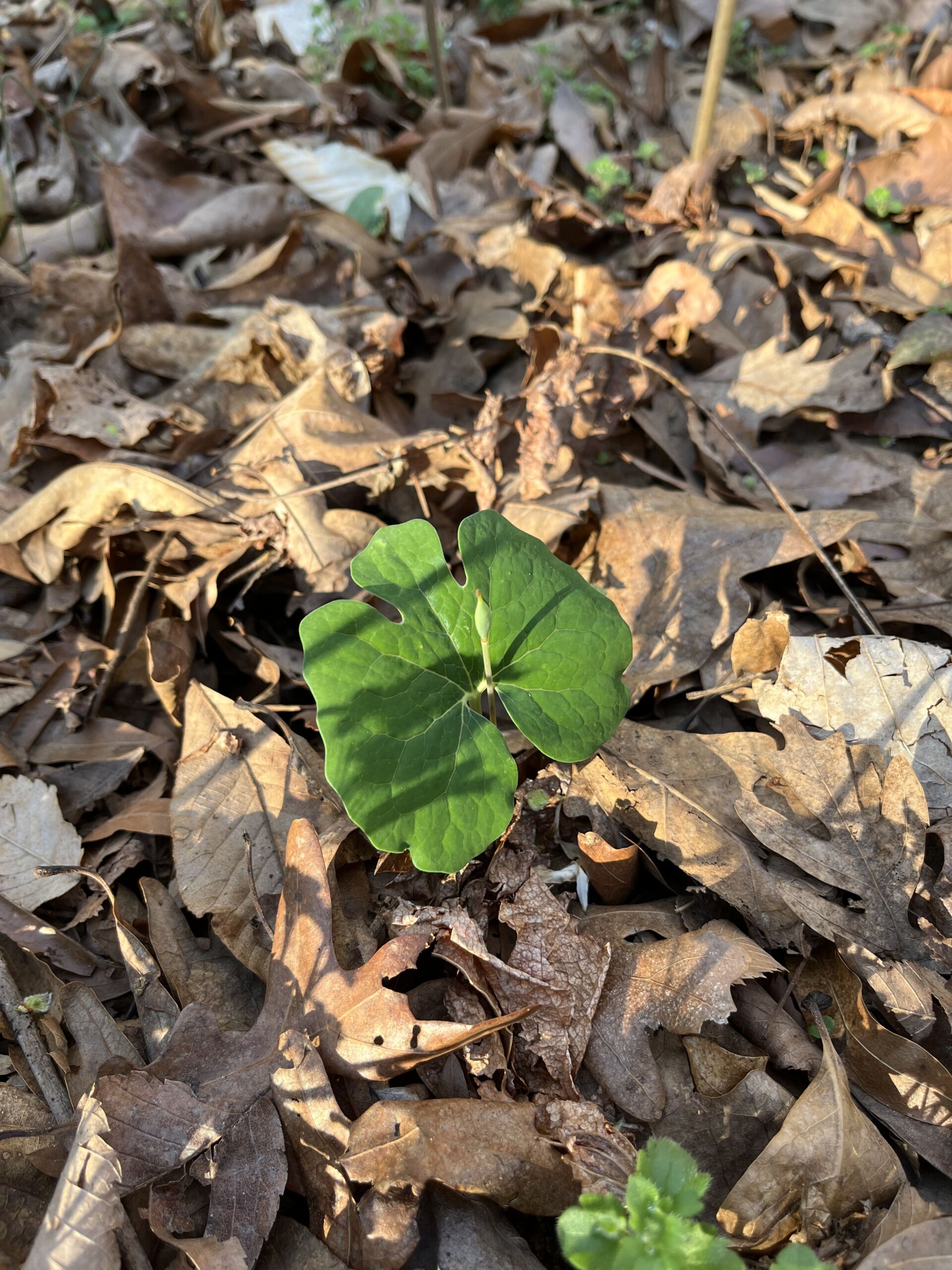
Bloodroot (Sanguinaria canadensis)
Bloodroot's brilliant white petals surround a golden center. It's a name comes from the bright orange-red sap found in its roots.
Like trout lily, Bloodroot relies on ants to disperse its seeds, highlighting how even the smallest forest creatures shape our landscape.
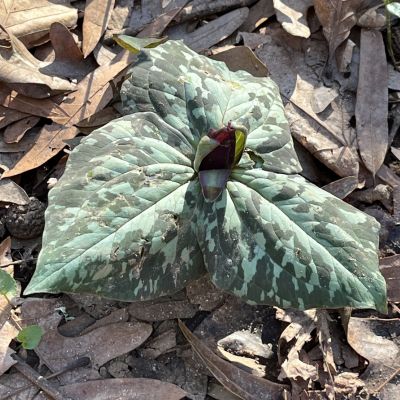
Photo taken by Stowe Phenology Volunteer Margaret Dunford
Little Sweet Betsy Trillium (Trillium cuneatum)
Native to the Piedmont and mountains of North Carolina, this maroon-flowered trillium blooms March through April. Its unusual scent attracts flies as pollinators, and its seeds are also dispersed by ants. This is another example of the quiet partnerships happening beneath our feet.
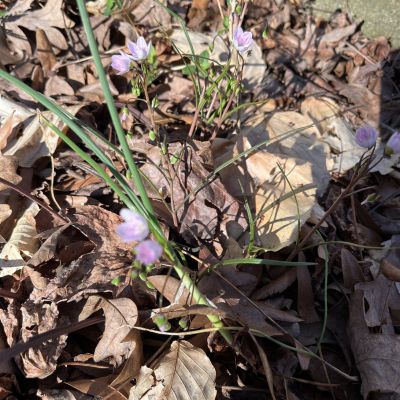
Photo taken by Stowe Phenology Volunteer Margaret Dunford
Virginia Spring Beauty (Claytonia virginica)
Delicate pink or white flowers with dark pink stripes open on sunny days and close at night. These low-growing blooms bring subtle color to moist woodland floors and are a favorite of early pollinators.
A Living Laboratory
Our Phenology Trail is more than a beautiful walk. It is part of our ongoing phenology program, where we track the timing of leaf-out, flowering, and fruiting from year to year. These observations connect our woodland to larger scientific efforts and help us understand how climate patterns influence plant life cycles.
When you visit in March, you're not just seeing flowers, you're witnessing ecological timing in action.
Plan Your Visit
Spring ephemerals are fleeting by nature. Many will be at peak bloom for only a few weeks before fading back into dormancy.
We invite you to slow down, look closely, and experience the magic of early spring in the woods.
Because in the life of a forest, March is anything but quiet.
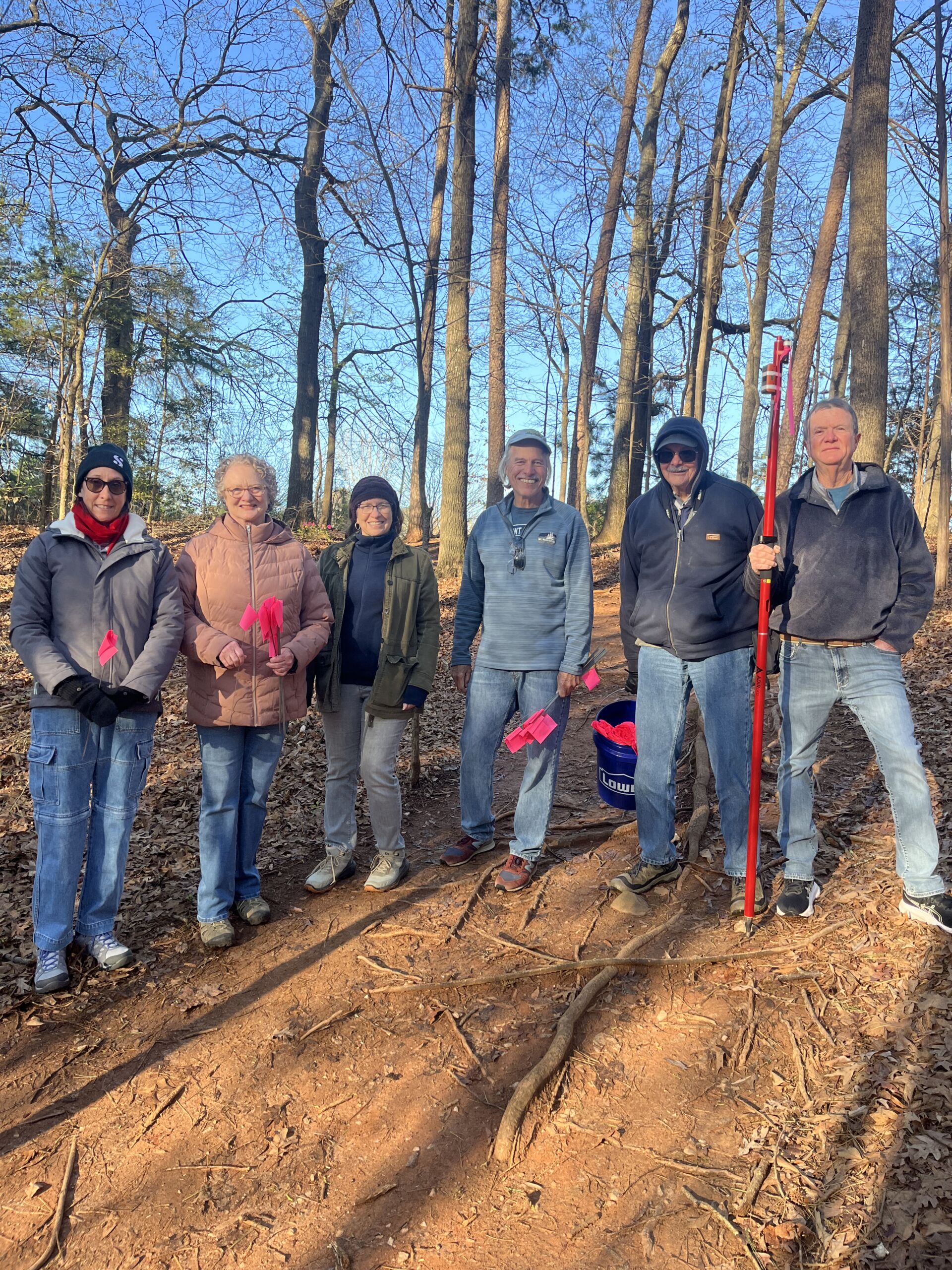
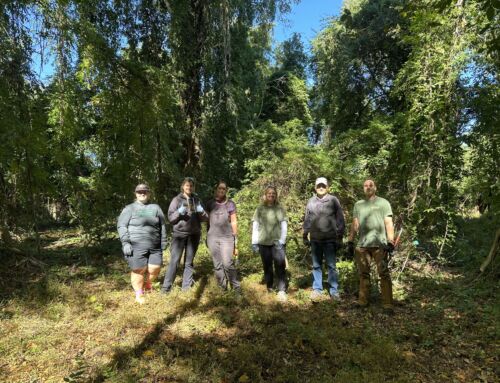
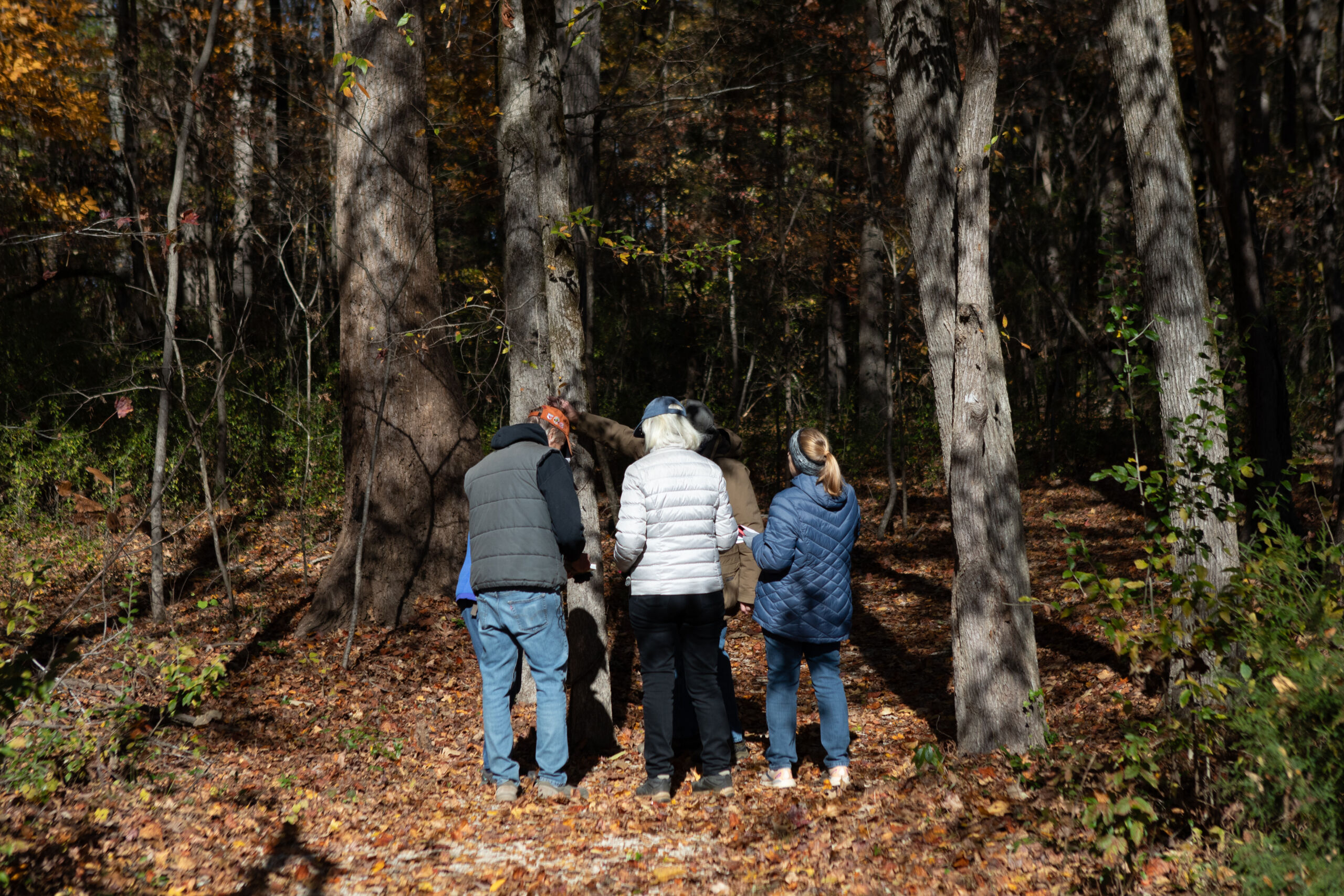
Our amazing Phenology Trail volunteers!
Enjoy a few more photos from Margaret Dunford of Stowe’s Phenology Volunteer team of the spring ephemerals: