
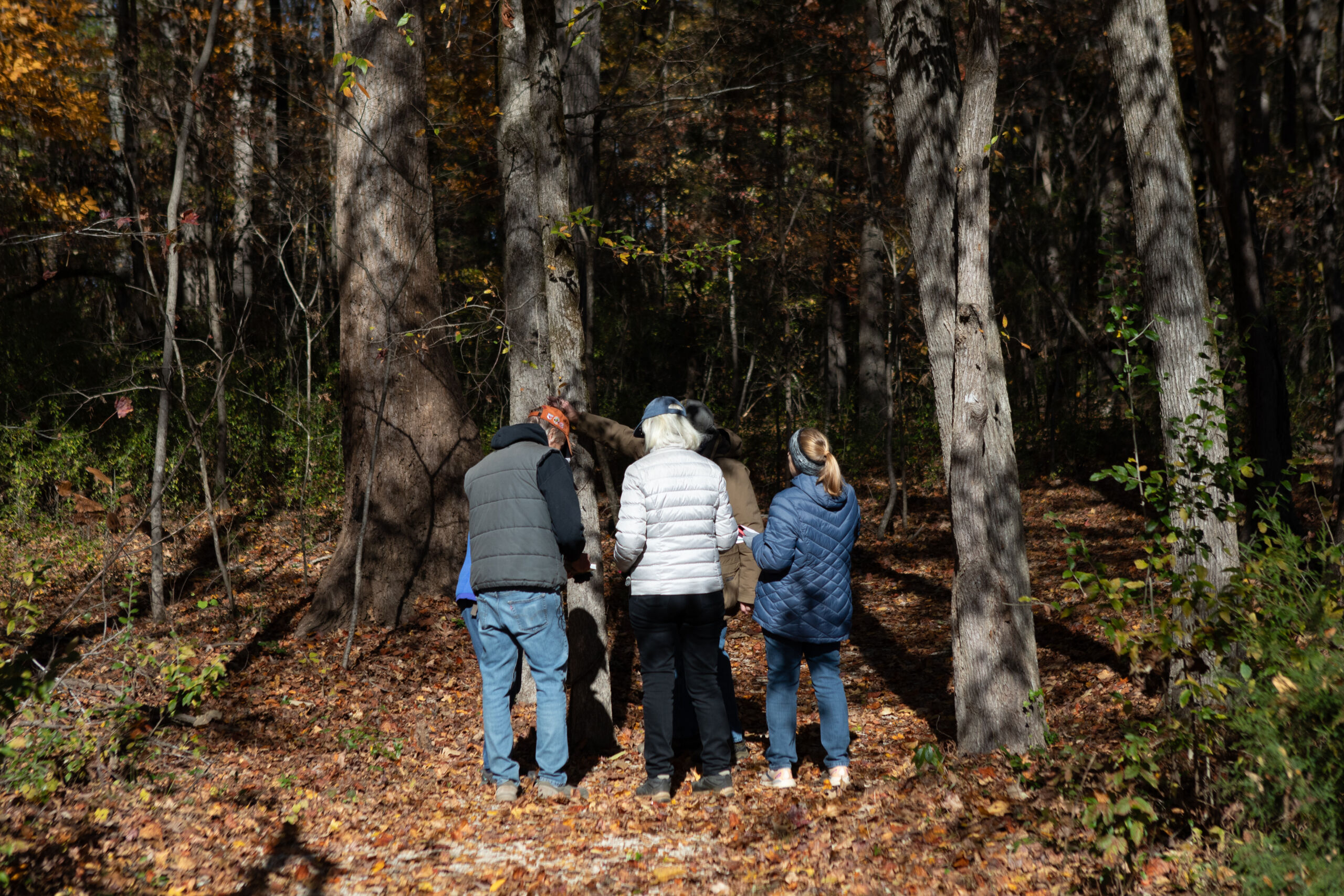
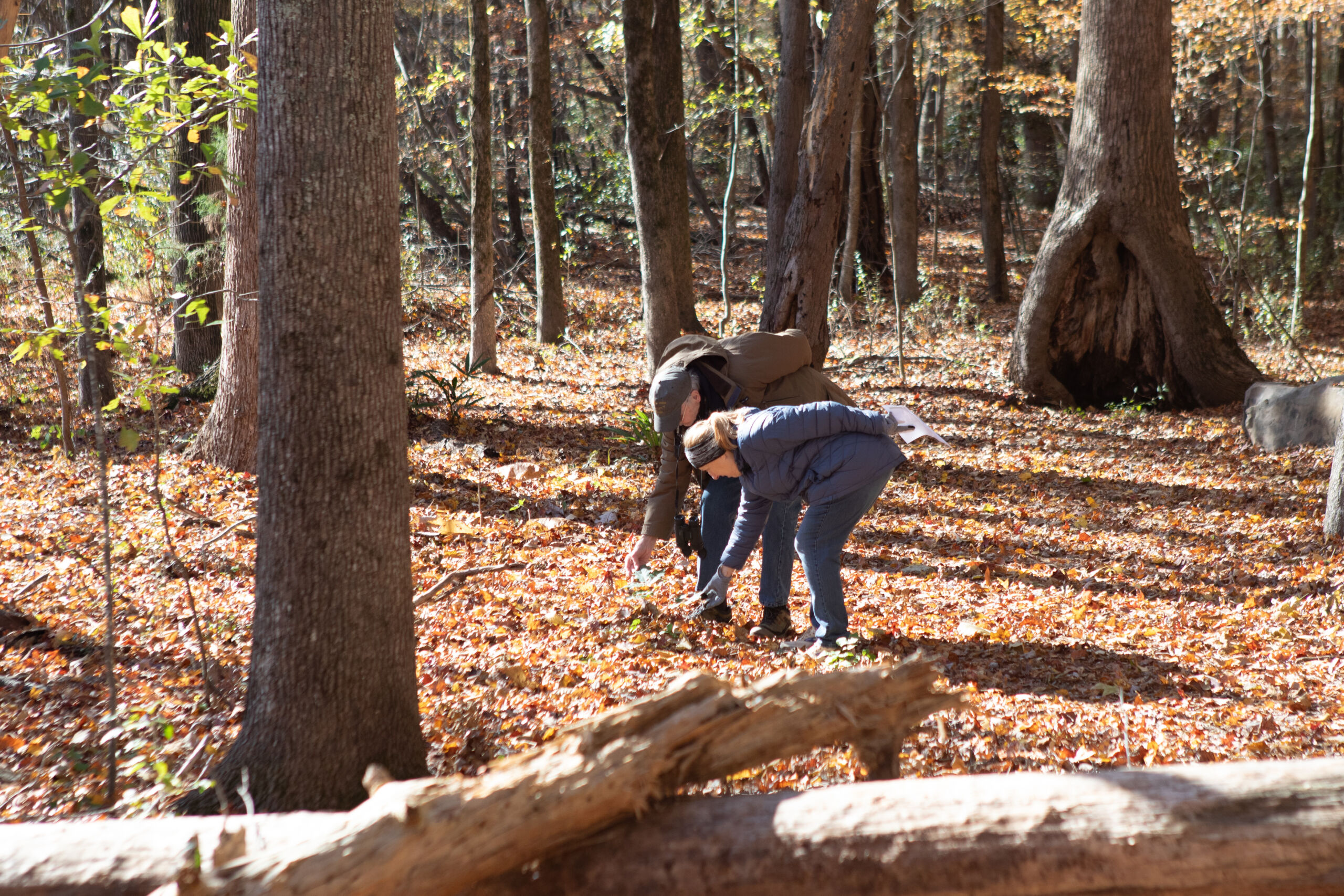
Our Phenology team hard at work
As we prepare to launch our 2026 phenology season, we are taking a moment to celebrate a remarkable year of community science at Daniel Stowe Conservancy. Thanks to the dedication of our volunteers and partners, our phenology program continues to grow, contributing meaningful, locally collected data to a national effort to understand how plants and animals are responding to changing climate.
By the Numbers
In 2025, the Daniel Stowe Conservancy phenology team submitted more than 44,000 Nature’s Notebook observations to the USA National Phenology Network:
- Persimmon Trail: 28,609 observations
- Bluebird Trail: 15,781 observations
These observations reflect careful, repeated monitoring of seasonal changes, from leaf-out and flowering to fruiting and senescence, across our established plant monitoring routes and bluebird trail. Each observation strengthens a long-term record of how Stowe’s landscapes are changing over time.

Margaret, one of our volunteers, leading a workshop for the Stowe Phenology team
What is Phenology?
According to the National Phenology Network, phenology is “nature’s calendar” or the study of seasonal changes in the natural world. Phenology is the first pop of green amidst the brown of winter and the shift of colorful leaves in autumn. Phenology is not only a beautiful documentation of changing seasons, but a leading indicator of climate change, a helpful tool for managing invasive species, predictions of health-related shifts such as allergies and optimization of planting, fertilizing and harvesting cycles for crops.
“Phenology is a vital field of ecological research that helps us understand how living organisms respond to environmental cues such as day length, temperature, and rainfall, and how climate change can impact these seasonal changes,” says the National Phenology Network. “Moreover, the study of phenology can aid in the development of more effective conservation strategies, enabling us to better anticipate and mitigate the challenges posed by changing environmental conditions. In short, phenology provides essential data for understanding, adapting to, and mitigating the ecological and societal consequences of a changing climate.”
Part of a National Effort
Our local observations contribute to a much larger collective impact. In 2025, 3,536 Nature’s Notebook observers nationwide submitted their findings of 3,750,954 phenology records, helping the National Phenology Database surpass 44 million total records!
Scientists, land managers and educators use these data to better understand how ecosystems respond to climate variability and extreme weather.
What We’re Learning
Thanks to community scientists like those at Daniel Stowe Conservancy, phenology data are helping researchers understand that plants and animals may be responding differently to climate change, that extreme weather events strongly influence flowering and insect activity and that volunteer observations are filling important gaps in biodiversity data across landscapes that are often underrepresented in scientific studies.
Why This Matters and How to Join Us in 2026
Phenology monitoring supports Daniel Stowe Conservancy’s mission by strengthening land stewardship, informing habitat management decisions and deepening our understanding of seasonal patterns across the landscape. Just as importantly, it connects volunteers, members and visitors to the rhythms of the natural world through slow, intentional observation.
How You Can Participate
Join the Stowe Phenology Team: As we look ahead to 2026, we invite new and returning volunteers to join our phenology walks on the Persimmon and Bluebird Trails. Participation is flexible; you do not need to attend every week to be involved. Walks are led by trained National Phenology Network Leaders and are designed as relaxed, guided opportunities to learn as we go, notice seasonal change and build confidence together. You do not need to be a scientist, an expert or a plant nerd to participate, just curious, observant and interested in the natural world around you. Volunteer sign-ups and walk schedules are available here.
Help Us Celebrate National Phenology Week: National Phenology Week is March 16-20 and serves as a virtual celebration of the seasonal cycles of plants and animals. Check out usanpn.org to sign up for webinars, Q+As with researchers, keynote presentations and to dive deeper into the world of Phenology.
Sign up as a Nature’s Notebook Observer! Become a backyard observer and track the seasonal events of plants and animals in your backyard, at local parks and outdoor spaces or use it to join the Phenology team at Stowe. Your participation can help the National Phenology Network reach their goal of four million phenology records collected in 2026!