By Caitlin Conner, Stowe Marketing + Communications Director
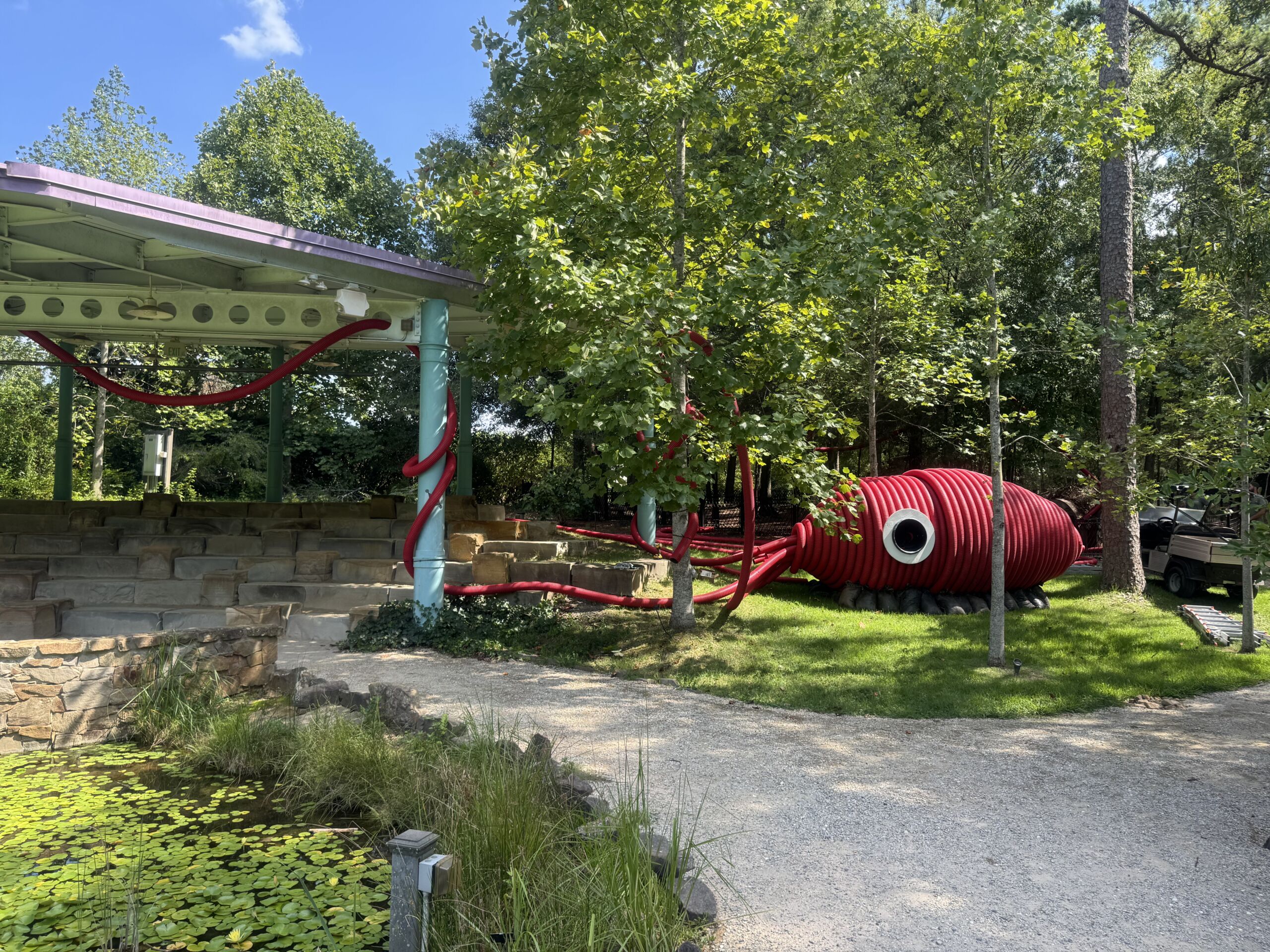
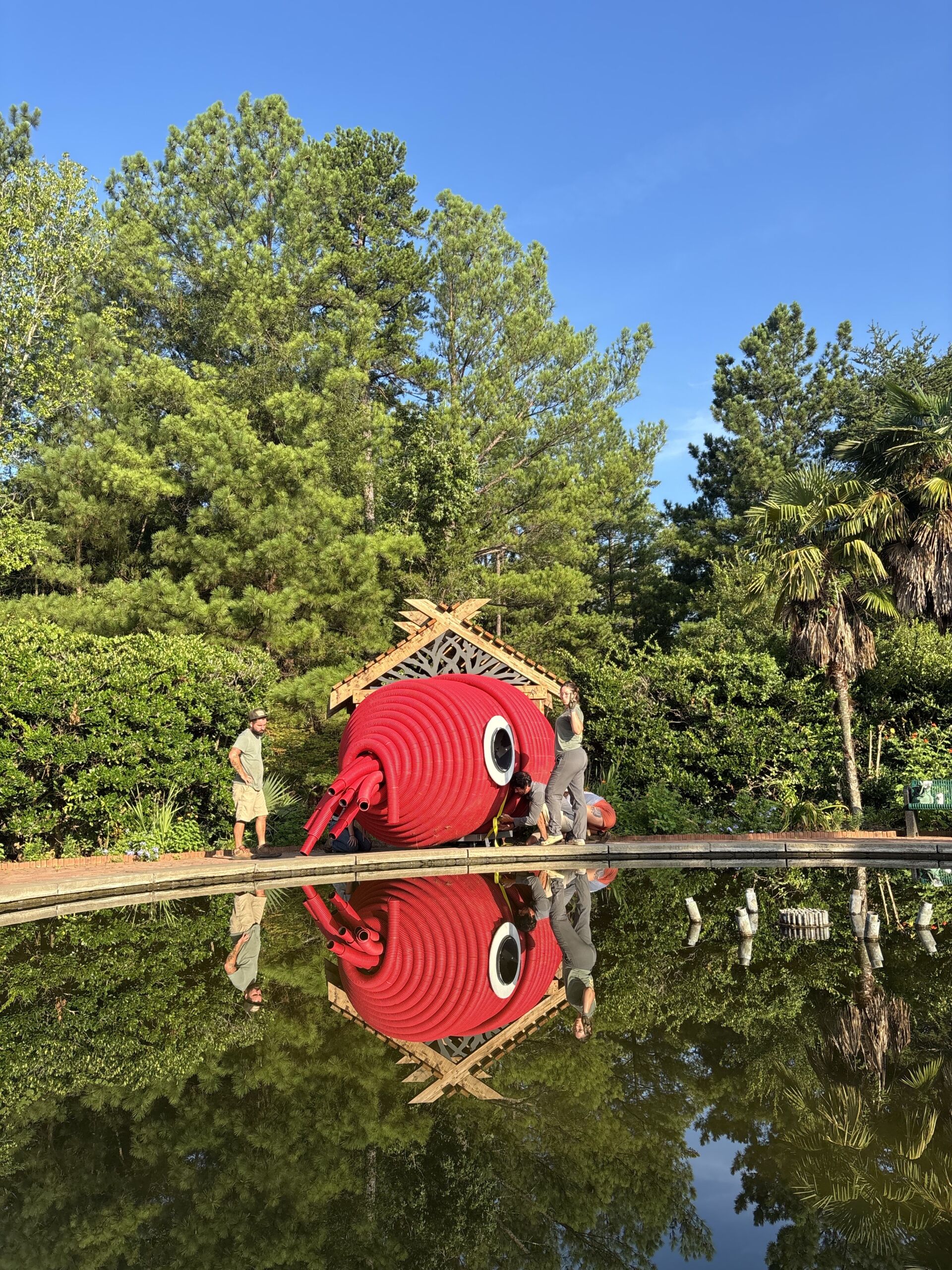
We’re used to seeing lots of creatures in Lost Hollow. Frogs, turtles, snakes, birds, fish and countless insects call Lost Hollow home. But recently there’s been a new resident… and you can’t miss her. Her tentacles drape all over the amphitheater and pond. Her vibrant, red color is striking against Lost Hollow’s natural setting. Her name is Lotty the Squid, and she’s here to encourage kids to play, get curious and interact with art in nature.
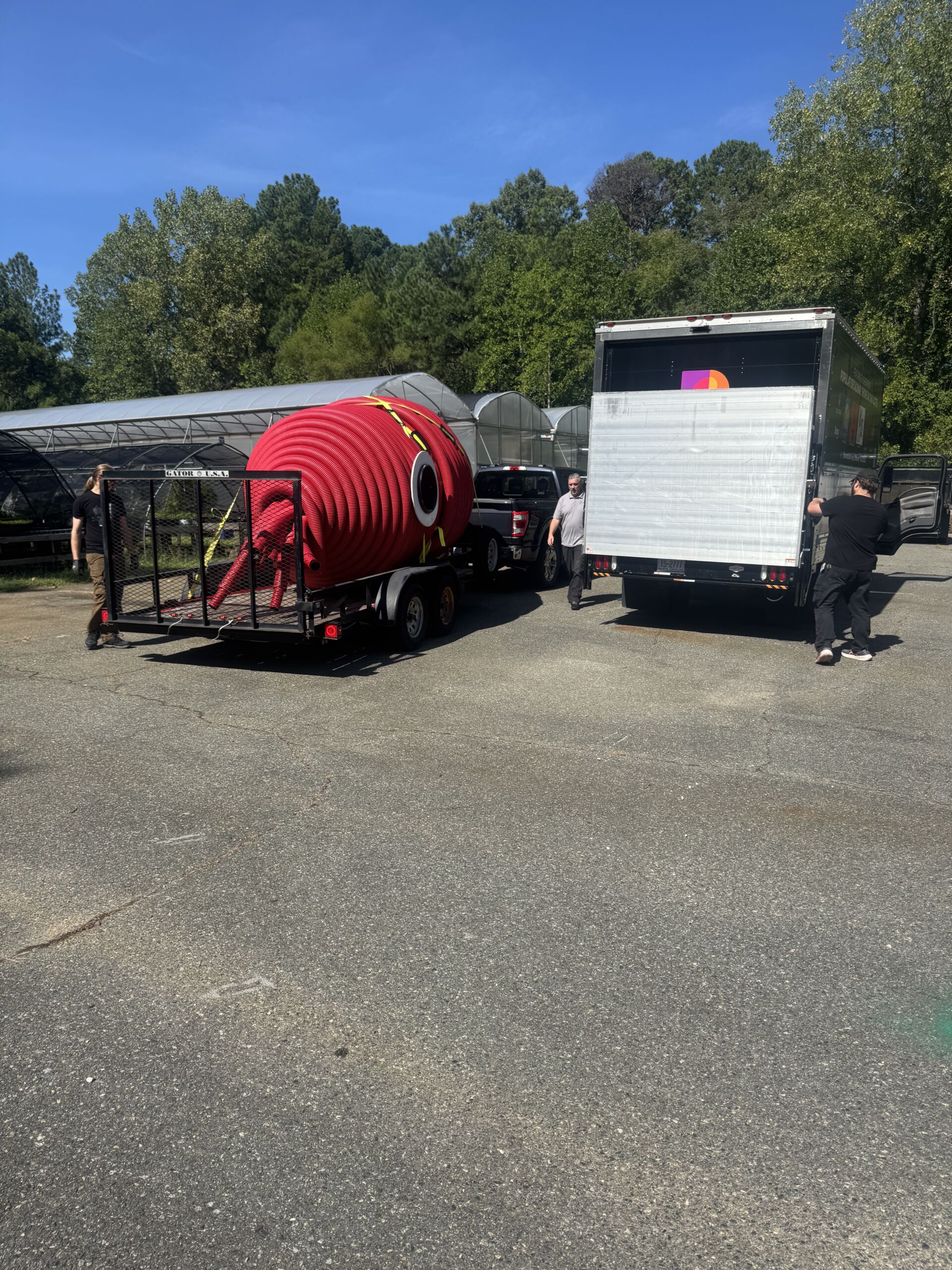
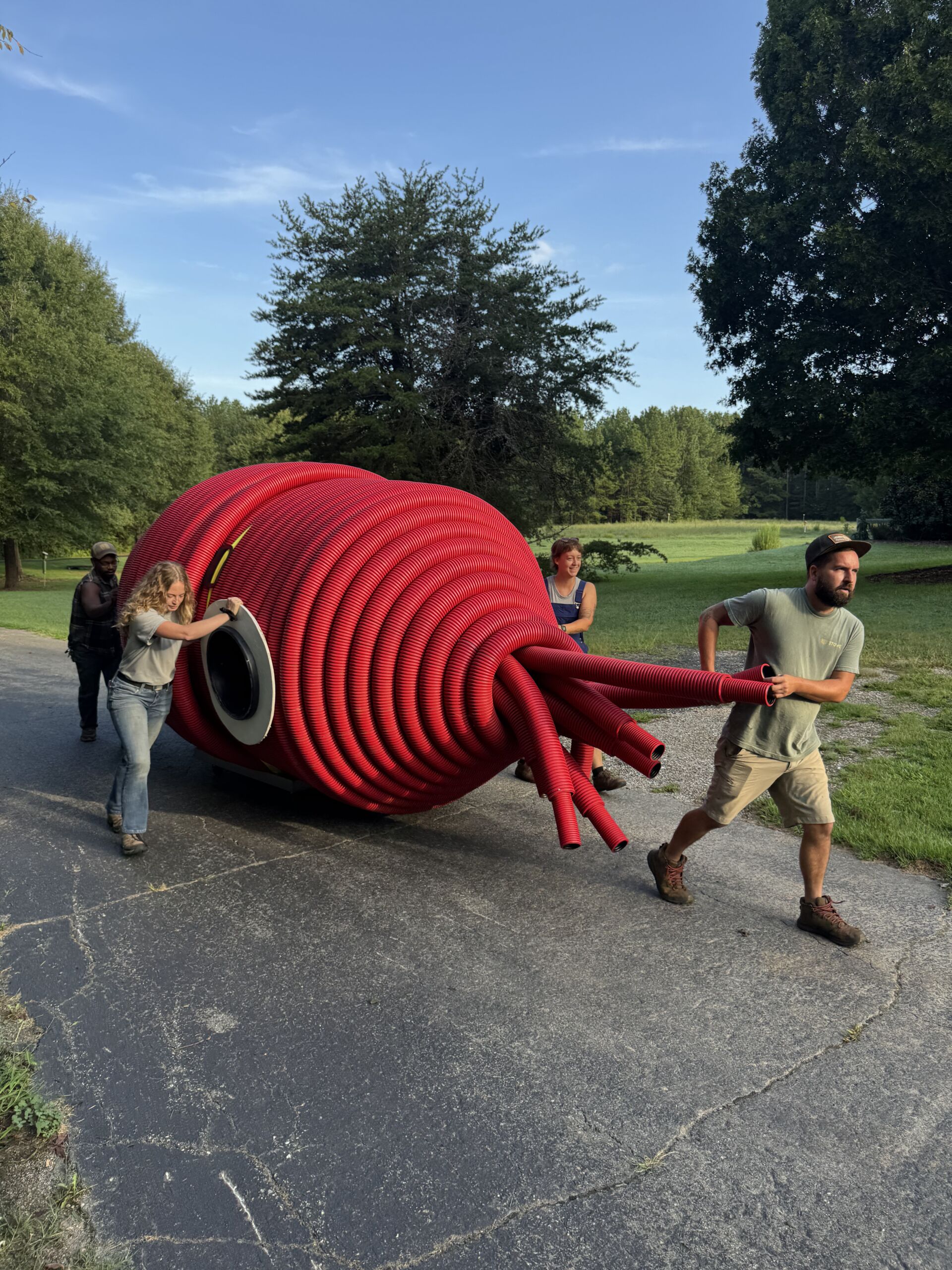
Lottie arriving at the Growing Center
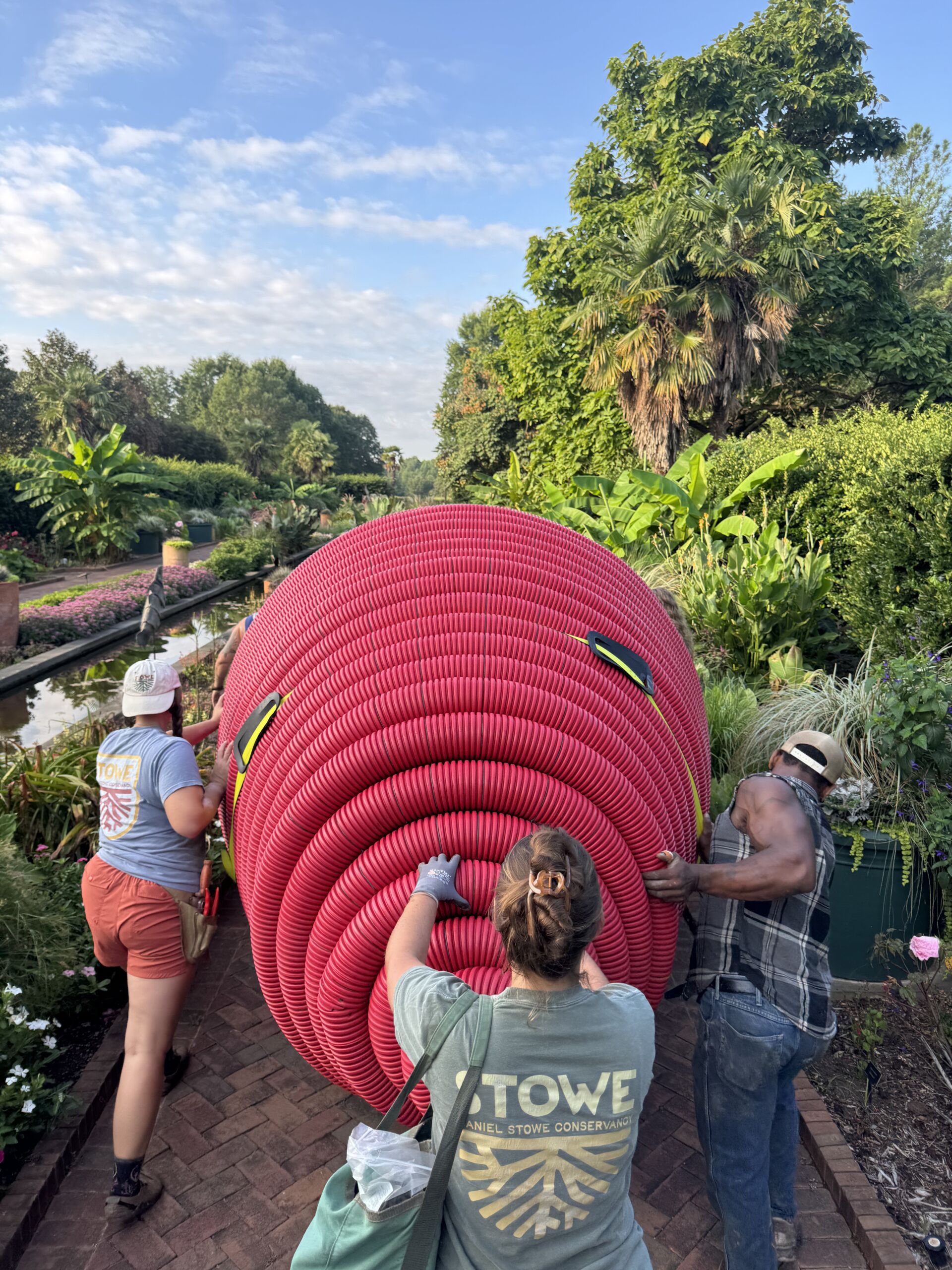
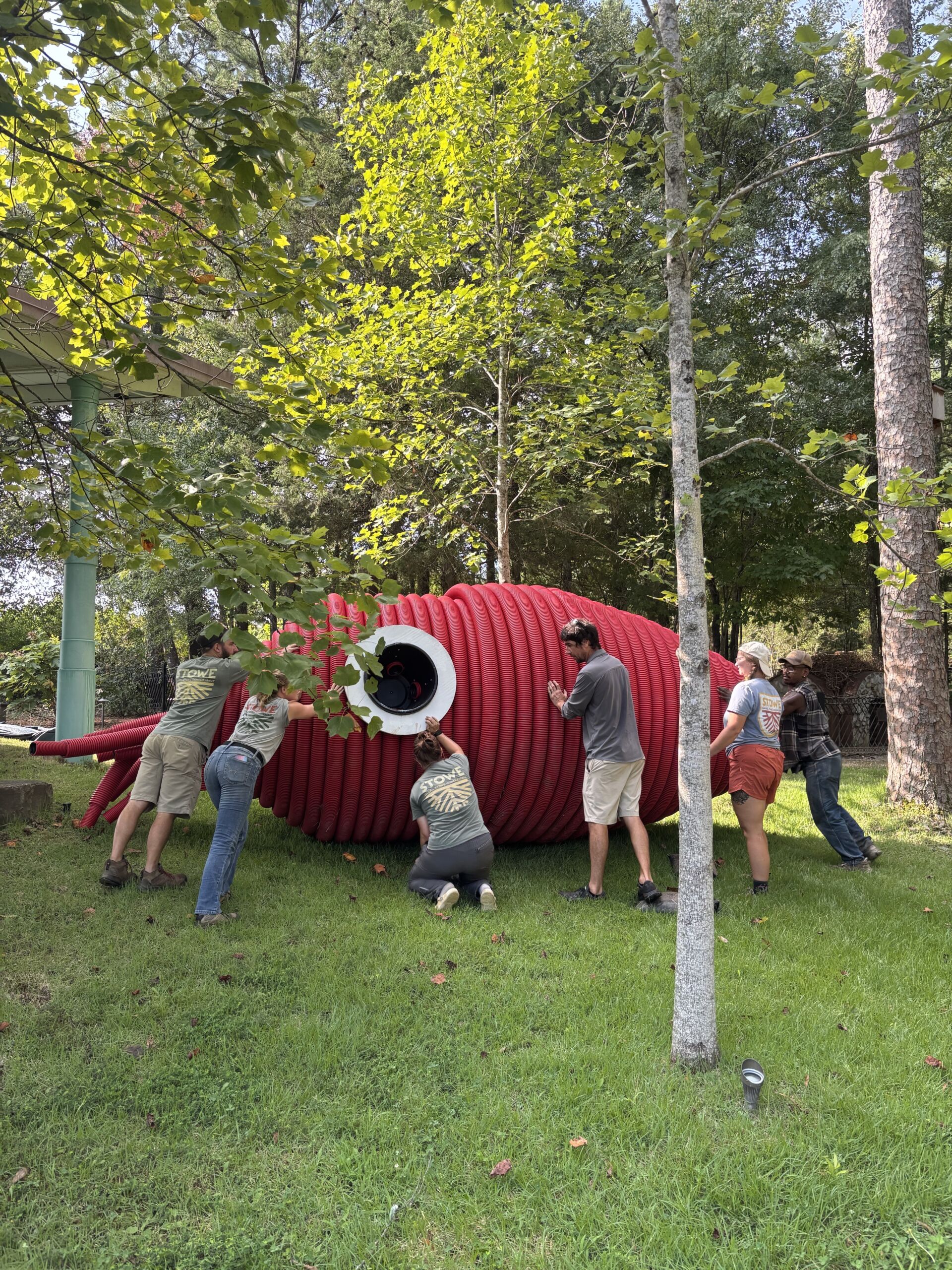
Bringing Lotty to Stowe was no small feat. Over the course of two days, more than ten members of our Horticulture team worked together to settle her into her new home. The installation process was part engineering challenge, part workout for the team. Each tentacle had to be positioned with intention: secure enough to withstand weather, visible enough to spark delight and playful enough to encourage exploration.
The result is awe-inspiring. Lotty feels both monumental and mischievous, as though she’s mid‑adventure and inviting you to join her.
Check out some photos of the Horticulture staff hard at work installing Lottie:
Moradavaga — a name formed from the Portuguese words for “vague address” — is anything but vague in its impact. The collective was born from the collaboration between architects Manfred Eccli and Pedro Cavaco Leitão, two creatives who share a fascination with how people move through and interact with public space. Their partnership bridges countries and cultures, with studios based in Kaltern/Caldaro, Italy and Porto, Portugal, and their work carries the imprint of both places: playful, architectural, curious, and deeply human.
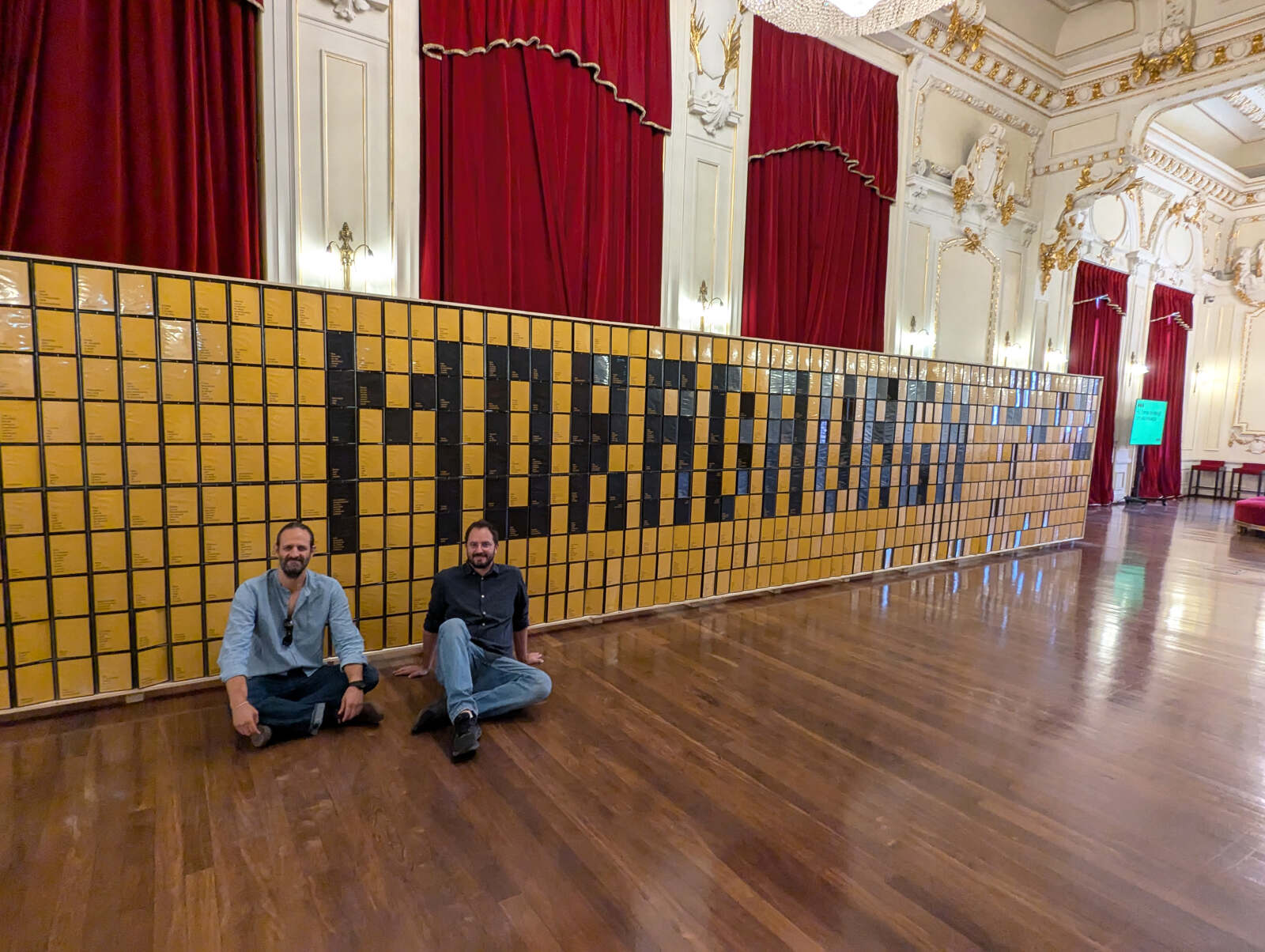
Manfred Eccli and Pedro Cavaco Leitão
Moradavaga began in 2006 with a focus on vacant spaces, derelict buildings, and the activation of the public realm — not through traditional architecture, but through what they call performative objects and active interventions. These early projects included social workshops, ideas competitions, and architectural happenings that encouraged communities to reimagine forgotten or overlooked spaces. Their approach wasn’t about building something new from scratch; it was about awakening what already existed, and inviting people to participate in that awakening.
Their work sits at the intersection of architecture, art, and design — a blend that feels both intentional and delightfully unpredictable. Each piece they create functions as a “dormant tool”, a term that perfectly captures their philosophy. These tools sit quietly in a space until someone engages with them. Only then do they activate, transforming from object to experience.
Moradavaga’s body of work is varied, eclectic, and internationally recognized. Over the years, they’ve been invited to participate in major cultural events and exhibitions hosted by renowned institutions, including:
- Centro Cultural de Belém — Tanto Mar – Portugueses Fora de Portugal, Lisbon (2014)
- Guimarães 2012 – European Capital of Culture — Pop Up Culture (2012)
- Fundação de Serralves — Serralves em Festa, Porto (2010)
- Oficina Segovia 2016 — Noche de Luna Llena (2008)
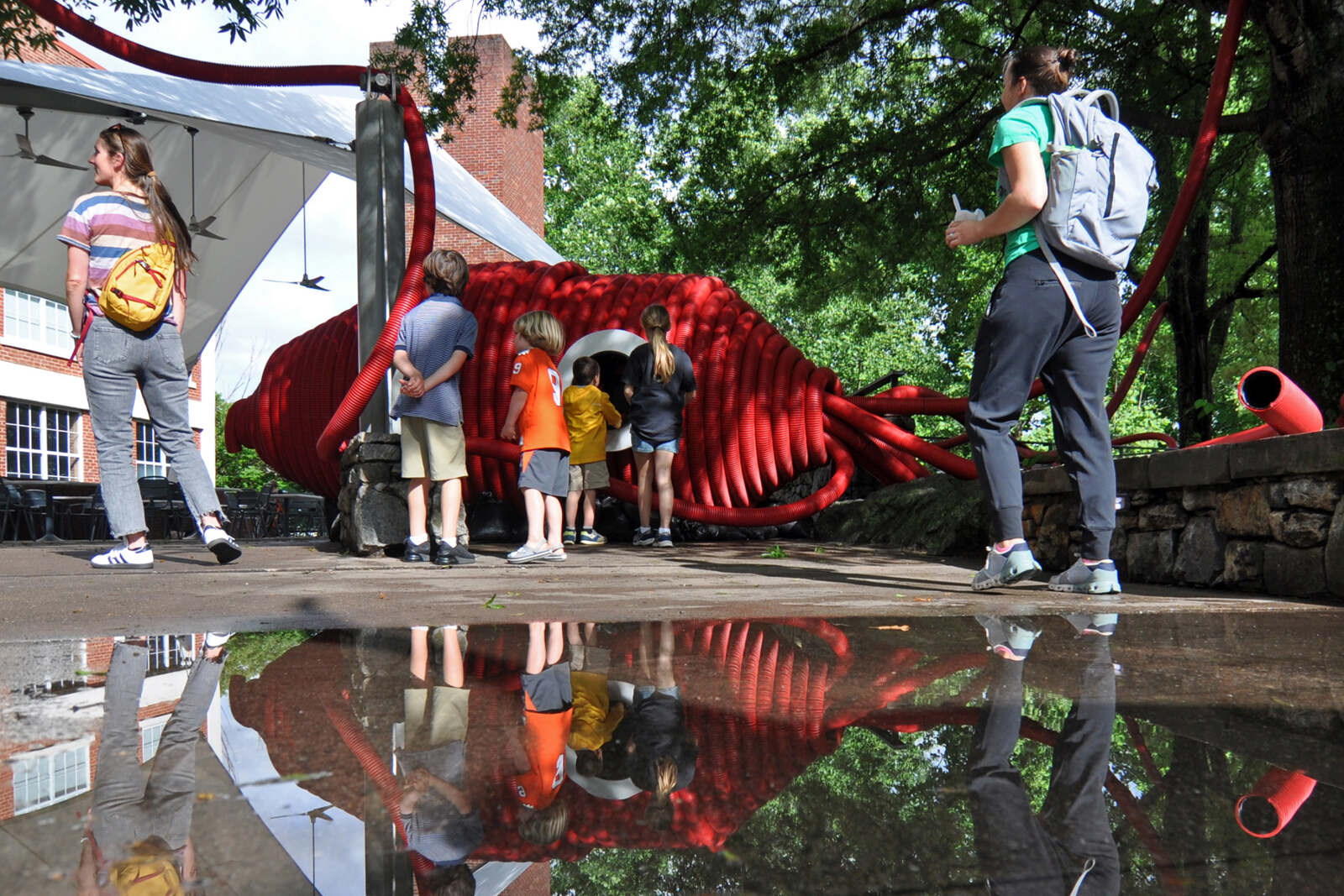
Lotty in Greenville, SC (Photo by Moradavaga)
Lotty the Squid is a quintessential Moradavaga creation. She’s bold, playful and visually striking, but she only activates through human interaction. When visitors call into her tentacles and hear their voices echo across Lost Hollow, they’re not just playing with a sculpture. They’re participating in a conversation between art and environment, exactly as Moradavaga intended.
Their work thrives in places where imagination is already part of the landscape, which makes Lost Hollow an ideal home. Stowe’s commitment to creativity, community and nature aligns beautifully with Moradavaga’s mission to create art that touches people on multiple levels. Lotty doesn’t just sit in the garden; she engages with it, and with everyone who visits.
Lotty will reside in Lost Hollow until April 2027, giving visitors plenty of time to explore, play and grow their curiosity. Lotty represents the best of what public art can be: joyful, interactive, surprising, and deeply connected to place. She invites us to slow down, explore, and rediscover the magic of play. She reminds us that art doesn’t have to be serious to be meaningful. And she transforms Lost Hollow into a space where imagination feels limitless.
Huge thank you to Gaston County Travel and Tourism for funding this amazing art installation and Blumenthal Arts for loaning her to us!