
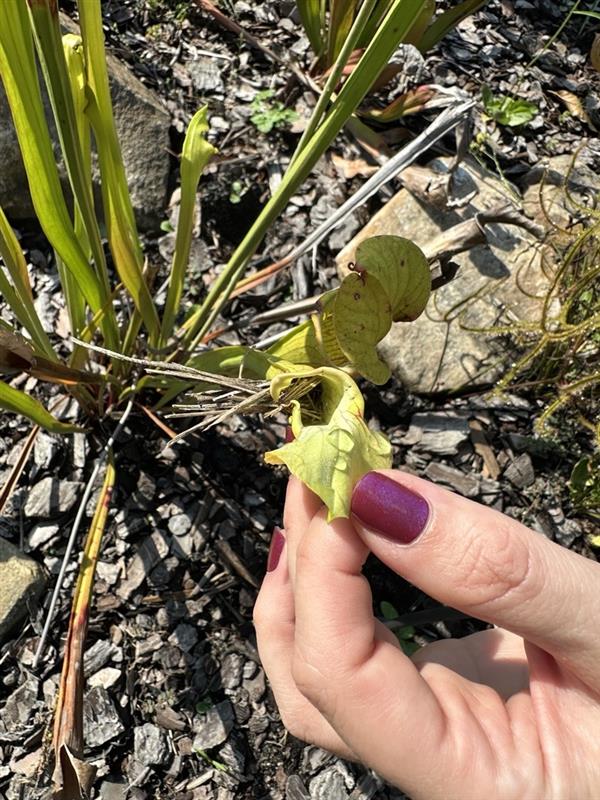
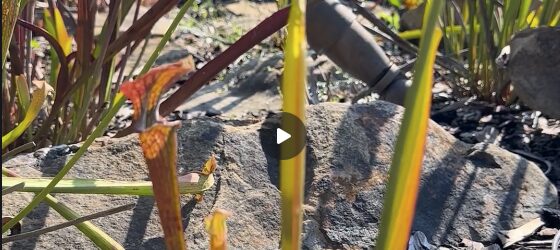
Recently, I was admiring the Bog Garden and witnessed a wasp crawling into a pitcher plant. Bogs are a type of wetland ecosystem characterized by its acidic and nutrient poor soil, and our Bog Garden mimics the native bogs found in North Carolina. Our Bog Garden is home to several carnivorous plants, including pitcher plants, sundews and Venus flytraps. Carnivory is an adaptation in plants to supplement nutrients that can’t be taken from the soil.
Back to the wasp – I thought it would meet its demise, but at least its body would nourish the pitcher plant. It can be sad, but that’s the circle of life and it’s the way the pitchers have uniquely adapted to eat. Imagine my surprise when the wasp just crawls back out! I was impressed and happy for the wasp as it made its grand escape.
As I continued to stand there, I saw a similar-looking wasp carrying a piece of straw in its mouth heading to a different pitcher plant. The wasp proceeded to land at the mouth of the pitcher and shove the straw into it. I started looking at other plants and realized that one mouth was so full of straw that it was essentially plugged up. This made me realize the wasps were making their homes in the pitcher plants!
Click to watch the wasp make its escape!
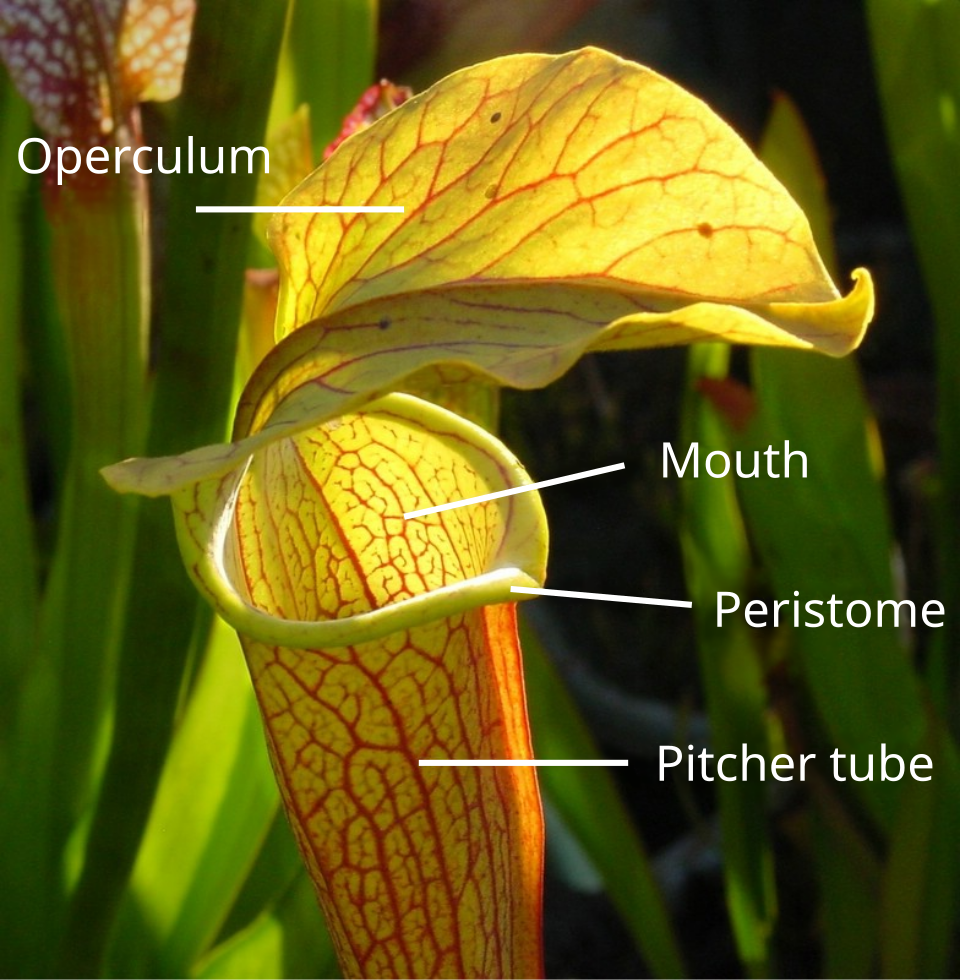
The pitcher plants in question are from the species Sarracenia. They are perennial carnivorous plants that are native to North Carolina. There are around 15 species ranging in colors like red, white, yellow and colored veins. The pitchers are modified leaves made just for the purpose of catching prey. The lid of the pitcher secretes nectar that attracts insects.
The name Sarracenia is a reference to Dr. Michael Sarrazin, a French doctor born in 1659. He moved to a colony in North America when he was 25 to be the town doctor. During a visit back to France, he met Joseph Pitton de Tournefort, who brought him into the world of botany. Dr. Sarrazin found Sarracenia purpurea and send several specimens to de Tournefort who described the species. Charles Linnaeus used S. purpurea when he published Species Plantarum. It was a list of every species and genera of plants known at the time.
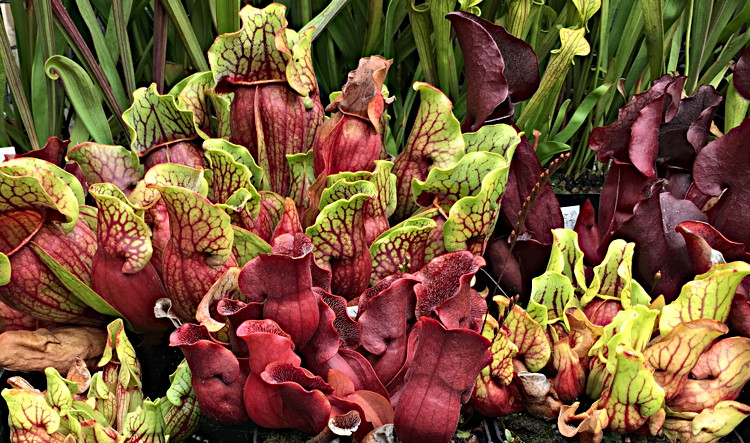
Four different varieties of S purpurea
I immediately start trying to figure out what kind of wasp it was. Thankfully, it was easy to discover they are Grass Toting Wasps, Isodontia species. There are six species in North America. Their mature size is about 0.7 inches. Their wings are usually black or red-brown color and can even reflect blue. The abdomen is on a long, thin pedicle (a pedicle is a small, thin structure that connects an organ to another part of the body). For the Grass Toting wasp, it’s what looks like a tiny waist. They have long hair on their body that can be pale, dark or golden.
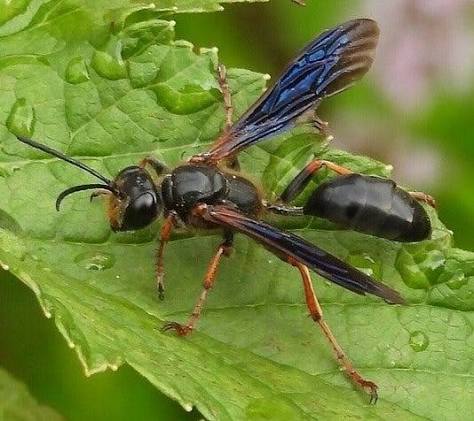
Isodontia Auripes with red legs and brown wings
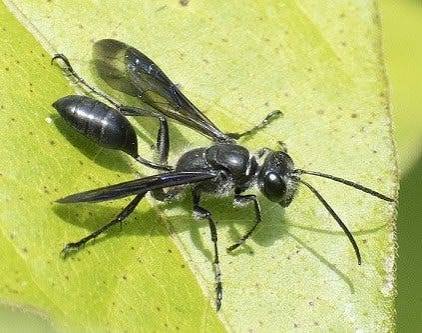
Isodontia Mexicana with a very dark body
They come out of their cocoons in the summer, mate and the females go search for potential nest sites. They look for empty holes they could move into. You could find a nest in hollow branches, bee hotels, abandoned bee nests, patios, rocks and even pitcher plants. They must have looked at the bog and saw open real estate. The wasps will pack the holes with grass that might be bigger than the actual hole. They will hunt and paralyze insects like tree crickets and katydids to pack in the nests as food for their babies. An important note – the female wasps building at the bog are very calm – they are not aggressive and will not attack!
I am very curious about what will happen to the pitchers that have nests in them. Will the emerging wasps bulldoze their way straight through the pitcher or will they go through the grass at the top? Only time and observation will tell. Come visit and see if you can spot the nests at the bog!