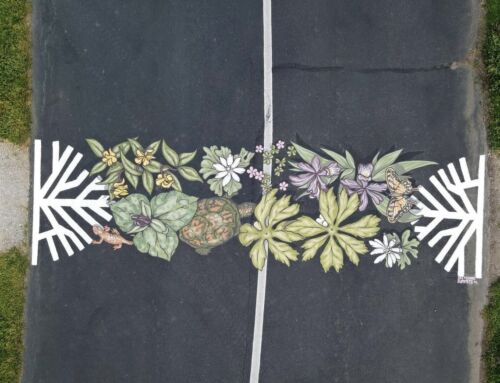

The Daniel Stowe Conservancy and Gardens at Stowe are more than just beautiful green spaces. The gardens, lawns and trails are places where nature, science and art collide. With the growing importance of STEAM education—science, technology, engineering, art and mathematics—it’s no surprise that places like ours are becoming hubs for STEAM-related learning. Stowe offers unique opportunities for people of all ages to explore the world around them in an engaging and hands-on way. Here are a few reasons why we are excited to educate the public, and particularly school children, about STEAM.
Science
By offering direct access to plant species, ecosystems and sustainable practices, educators and our Public programs team utilizes our property can teach important scientific principles such as photosynthesis, biodiversity and the water cycle.
- Hands-On Learning: Students can observe plant growth, examine ecosystems and study environmental conservation techniques, making complex scientific concepts more tangible and exciting.
- Environmental Awareness: Viewing the trails and gardens with an eye for the changing landscape and our newly changed growing zone is helping people understand ecological issues like climate change, conservation and sustainability.

Technology
In today’s digital age, technology plays a crucial role in almost every field, including gardening and environmental science.
- Tech Integration in Nature: Teaching people how technology can work with nature and helps us with tasks such as identifying plants or observing their health fosters a sense of innovation and the degree to which technology can assist us, even in wild areas. In a more practical sense, we are also able to lessen our environmental impact by going digital with membership cards, emails and billboards, creating less waste.
Engineering
Engineering principles are central to designing and maintaining the systems on the property, particularly our Conservatory and water systems like the ponds and fountains.
Building and Design: By exploring the history of the property and the engineering behind creating and maintaining a space like ours, students learn practical applications of engineering in the real world.


Art
An appreciation for art and design has always been at the heart of the Conservancy, from its very inception and the passion our founder, Dan Stowe, held for all types of artistic expression. Art and design plays an essential role in how gardens, trails and other green spaces are experienced and appreciated.
- Creative Expression: Our property offers opportunities for students to learn about landscape design, botanical illustration and even sculpture. Students can engage in creative projects that inspire a deeper connection to nature.
- Aesthetic Appreciation: The art collection that enriches the formal garden spaces as well as in the Conservatory helps cultivate an appreciation for beauty and encourages students to use plants and natural environments as a medium for artistic expression.
Mathematics
While many people don’t immediately associate mathematics with gardening, math is deeply embedded in botanical practices—from the geometry of plant arrangements to the calculations of growth rates.
- Patterns and Symmetry: Students can study the mathematical patterns in nature, such as the Fibonacci sequence or the symmetry found in flowers and leaves.
- Data and Measurement: From calculating growth rates to analyzing soil pH, a cultivated space provides practical math applications, helping students understand how mathematics is used in both the natural world and scientific research.
We are proud to offer a rich, interdisciplinary setting where science, technology, engineering, art and mathematics come together. By educating the public and school children about these topics, the Daniel Stowe Conservancy not only inspires a sense of wonder and curiosity but also cultivates the critical thinking skills needed to tackle the challenges of the future.